Russia’s War Machine Facing Collapse Amidst Heavy Losses
Russia faces mounting battlefield challenges with staggering casualties and equipment shortages, forcing continuous recruitment to sustain the war. Military analysts suggest that while the human cost is immense, President Putin may be compelled to continue the conflict for political survival. Ukraine's adaptive drone warfare strategy is slowing Russian advances, while domestic restrictions and international tensions add layers of complexity to the ongoing crisis.

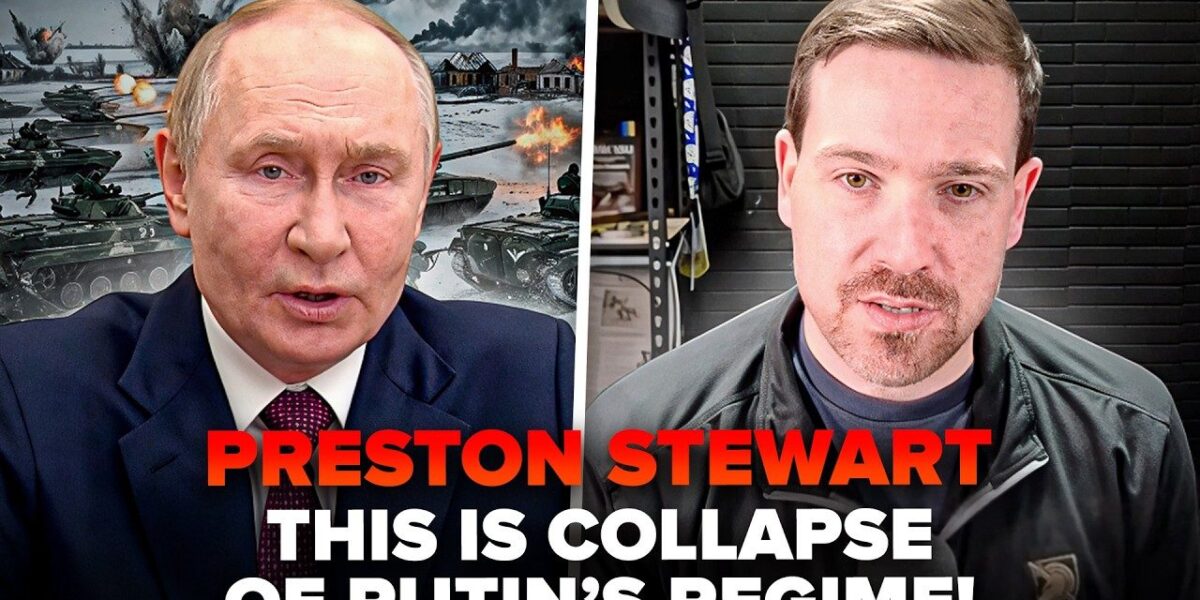
Russia’s Battlefield Struggles Intensify Amidst High Casualties
Despite outward displays of strength, Russia’s military operations in Ukraine are increasingly characterized by desperation, according to military analyst Preston Stewart. Ukraine reports staggering Russian casualties, estimated at approximately 1.26 million killed and wounded, without achieving any decisive breakthroughs. These heavy losses, coupled with critical equipment shortages, are forcing continuous recruitment simply to maintain the current level of conflict. The army, once lauded as the world’s second-largest and strongest, appears to be losing momentum.
Unsustainable Losses and the Question of Russian Resilience
The sustainability of Russia’s war effort in the face of such profound losses remains a critical question. Preston Stewart, a former US Army Field Artillery Officer and West Point graduate, expressed surprise at the duration and scale of the conflict, noting that many Western analysts, including himself, had anticipated a threshold of human cost that would compel Russia to reconsider its objectives much earlier. “We never really thought that we would experience this in our life. We thought life was too valuable that nobody would send their men to slaughter like that,” Stewart remarked.
He added, “I was talking with some old army friends this morning where they were talking about the number of Russian casualties and we never really thought that we would experience this in our life… It’s a little bit scary to think that any country or any leader of a country is so willing to throw this many people to their death.” Stewart suggested that a sustained period of exceptionally high, irreplaceable casualties, potentially around 50,000 per month, might eventually force a change in Russian behavior, though he acknowledged this point seemed to have arrived much later than expected.
The “Kill Zone”: How Drones Are Reshaping Warfare
The pace of Russian advances has slowed dramatically, with recent campaigns showing progress of mere meters per day. Stewart attributes this significant slowdown primarily to Ukraine’s effective integration of drone warfare. “Ukraine has done a a great job of of shifting the fight,” he explained. “For a long time, it was heavily focused on manpower, maneuver, warfare for a period, and then artillery… Ukraine by by shifting to more of a drone focus has pushed that, you know, what used to be called a no man’s land all the way back to World War I. The the name has changed to the kill zone and it’s just gone from, you know, 5 10 kilometers in some areas to 50 in more.”
Stewart vividly described the new reality on the front lines: “We see the videos coming out of this. One of the most shocking things of this conflict is you you can see the videos of these these Russian soldiers getting dropped off and trying to walk 10 20 kilometers forward and just hope they can find some place to hide from the Ukrainian drones. It’s kill zone is the appropriate way to put it.” He highlighted data comparing recent Russian advances to the largest battles of World War I and II, underscoring the glacial pace of current operations.
The Kremlin’s Narrative and Putin’s Grip on Power
Despite battlefield setbacks, Russian Foreign Minister Sergey Lavrov has reiterated the rejection of peace terms that do not include Russian gains. Stewart interprets this not merely as strong language but as a reflection of a deeper reality: Vladimir Putin’s perceived need to maintain the war to secure his own political power. “A while ago, I would have thought that this is just strong language, negotiating tactics, right? To to say we’re going to, you know, we’re going to hold the line that we’re going to ask for the most possible, but it’s hard to hold that belief anymore,” Stewart stated.
He elaborated on the complex domestic calculus: “I get the impression that Putin needs war to stay in power. Uh, no doubt this has been bad for Russia. It’s been bad for the Russian people. It’s been bad for the Russian economy, but it it has in some ways kind of cemented Putin’s uh authority in a lot of ways.” Stewart pointed out that ending the war abruptly could lead to economic hardship for many Russians whose livelihoods depend on the defense industry, potentially creating domestic instability that Putin seeks to avoid.
War Creeping Home: Drone Strikes on Russian Soil
The war is increasingly making its presence felt within Russia’s borders, with Moscow experiencing repeated drone attacks. Stewart noted that while initial incidents were met with disbelief or claims of false flags, the regularity of these strikes is forcing a greater acknowledgment of the conflict’s proximity. “Little by little, it seems like there’s more being forced on them. They’re forced to acknowledge that it’s happening,” he observed. He anticipates an escalation of such incidents, stating, “By the end of the year, I we’re going to see even more of that. The war is going to be brought more and more to the to the steps of the Russian people.”
Ukraine’s Adaptive Strategy and Tactical Gains
Ukraine’s army is demonstrating remarkable adaptability, shifting from artillery duels to sophisticated drone warfare and targeted operations. Stewart highlighted recent Ukrainian successes in areas like Kubansk and Drobilia, emphasizing a move away from large-scale armored assaults towards exploiting Russian overextensions. “Instead of trying to necessarily even take back significant portions of territory, although that has been the uh the result in some of these cases. It’s mostly just kind of in a sense like a boxer would fight. You you wait to see exactly how your adversary acts and you take advantage of the opening,” he explained.
This strategy involves identifying Russian positions that are overextended and vulnerable, methodically moving in to engage and capture Russian forces. Stewart described it as a smart, adaptive approach that leverages Ukrainian intelligence and specialized assault capabilities.
Information Control and the Specter of Further Mobilization
In an effort to control the narrative and suppress dissent, the Kremlin is increasingly restricting online platforms like Telegram. Stewart views this as a move towards a more closed information environment, although he believes Russia is not yet as isolated as North Korea. He also addressed the recurring discussion of a potential new wave of mobilization, stating, “I don’t think they need to mobilize yet. It’s interesting that that conversation comes up about every 6 months to a year of is this going to be the time where they do it.” He suggested that Putin is still working to shield the average Russian from the war’s direct impact, making mass mobilization a step he may be hesitant to take unless absolutely necessary.
Regarding the crackdown on Telegram, Stewart noted the official justification of preventing terrorist attacks but argued the underlying motive is likely broader information control. He cautioned that such measures, while intended to tighten control, could ultimately harm Russia by limiting communication channels for soldiers and hindering accountability within the military. “The more Russia clamps down on modes of communication… the more they clamp down on that, it it’s just going to put them in a worse and worse position,” he concluded.
The Elusive Off-Ramp: Navigating Peace Prospects
Finding a realistic off-ramp for the conflict that avoids rewarding aggression or destabilizing Europe presents a significant challenge. Stewart expressed skepticism about recent reports of breakthroughs in peace negotiations, suggesting that progress has been made on peripheral issues rather than core territorial control or security guarantees. He speculated that a bold move by NATO, such as admitting Ukraine and deploying defensive forces to its western regions, might create enough pressure on Putin to seek an end to the war, though he acknowledged this is a risky gamble.
Stewart concluded that the situation remains a stalemate: Russia lacks the battlefield capacity for a swift victory, Ukraine cannot forcibly expel Russian forces, and negotiations are stalled. The conflict’s trajectory hinges on external pressures and the willingness of both sides to compromise, a prospect that currently seems distant.
Broader Geopolitical Shifts: Iran Tensions and Global Security
The conversation also touched upon rising tensions between the United States and Iran, with Stewart assessing the risk of escalation. He noted that while a military strike is possible given the significant military buildup in the region, the ultimate consequences remain uncertain. He highlighted that regional allies are urging caution, preferring internal Iranian instability over a wider regional conflict.
Stewart believes that a prolonged conflict with Iran would inevitably draw U.S. attention away from Ukraine. “The minute the US is in a hot war, that’s going to take the vast majority of our our government and uh political focus,” he stated. This shift in focus could have significant implications for ongoing support for Ukraine, potentially reducing its priority in international diplomacy and resource allocation.
Sanctions Evasion and Russia’s Resilience
The discussion concluded with an examination of Russia’s persistent ability to bypass international sanctions, particularly in acquiring critical components for military equipment. Stewart expressed frustration over the ongoing circumvention of sanctions, acknowledging that while they may hinder Russia’s capabilities, they are not entirely effective. He noted that smugglers and illicit networks continue to find ways to supply Russia, a reality that complicates efforts to exert sustained pressure on the Kremlin.
Source: ⚡️Putin panics: front has collapsed! Kremlin lost millions. Military blogger exposes russian lies (YouTube)

Related Articles

Oil Prices Surge to $91 Amid Geopolitical Tensions
Oil prices have surged to $91 a barrel, driven by disruptions in the Strait of Hormuz. This is leading to higher gas prices across the U.S., with California facing particularly steep costs. The situation is fueling debate on energy policy, exports, and the transition to renewable fuels.

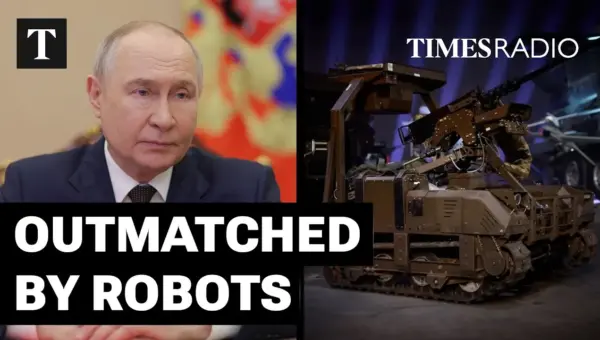
Ukraine War Robots Make Russian Tech Obsolete, Expert Says
Ukraine has achieved a historic military victory using ground robotic systems, marking a potential turning point in warfare. Defense tech expert Igor Novikov described the event as groundbreaking, highlighting the rapid evolution of conflict and Ukraine's role in pioneering its future. The conversation also touched upon concerns regarding UK defense spending and the global implications of proliferating autonomous weapon systems.

China’s Iran Gambit: Deception or a New World Order?
President Trump claims China will stop sending weapons to Iran, but deep skepticism remains due to China's past support and use of spy satellites to aid Iran. This move could be a strategic ploy to weaken the US military.