Democrats Face ‘Clown Car’ Election Outlook Amidst Poll Weakness
No Democratic candidate is currently polling above 20%, leading to concerns about a lack of a clear frontrunner for the 2028 election. Analysts describe the situation as a 'clown car' but argue that the prolonged absence of a leading figure might strategically benefit the party by limiting early attacks.


Democratic Party Grapples With Unclear Frontrunner Status
As the 2028 presidential election cycle begins to take shape, the Democratic Party is facing a significant challenge: the absence of a clear frontrunner. Data presented by CNN’s data guru, Harry Enten, reveals that no potential Democratic candidate is currently polling above 20%, a situation described as a “total clown car” and a “total mess.” With over two years until the election, and a primary process still to unfold, the party appears to be in a state of flux regarding its potential nominee.
Key Figures Lagging in Early Polls
Current polling data indicates a fragmented field of potential candidates. According to Enten’s analysis, current figures show:
- Gavin Newsom at 19%
- Kamala Harris at 18%
- Pete Buttigieg at 13%
- Alexandria Ocasio-Cortez at 12%
This lack of a dominant candidate has raised concerns among political observers, with Enten highlighting the historical rarity of such a situation for the Democratic Party. He noted that the last time the party lacked a clear frontrunner at this stage was in 1992, a cycle that ultimately saw Bill Clinton emerge as the nominee and go on to win two terms.
“This is just a total clown car. It is a total mess. There is no clear front runner at this particular point on the Democratic side. Who the heck knows who the nominee is going to be in two years?” – Harry Enten
Historical Context and Skepticism
While the current polling may seem historically unusual, some analysts argue against premature panic. The 1992 election serves as a historical precedent where an unclear field eventually coalesced around a winning candidate. However, the context of that election, including the impact of third-party candidate Ross Perot siphoning votes from the Republican ticket, is also a crucial factor.
Furthermore, skepticism abounds regarding the viability of the current leading figures in a general election. Gavin Newsom, despite his position as Governor of California, faces headwinds due to Republican efforts to portray the state negatively. Enten suggests that this narrative could alienate moderate and independent voters, making it difficult for a California-based candidate to succeed nationwide.
Critiques of Potential Candidates
The transcript also delves into specific critiques of other potential candidates:
Kamala Harris and Alexandria Ocasio-Cortez
While Kamala Harris has stated she is open to running, there is speculation that she may ultimately not enter the race. Alexandria Ocasio-Cortez, though popular, is also not expected to run, despite being viewed by some as a strong contender if she were to enter the fray.
Pete Buttigieg’s Viability
Pete Buttigieg faces significant hurdles, with the assertion that he would lose in a landslide, even against a hypothetical third term for Donald Trump. The critique extends beyond his political potential to his performance as Secretary of Transportation, which is described as subpar. The transcript argues that while external factors may have played a role, the perception of his competence has been damaged by Republican criticism, portraying him as an “incompetent buffoon.” The suggestion is made that Buttigieg would benefit from holding more significant elected offices before aspiring to the presidency.
A Strategic Advantage in Lacking a Frontrunner?
Counterintuitively, the absence of a clear Democratic frontrunner might serve as a strategic advantage. The argument is made that a designated frontrunner becomes a large target for conservative attacks, allowing well-coordinated media campaigns to effectively damage their reputation. Therefore, prolonging the period without a definitive leader could shield potential candidates from early and intense scrutiny.
The transcript posits that having no frontrunner for an extended period, perhaps even another two years, could be beneficial for the Democratic Party. This strategy would give Republicans less time to focus their attacks on a single individual, thereby preserving the party’s options and potentially allowing a stronger, more resilient candidate to emerge later in the cycle.
Looking Ahead: Time and Opportunity
Despite the current polling landscape, the analysis concludes that there is ample time for the Democratic Party to rally behind a candidate. The primary process will undoubtedly shape the field, and new contenders may emerge. The focus remains on the upcoming election cycles and the party’s ability to navigate the current uncertainties to ultimately present a viable contender for the presidency.
Source: This Annoyed The HELL Out of Me… (YouTube)

Related Articles

Omar Urges Democrats to Welcome Ex-MAGA Figures
Rep. Ilhan Omar is urging Democrats to embrace former Trump allies like Marjorie Taylor Greene who are now breaking with the former president. Omar believes these individuals deserve credit for their "wake-up call" and should be welcomed to help save the country. This call comes as Democrats explore strategies to broaden their coalition and appeal to disillusioned Republicans.
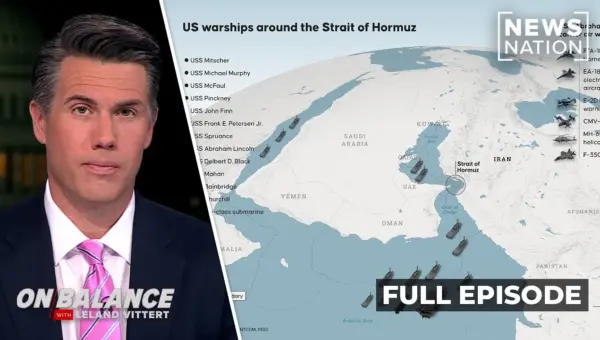
Iran Tensions Rise as US Blockades Ports
The US has imposed a naval blockade on Iran to cut off its funding, a move supported by most Americans in principle but not in practice due to economic costs. Meanwhile, internal Democratic Party struggles and a major scandal in California's gubernatorial race add to the political turbulence.


Democrats Target Trump’s Fitness with New 25th Amendment Push
A coalition of Democrats is proposing a new commission to assess presidential fitness, potentially invoking the 25th Amendment. They cite concerns over Donald Trump's behavior, including controversial statements and actions, as justification. This move brings the serious constitutional question of presidential capacity into sharp political focus.