Silent Warnings: When Ordinary People Foresee Disaster
Explore the chilling accounts of ordinary individuals whose warnings about impending crimes were tragically ignored. From financial fraud to mass violence, these stories highlight the critical importance of heeding early signs.

The Unheard Alarms: Stories of Those Who Saw Danger Coming
In a world often focused on the dramatic actions of criminals and the swift responses of law enforcement, the stories of ordinary individuals whose quiet warnings were tragically ignored often slip through the cracks. A recent exploration delves into these chilling accounts, highlighting moments where everyday people perceived impending doom, only to have their concerns dismissed, leading to devastating consequences. This isn’t about sensationalized prophecies, but about the mundane yet crucial observations that, had they been heeded, might have altered the course of history.
Bernie Madoff: The Unrealistic Returns That Raised Red Flags
One of the most infamous cases highlighted is that of Bernie Madoff, the architect of history’s largest Ponzi scheme. While his name became synonymous with financial ruin for thousands, the cracks in his operation were visible long before his eventual downfall. Harry Maropoulos, a profiler for Rampart Investment Management, grew suspicious in the late 1990s. He noted that Madoff’s investment returns were “unrealistically consistent for legal methods and market activity.” This observation, so starkly out of sync with market volatility, led Maropoulos to file a report with the SEC in 2000. His concerns, along with two subsequent reports in 2001 and 2005, were seemingly met with inaction. Maropoulos eventually left Rampart, disillusioned by the apparent willful blindness within the financial oversight system, where feeder funds were incentivized not to ask too many intrusive questions. It wasn’t until 2008, when Madoff’s own sons exposed the scheme, that the world truly listened to Maropoulos’s early warnings. His experience has since propelled him into a respected career as a forensic accountant, dedicated to exposing white-collar crime.
Omar Mateen: A Pattern of Red Flags Ignored
The horrific events of June 12th, 2016, at Orlando’s Pulse nightclub, where 49 lives were lost, also underscore a pattern of ignored warnings. Omar Mateen, the perpetrator, had a history that troubled those around him. His co-workers at G4S Secure Solutions, the security company where he was employed, noted his disturbing behavior and sympathies for extremist groups. Daniel Gilroy, a colleague, reported Mateen’s threats to his supervisor on two separate occasions. Gilroy also voiced concerns about Mateen’s bigotry, misogyny, and anger, which created a hostile work environment. Despite these reports, little to no action was taken, and Gilroy eventually resigned, even writing a letter detailing his fears about Mateen. These earlier concerns had prompted two FBI investigations, which briefly placed Mateen on a terrorist watch list. However, he was cleared, and two years later, was able to legally purchase the firearms used in the massacre. The tragedy served as a stark reminder of the limitations in identifying and preventing individuals deemed dangerous, especially when early warning signs are not adequately addressed.
Robert Card and Shawn Hodgson: A Friend’s Desperate Plea
The devastating mass shooting in Lewiston, Maine, in October 2023, which claimed 18 lives, also brings to light a deeply personal tragedy rooted in ignored warnings. U.S. Army reservist Robert Card was experiencing a severe psychological decline, believed to be exacerbated by his time as a grenade instructor. His best friend of two decades, Shawn Hodgson, witnessed this deterioration firsthand. Hodgson grew increasingly concerned about Card’s escalating anger and mental health struggles, especially after Card’s authorizations were limited due to hostile acts. In September 2023, Hodgson took the drastic step of asking his supervisors at Card’s training facility to change his passcode, fearing a mass shooting. Tragically, Hodgson’s pleas were not enough. Card went on to carry out the attack at a bowling alley before taking his own life. A devastated Hodgson later expressed his grief, lamenting that his warnings about his friend’s deteriorating mental state and refusal to seek help were not taken seriously enough.
Salman Abedi: Intelligence Lapses and Missed Opportunities
The 2017 Manchester Arena bombing, which killed 22 people, also revealed significant failures in intelligence and oversight. MI5 had launched an investigation into Salman Abedi in 2014 following multiple tips from a counterterrorism hotline. These tips came from various sources, including peers from college and members of the Muslim community in Manchester, who expressed concerns about Abedi’s pro-Islamist views and his family’s background. Despite these credible concerns, British intelligence closed the inquiry without adequately sharing information with local law enforcement. The public inquiry launched three years later concluded that MI5 had failed to fully investigate the community’s concerns. MI5 eventually issued a formal apology, acknowledging the missed opportunities. The case highlighted the complex challenges in monitoring potential threats and the critical need for effective information sharing between intelligence agencies and law enforcement.
Elliot Rodger: The Manifesto of a Troubled Mind
In April 2014, the chilling online manifestos and YouTube videos of Elliot Rodger, a 22-year-old loner, foretold a horrific spree of violence. His disturbing views on women and society were evident in his content. Rodger’s mother, Chin, had grown increasingly concerned about his increasingly disturbing online rants and reported them, leading to a police wellness check. However, Rodger managed to convince the officers and his mother that he was merely venting. Shortly after this encounter, Rodger took his own life, but not before killing six others in a violent rampage. His family had contacted the police just weeks earlier, fearing for his mental state. The evidence he left behind, including a video manifesto and an autobiographical manuscript, became influential within certain online communities, particularly the incel (involuntary celibate) subculture. Chin Rodger later became an activist, advocating for parents to recognize the seriousness of their children’s mental health and beliefs.
James Holmes: Violent Fantasies and a Breach of Confidentiality
The 2012 mass shooting at a movie theater in Aurora, Colorado, by James Holmes, also involved a mental health professional who perceived warning signs. Dr. Lynn Fenton, a university psychiatrist, was treating Holmes and was disturbed by his persistent violent fantasies. However, these fantasies lacked the specificity required to classify him as an imminent threat under existing protocols. It was only after Holmes announced his intention to drop out of school that Dr. Fenton, in a difficult decision, violated patient confidentiality to share information with Holmes’s mother and campus police. Despite these concerns, further psychiatric evaluation was not readily approved. The case underscored the complex ethical and legal boundaries mental health professionals navigate when dealing with potential threats, and the ongoing debate about the balance between patient confidentiality and public safety, especially in the context of easy access to lethal means.
The Common Thread: The Cost of Ignored Warnings
These narratives, while distinct in their specifics, share a common, tragic thread: the failure to act on critical information provided by ordinary people. From financial experts to concerned friends, colleagues, and family members, individuals on the ground often possess the earliest insights into brewing dangers. The stories of Madoff, Mateen, Card, Abedi, Rodger, and Holmes serve as powerful testaments to the fact that ‘normal people’ can, and do, foresee terrible crimes. Their experiences underscore a vital societal challenge: how to better listen to, validate, and act upon these crucial, often overlooked, warnings before they escalate into unimaginable tragedies.
Source: 10 Normal People Who Tried to Warn Us About Terrible Crimes (YouTube)

Related Articles

The Price of Attention: Two Fatal Pursuits of Fame
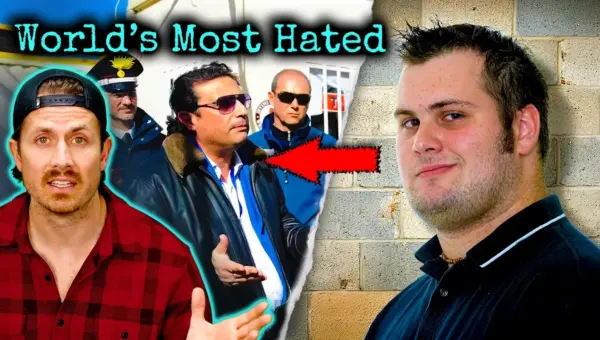
Two men, Derek Keeper and Francesco Schettino, pursued attention and validation, resulting in tragic outcomes. Keeper died in a car crash due to his anti-seatbelt stance, while Schettino's reckless actions as a cruise ship captain led to a deadly shipwreck. Their stories serve as cautionary tales about the pursuit of recognition and the severe consequences of poor judgment.

TV Stars’ Dark Secrets: Shocking Crimes Revealed!
Beloved TV stars have been involved in shocking real-life crimes, from sexual assault and fraud to murder. This article explores the disturbing cases of figures like Bill Cosby, Danny Masterson, and the Chrisley family. These scandals shattered public illusions and brought severe legal consequences.


Teens Planned Horrific Ritual Sacrifice To Resurrect Killer
Two Florida high school students, Isabelle Valdez and Lois Liippard, were arrested for allegedly plotting a ritual sacrifice to resurrect mass killer Adam Lanza. An anonymous tip to Fortify Florida exposed their disturbing obsessions and a detailed murder plan targeting a fellow student.