Netanyahu Claims Iran’s Supreme Leader Killed in Strikes
Israeli Prime Minister Benjamin Netanyahu claims "many signs" indicate Iran's Supreme Leader Ayatollah Ali Khamenei was killed in coordinated US-Israeli strikes. While the compound was reportedly destroyed, evidence remains unconfirmed. Experts suggest Iran's resilient institutions may absorb the shock, while its strategy focuses on regional destabilization.

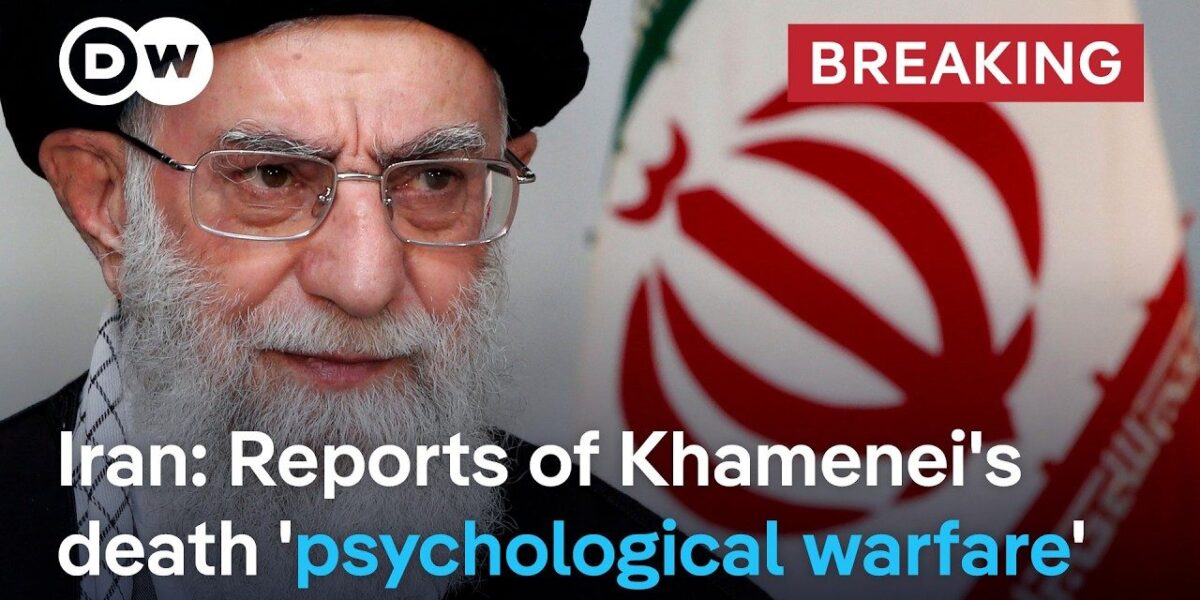
Netanyahu Claims Iran’s Supreme Leader Killed in Strikes
Israeli Prime Minister Benjamin Netanyahu announced on Tuesday that “many signs” indicate Iran’s Supreme Leader, Ayatollah Ali Khamenei, was killed in coordinated strikes by the United States and Israel. The high-security compound housing the Ayatollah was reportedly “completely destroyed,” according to Netanyahu, who vowed that Israel would continue to target thousands of Iranian regime sites in the coming days. The statement comes amid heightened tensions and a series of retaliatory actions between Iran and Israel, with both nations engaging in strikes and counter-strikes across the region.
Early Morning Strikes Target Iranian Leadership
The coordinated attacks, according to military officials cited by DW correspondent Tanya Kmer in Jerusalem, were strategically launched in the early morning hours, a departure from typical nighttime operations. This timing was reportedly chosen due to the presence of leadership gatherings. Prime Minister Netanyahu further asserted that senior commanders and officials involved in Iran’s nuclear program were also killed in these initial strikes. However, Kmer emphasized that Netanyahu did not present any evidence to support these claims, and the confirmation of Khamenei’s death remains uncertain at this point.
Israelis Brace for Extended Campaign Amidst Limited Retaliation
Speaking from Jerusalem, Kmer described the mood in Israel as one of apprehension, with citizens frequently moving in and out of bomb shelters across the country. While alerts and orders to seek shelter have been frequent, the immediate retaliatory missile strikes from Iran have been limited in scope. “There have been no heavy casualties so far in Israel, mainly minor injuries from people running to the shelter,” Kmer reported. She noted that Israel’s defense systems appear to be holding, but acknowledged the ongoing threat of ballistic missiles and the uncertainty of what further actions might follow. Prime Minister Netanyahu has urged Israelis to prepare for a prolonged campaign, stating, “this is not over in a day or two and that this would be going on as long as needed.” This message is also intended for regional actors, given Iran’s history of retaliating against other countries in the Middle East.
Expert Analysis: Iran’s Resilience and Destabilization Tactics
Madawi al-Rashid, a visiting professor at the Middle East Centre of the London School of Economics and Political Science, offered a more nuanced perspective on the potential implications of targeting Iran’s leadership. She noted that while the removal of a figure like Khamenei would be a significant blow, Iran’s institutional structure is designed to withstand such shocks. “It is very easy to replace them. But somebody who has the same status as Khamenei will become a blow to Iran. But I think the institutions that the Iranians have will probably survive at least for some time as they are probably capable of producing yet another leader very quickly,” al-Rashid explained. She highlighted that the Iranian regime has spent 47 years strengthening its military and political institutions, making it resilient to leadership decapitation. Instead of directly targeting leadership, Iran’s strategy, according to al-Rashid, involves suppressing internal dissent and using limited weaponry, such as drones, to target American interests and Gulf countries hosting military bases. This strategy aims to create chaos and destabilize regions perceived as hosting hostile forces.
“It is very easy to replace them. But somebody who has the same status as Khamenei will become a blow to Iran. But I think the institutions that the Iranians have will probably survive at least for some time as they are probably capable of producing yet another leader very quickly.”
Gulf States’ Concerns and Shifting Alliances
Al-Rashid also commented on the geopolitical dynamics, suggesting that the Trump administration’s actions are more aligned with Israeli interests than those of key Gulf states. She pointed out that leaders like Saudi Arabia’s Crown Prince Mohammed bin Salman and the UAE’s Mohammed bin Zayed had reportedly tried to dissuade the U.S. from striking Iran, advocating for regional stability. However, al-Rashid believes that President Trump prioritizes Netanyahu’s agenda, leading to an escalation that could draw in not only the Gulf but also Europe, which is already grappling with the conflict in Ukraine.
Lessons Unlearned from Past Conflicts
Drawing parallels to the aftermath of the 1991 Gulf War, al-Rashid expressed concern that the current leadership in the U.S. and Israel has not learned from past mistakes. She recalled how the West encouraged an uprising in southern Iraq after the war but ultimately abandoned the Iraqi people, leading to prolonged suffering. The current approach, she argued, is placing all strategic reliance on Israel, potentially leading to a messy and protracted conflict in the Middle East. The situation remains highly volatile, with the potential for wider regional conflict escalating.
Source: Israeli PM Netanyahu claims 'signs' Iran’s Ayatollah Khamenei has been killed | DW News (YouTube)

Related Articles

China’s Iran Gambit: Deception or a New World Order?
President Trump claims China will stop sending weapons to Iran, but deep skepticism remains due to China's past support and use of spy satellites to aid Iran. This move could be a strategic ploy to weaken the US military.
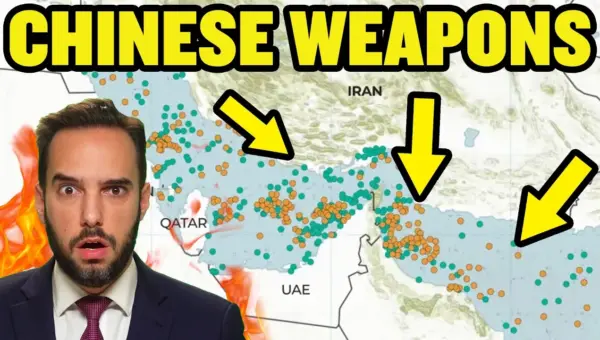
China Aids Iran Amid US Conflict Escalation
Recent intelligence suggests China is secretly supplying Iran with weapons like MANPADS and sharing critical intelligence, a significant escalation from its previous stance. This move, if confirmed, could deepen regional conflict and lead to severe US economic retaliation, while highlighting long-standing strategic ties between Beijing and Tehran.
China Backs Strait of Hormuz Blockade, Halts Iran Arms
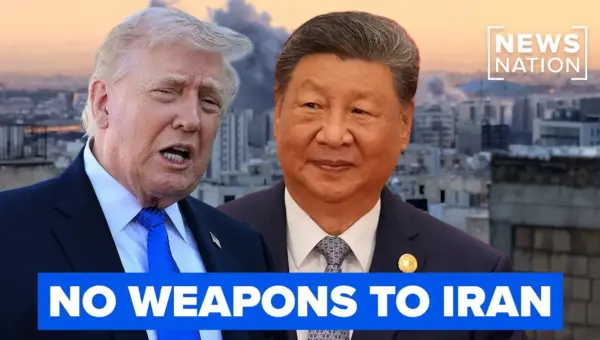
China has agreed not to supply weapons to Iran and is not opposing the U.S. naval blockade in the Strait of Hormuz. This significant development comes as President Trump prepares for a state visit to China and aims to pressure Iran by controlling vital shipping lanes. The move impacts global trade and reshapes regional power dynamics.