Ukraine Endures Massive Russian Barrage: Civilian Killed, Critical Infrastructure Targeted in Widespread Missile and Drone Assault
A massive Russian missile and drone attack on Ukraine on February 22 resulted in one civilian death and 17 injuries, primarily hitting Kyiv and its surrounding areas. The extensive barrage targeted critical energy, water, and railway infrastructure, underscoring Russia's ongoing strategy to degrade essential services and terrorize the population amidst a harsh winter.

Ukraine Endures Massive Russian Barrage: Civilian Killed, Critical Infrastructure Targeted in Widespread Missile and Drone Assault
In the early hours of February 22, Ukraine once again became the target of a brutal and extensive aerial assault, as Russia launched a large-scale combined missile and drone attack across the country. The devastating barrage, primarily concentrated on Kyiv and its surrounding regions, resulted in the tragic death of one civilian, left 17 others injured, and inflicted significant damage on vital infrastructure. This latest act of aggression underscores Russia’s persistent strategy of terrorizing the civilian population and crippling Ukraine’s essential services, particularly during the harsh winter months.
The coordinated attack, involving a formidable arsenal of 50 missiles and 297 long-range kamikaze drones, marked a stark reminder of the relentless nature of the ongoing conflict. While Ukrainian air defenses demonstrated remarkable efficacy, intercepting a significant portion of the incoming threats, the sheer scale of the assault ensured that some munitions reached their targets, leaving a trail of destruction and human suffering.
The Night of Terror: A Timeline of the Attack
The tranquility of Kyiv was shattered at approximately 4:00 a.m. local time, when wall-shaking explosions began to reverberate across the capital. Journalists from The Kyiv Independent on the ground reported the initial blasts, signaling the commencement of a protracted period of aerial bombardment. Just half an hour later, at around 4:30 a.m., more explosions were heard, and the terrifying symphony of air raid sirens and subsequent impacts continued intermittently throughout the early morning hours, plunging residents into fear and uncertainty.
The primary focus of the assault appeared to be Kyiv and its suburbs, regions that have repeatedly borne the brunt of Russia’s aerial campaigns. The use of a combined missile and drone attack strategy is a well-established tactic employed by Russia to overwhelm and exhaust Ukrainian air defense systems. Drones, often slower and less expensive, are frequently used to probe and deplete air defense missile stocks, creating openings for faster, more destructive ballistic or cruise missiles to penetrate.
Human Cost and Devastation
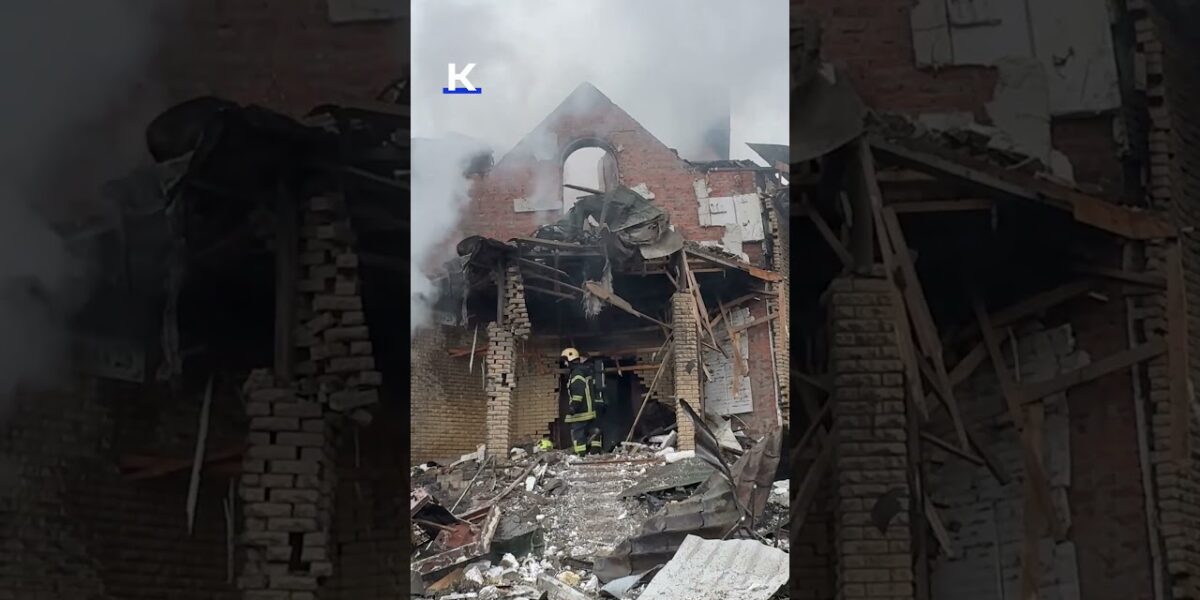
The most tragic consequence of the attack unfolded in the town of Fastiv, located approximately 60 kilometers southwest of Kyiv. A building there suffered a direct hit, leading to its collapse and claiming the life of a 49-year-old man. Kyiv Oblast governor Mykola Kalashnyk confirmed the fatality and reported that seven other individuals were injured in Fastiv alone. Across the entire Kyiv Oblast, the toll was even higher, with a total of 15 people sustaining injuries, including four children, highlighting the indiscriminate nature of these attacks and their devastating impact on the most vulnerable members of society.
In Kyiv city, Mayor Vitali Klitschko also reported additional casualties, confirming that a woman and a child were among those injured. These incidents paint a grim picture of the immediate human cost, with families torn apart and lives irrevocably altered by the violence. Beyond the immediate physical injuries, the psychological trauma inflicted upon survivors and witnesses of such intense bombardments is profound and long-lasting, contributing to a widespread mental health crisis across the war-torn nation.
Ukraine’s Air Defense: A Shield Against Overwhelming Odds
Despite the tragic outcomes, the Ukrainian Air Force demonstrated remarkable resilience and capability in countering the massive aerial onslaught. Officials reported successfully downing 33 of the 50 incoming missiles and an impressive 274 of the 297 long-range kamikaze drones. This high interception rate, particularly against the swarm of drones, underscores the continuous improvement and effectiveness of Ukraine’s air defense network, bolstered by crucial international support.
The deployment of advanced Western air defense systems, such as Patriot, NASAMS, IRIS-T, and Gepard, alongside Ukraine’s existing Soviet-era S-300s, has been instrumental in protecting Ukrainian skies. However, the sheer volume of attacks, as exemplified by this incident, places immense strain on these systems and their operators, consuming valuable interceptor missiles and requiring constant vigilance. The battle for air superiority, or at least air denial, remains a critical aspect of the broader conflict, with both sides continually adapting their tactics.
Targeting Critical Infrastructure: Russia’s Winter Campaign
Ukrainian President Volodymyr Zelensky provided crucial insights into Russia’s strategic objectives behind this particular attack. Speaking on Sunday afternoon, he confirmed that the targets extended beyond mere civilian areas, explicitly stating that the assault aimed at energy facilities, water supply infrastructure, and railway networks. This revelation aligns perfectly with Russia’s well-documented and systematic campaign, initiated since October, to degrade Ukraine’s critical infrastructure, especially its energy and heating systems, as the country endures one of its coldest winters in years.
The deliberate targeting of energy infrastructure is a cynical tactic designed to break the will of the Ukrainian people, create humanitarian crises, and undermine the country’s economic and military capabilities. By cutting off power, heat, and water, Russia seeks to make life unbearable for civilians, hoping to sow discord and pressure the Ukrainian government into concessions. Such actions are widely condemned internationally as war crimes, particularly when they indiscriminately impact civilian populations.
Railway infrastructure, also targeted in this assault, is equally vital for Ukraine. It serves as a crucial lifeline for transporting military supplies, humanitarian aid, and civilian passengers across the vast country. Disrupting rail lines can impede troop movements, delay essential deliveries, and further isolate regions, compounding the challenges faced by a nation at war.
The Escalating Aerial Threat: A Broader Pattern of Aggression
President Zelensky’s broader assessment of Russia’s aerial aggression paints an even more alarming picture of the scale and intensity of the attacks. He revealed that in the week leading up to this particular barrage, Russia had launched an staggering total of more than 1,300 attack drones, over 1,400 guided aerial bombs, and 96 missiles of various types, including dozens of ballistic ones, against Ukraine. These figures underscore a significant escalation in Russia’s use of aerial weaponry, signaling a deliberate strategy to overwhelm Ukrainian defenses and inflict maximum damage.
The introduction and extensive use of guided aerial bombs, often referred to as KABs (Korrektirovannaya Aviatsionnaya Bomba), represents a particularly dangerous development. These bombs, typically Soviet-era ‘dumb bombs’ retrofitted with guidance kits (GPS/GLONASS), allow Russian aircraft to strike targets from a standoff distance, reducing the risk to their own planes while delivering devastating payloads. Their high destructive power and increasing frequency of use pose a significant challenge for Ukrainian forces, particularly on the front lines.
The consistent use of ballistic missiles, known for their high speed and difficult-to-intercept trajectories, further complicates Ukraine’s defensive efforts. Combined with the slower, but numerous, kamikaze drones (primarily Iranian-made Shahed-131/136s), these attacks create a multi-layered threat that tests the limits of even the most sophisticated air defense systems.
The Strategic Implications of Russia’s Air Campaign
Russia’s persistent and escalating air campaign against Ukraine’s civilian infrastructure and population serves multiple strategic objectives. Firstly, it aims to degrade Ukraine’s military-industrial capacity and logistics by targeting facilities and transportation networks that support the war effort. Secondly, it seeks to exhaust Ukraine’s air defense resources, forcing them to expend valuable interceptors on drones and less critical targets, thus creating vulnerabilities for more strategic strikes.
Thirdly, and perhaps most cynically, it is a psychological warfare tactic designed to break the morale of the Ukrainian people. By creating widespread suffering, power outages, and a constant sense of fear, Moscow hopes to erode public support for the war and pressure the Ukrainian government into negotiating on Russia’s terms. However, historical evidence from this conflict and others suggests that such tactics often have the opposite effect, hardening resolve and fostering greater unity among the targeted population.
Furthermore, these attacks serve as a demonstration of force, intended to project Russian power and influence, both domestically and internationally. They send a message that despite sanctions and international condemnation, Russia retains the capability and willingness to inflict severe damage on its adversary.
International Response and the Call for More Air Defense
Each major Russian attack on Ukrainian cities inevitably triggers a fresh wave of international condemnation and renewed calls for increased military aid, particularly in the realm of air defense. Western allies have repeatedly pledged their unwavering support to Ukraine, recognizing that robust air defense is paramount to protecting lives and critical infrastructure.
However, the sheer demand for air defense systems and interceptor missiles far outstrips supply. Manufacturing these sophisticated weapons takes time, and many allied nations are hesitant to deplete their own strategic reserves. The ongoing debate surrounding sustained military assistance, particularly in the United States, adds another layer of uncertainty to Ukraine’s long-term defensive capabilities.
Experts consistently highlight the need for a multi-layered air defense approach, combining short-range, medium-range, and long-range systems to effectively counter the diverse array of threats posed by Russian missiles and drones. The ability to detect, track, and intercept these munitions requires not only advanced hardware but also highly trained personnel and seamless integration of intelligence and command systems.
Resilience in the Face of Adversity
Despite the relentless bombardment and the immense challenges it presents, the Ukrainian people and their government continue to demonstrate extraordinary resilience. Utility workers, often referred to as ‘energy heroes,’ work tirelessly, frequently under fire, to repair damaged infrastructure and restore essential services. Communities come together to support those affected, providing shelter, aid, and comfort.
The resolve to resist and rebuild remains strong, even as the war grinds on. Each attack, while inflicting pain and destruction, also serves to reinforce Ukraine’s determination to defend its sovereignty and choose its own future, free from Russian aggression. The international community’s continued solidarity and practical support are crucial in enabling Ukraine to withstand these brutal assaults and ultimately prevail.
Conclusion: A War of Attrition in the Skies
The February 22nd attack on Ukraine, with its tragic civilian casualties and deliberate targeting of critical infrastructure, is a grim illustration of the ongoing war of attrition being waged in the skies above Ukraine. Russia’s strategy of overwhelming air defenses with combined missile and drone barrages, aimed at terrorizing civilians and crippling essential services, continues to pose an existential threat to the nation.
While Ukraine’s air defense forces continue to achieve impressive interception rates, the sheer volume and persistence of Russian attacks demand unwavering international support in the form of advanced air defense systems and a steady supply of interceptor missiles. The ability of Ukraine to protect its skies and its people remains a critical determinant of the conflict’s trajectory and the nation’s ability to endure and ultimately rebuild.
As the conflict enters another challenging phase, the world watches as Ukraine stands firm, defending its freedom against a relentless aggressor, with each day bringing new tests of its resolve and the enduring strength of its international partnerships.
Source: Russia launches mass missile attack, killing 1, injuring 17 (YouTube)

Related Articles


Iran-Made Drones Fuel Ukraine War, Stirring Kyiv Resident
A Kyiv resident with Iranian roots describes the emotional toll of seeing Iranian-made drones used by Russia in Ukraine. He shares his deep connection to Ukraine and the difficult personal conflict the war has created.


Hungary Ousts Putin Ally, Shifting EU-Russia Dynamics
Hungary has elected a new prime minister, signaling a significant geopolitical shift away from its close ties with Moscow. The departure of Viktor Orbán's pro-Russian government is seen as a major setback for Russian influence in Europe. The new leadership is expected to align more closely with EU and NATO policies concerning Russia and Ukraine.


Ukraine Pushes Back on Territory Swap Talk
President Zelenskyy directly refuted suggestions of territorial concessions for peace, emphasizing Ukraine's need for strong security guarantees. He also addressed preparations for winter, global energy markets, and Ukraine's defensive strikes.