Rep. Boebert Stumbles on Inflation Definition, Blames ‘Green New Scam’
U.S. Representative Lauren Boebert has defined inflation as a consequence of government "squandering" tax dollars, specifically citing the "Green New Scam." Her explanation attributes rising prices to federal spending and its impact on the free market, drawing attention amid ongoing debates about economic policy.

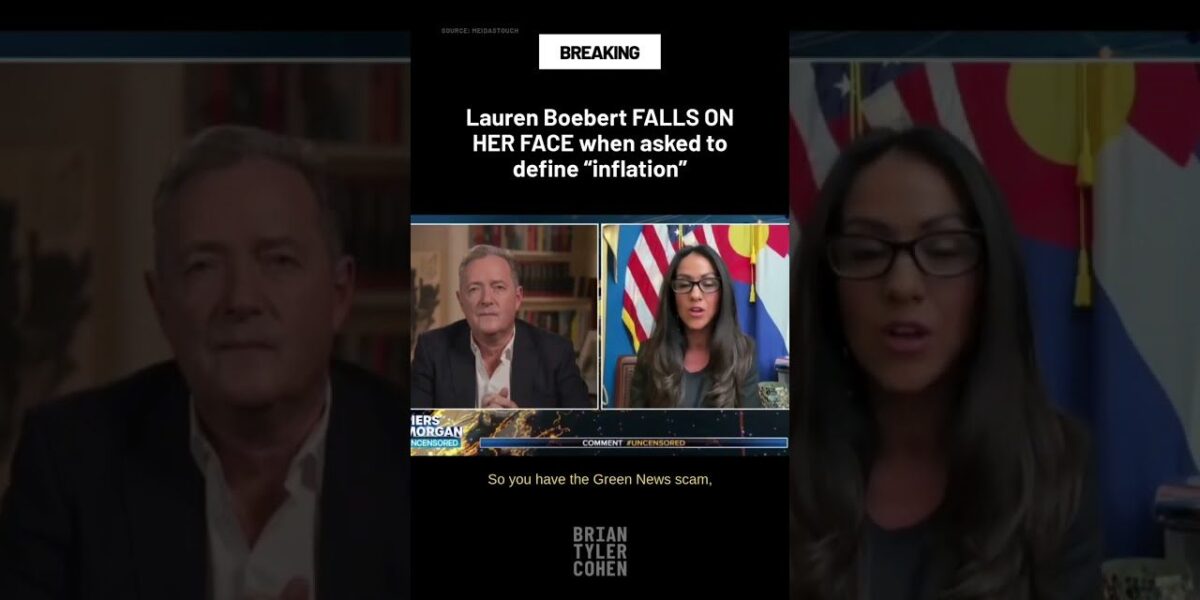
Boebert’s Inflation Explanation Draws Scrutiny
In a recent public exchange, U.S. Representative Lauren Boebert faced questions regarding the definition of inflation, offering an explanation that has since drawn considerable attention and criticism. When asked to define the economic term, Boebert attributed rising prices primarily to government spending, specifically referencing what she termed the “Green New Scam” and the federal government’s alleged “squandering” of tax dollars.
Defining Inflation: A Complex Economic Concept
Inflation, a core concept in economics, is generally understood as a sustained increase in the general price level of goods and services in an economy over a period of time. When the general price level rises, a unit of currency buys fewer goods and services; consequently, inflation reflects a reduction in the purchasing power per unit of money. While various factors can contribute to inflation, including supply and demand imbalances, increased production costs, and monetary policy, Boebert’s explanation focused almost exclusively on government expenditure.
Boebert’s ‘Green New Scam’ Argument
The congresswoman’s response linked inflation directly to government spending on initiatives like the “Green New Scam,” a term she used to describe environmental policies aimed at transitioning to renewable energy. She stated, “So, you have the Green New Scam, hundreds of billions of dollars spent there um to provide affordable energy. Uh and it was not affordable. It was never free. It was never discounted. That money was taken from the people and forced into the system. It wasn’t a free market.”
“Well, inflation is when uh when the the price of things um is is over um is is too expensive because of of um the uh federal government uh really squandering the tax dollars.”
Rep. Lauren Boebert
Boebert’s argument suggests that government investment in green energy, which she characterized as wasteful spending, leads to inflation by removing funds from the populace and injecting them into the system in a manner that distorts the free market. This perspective places the onus of price increases squarely on governmental fiscal actions rather than broader economic forces.
Economic Perspectives on Inflation Drivers
Mainstream economic theory identifies several potential drivers of inflation. These include:
- Demand-Pull Inflation: Occurs when aggregate demand in an economy outpaces aggregate supply. This can happen when consumers are flush with cash, leading them to spend more, or when government spending increases significantly.
- Cost-Push Inflation: Arises when the costs of production increase, forcing businesses to raise prices to maintain profit margins. Factors such as rising energy prices, supply chain disruptions, or increased wages can contribute to this.
- Built-In Inflation: Often linked to adaptive expectations, where people expect current inflation rates to continue and factor this into their wage and price decisions, creating a wage-price spiral.
- Monetary Policy: The actions of central banks, such as adjusting interest rates or the money supply, can influence inflation levels. An expansionary monetary policy can, under certain conditions, lead to higher inflation.
While government spending, particularly large-scale fiscal stimulus or investments, can contribute to demand-pull inflation if the economy is operating near full capacity, attributing inflation solely to such spending, especially when framed as “squandering,” represents a particular ideological viewpoint. The “Green New Deal” and similar initiatives are complex policy proposals with debated economic impacts, and their direct, singular causal link to current inflation rates is a subject of ongoing economic discussion and analysis.
Context and Broader Implications
The definition and causes of inflation have become a highly politicized topic, particularly in recent years as many economies have experienced elevated price increases. For politicians, addressing inflation is a critical concern for voters, and explanations often align with their broader economic philosophies. Republicans, like Representative Boebert, frequently emphasize government spending and regulation as primary inflationary drivers, advocating for fiscal restraint and free-market principles. Democrats, on the other hand, often point to supply chain issues, global events, and corporate pricing power as significant contributors, while also sometimes acknowledging the role of fiscal policy.
Representative Boebert’s response reflects a common narrative within conservative circles that views government intervention and spending, especially on progressive initiatives, as inherently inflationary and detrimental to economic freedom. Her use of the term “Green New Scam” further signals a strong ideological opposition to such policies. The debate over inflation’s causes is crucial because it informs the policy solutions proposed by different political factions. If inflation is primarily caused by government spending, then reducing that spending is the logical solution. If it’s driven by supply chain issues, then addressing those bottlenecks becomes paramount.
Looking Ahead
As inflation continues to be a significant economic concern for households and policymakers, the discourse surrounding its causes and solutions is likely to remain intense. Future economic data, central bank actions, and legislative debates will provide further insights into the effectiveness of various approaches to managing price stability. Public understanding and the political framing of inflation will undoubtedly play a crucial role in shaping economic policy decisions in the coming months and years.
Source: Lauren Boebert FALLS ON HER FACE when asked to define inflation (YouTube)

Related Articles
High Debt Forces Fed’s Hand, Paving Way for Rate Cuts
Massive U.S. debt is limiting the Federal Reserve's ability to fight inflation, potentially forcing interest rate cuts. This delicate balancing act risks higher inflation and impacts the real estate market, creating both challenges and opportunities.


US Imposes Iran Port Blockade; Peace Talks Loom Amid Tensions
U.S. forces have fully implemented a blockade on Iranian ports, halting trade amid escalating Middle East tensions. Peace talks between the U.S. and Iran are reportedly on the horizon, though Iran's nuclear program remains a key obstacle. Meanwhile, historic direct talks between Israel and Lebanon took place in Washington, marking a significant diplomatic step.

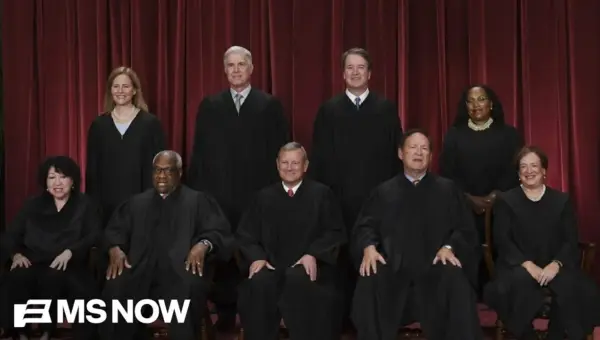
Supreme Court’s Legitimacy Tested: A Look Inside
The Supreme Court is increasingly seen as the "last branch standing" to resolve national disputes, a role that strains its legitimacy. Author Sarah Isker's new book, 'Last Branch Standing,' examines the court's internal dynamics and its complex relationship with public opinion and other branches of government.