Rep. Boebert’s Inflation Explanation Sparks Bipartisan Criticism
Representative Lauren Boebert's recent explanation of inflation on live TV has sparked widespread criticism. Her definition, which attributed rising prices solely to government "squandering" and environmental policies, was directly challenged by the interviewer, who provided a more standard economic explanation. The incident highlights the ongoing debate over economic communication in politics.

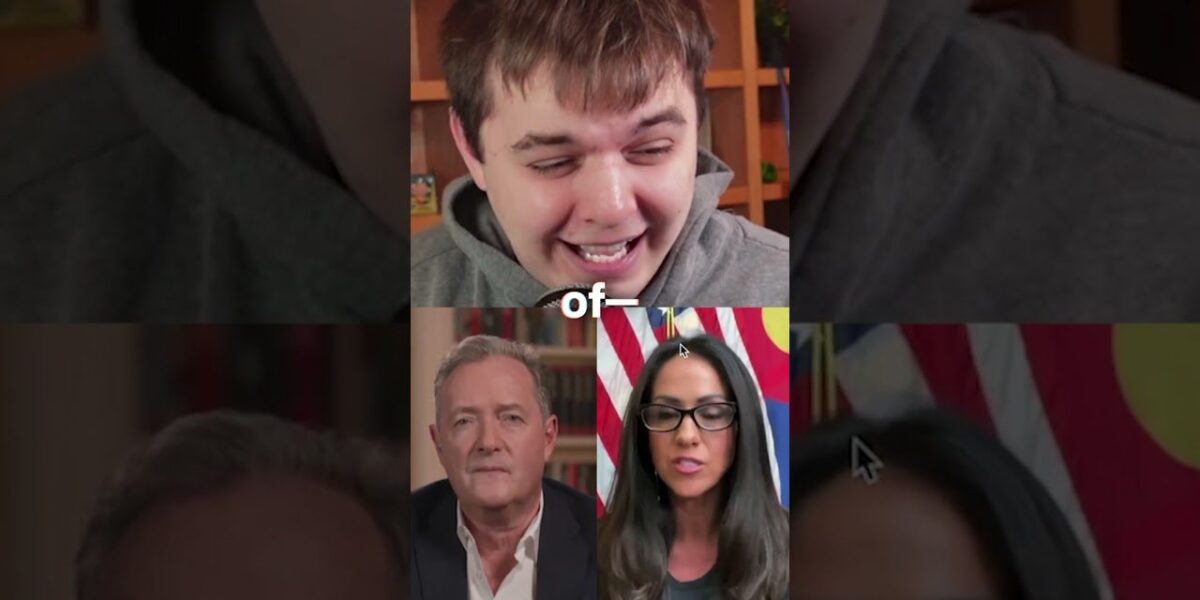
Boebert’s Inflation Definition Draws Scrutiny
In a recent live television appearance, U.S. Representative Lauren Boebert’s explanation of inflation has drawn widespread criticism and bipartisan commentary. When asked to define inflation, the Colorado Republican offered a definition that focused heavily on government spending and the “Green New Scam,” a term she used to deride environmental initiatives. Boebert stated, “Well, inflation is when uh when the the price of things um is is over um is is too expensive because of of um the uh federal government uh really squandering the tax dollars. So, you have the Green New Scam.”
Expert and Opponent Reactions
Her explanation was immediately met with a sharp rebuke from the interviewer, who described the response as “incredibly brutal.” The interviewer then provided a more conventional economic definition: “The real answer is just very simple. You don’t have to be an econ major. You don’t even have to go in depth. It’s just the general increase in prices for services or goods and services over time.”
The interviewer further elaborated on the nuances of inflation, noting that a “healthy level of inflation” is often desired in a stable economy. This perspective contrasts with a common stance among some Republicans who, according to the interviewer, believe that prices should be decreasing or that inflation should be at zero. “A lot of Republicans think that it’s healthy when prices go down or that prices should be going down or that inflation should be zero. But no, there is a healthy level of inflation that the Fed wants to reach,” the interviewer explained.
Economic Context and Inflation’s Real Drivers
Economists generally define inflation as a sustained increase in the general price level of goods and services in an economy over a period of time. When the general price level rises, each unit of currency buys fewer goods and services; consequently, inflation reflects a reduction in the purchasing power per unit of money. This can be caused by a variety of factors, including increased consumer demand, rising production costs (such as wages or raw materials), and expansionary monetary policy by central banks.
While government spending can indeed influence inflation, particularly if it leads to an excessive increase in the money supply without a corresponding increase in the production of goods and services, attributing inflation solely to government “squandering” and specific policy initiatives like environmental programs oversimplifies a complex economic phenomenon. The interviewer’s counterpoint highlights that moderate inflation is often a target for central banks, such as the U.S. Federal Reserve, which typically aims for an annual inflation rate of around 2 percent. This level is seen as conducive to economic growth, encouraging consumer spending and business investment.
Political Ramifications and Public Perception
The incident involving Representative Boebert underscores the ongoing political debate surrounding economic policy and the communication of complex issues to the public. In an era of high inflation, which has impacted household budgets significantly, clear and accurate explanations of its causes and potential solutions are crucial for public trust and informed decision-making. Boebert’s remarks, however, have been widely interpreted as a simplification that aligns with a particular partisan narrative rather than a comprehensive economic analysis.
The criticism suggests a gap between Boebert’s public messaging and established economic principles, potentially affecting how her constituents and the broader public understand the economic challenges facing the nation. The interviewer’s direct correction and explanation serve as a stark illustration of the scrutiny that public figures face when discussing economic matters on a national stage.
Looking Ahead
As inflation remains a key concern for voters and policymakers, the clarity and accuracy of economic discourse will continue to be under a microscope. Future discussions involving Representative Boebert and other political figures on economic issues will likely be closely watched, with an emphasis on whether their explanations align with mainstream economic understanding or continue to reflect simplified, politically charged narratives. The effectiveness of political communication on complex economic topics will be a critical factor in shaping public opinion and policy responses in the coming months.
Source: Lauren Boebert Humiliates Herself On Live TV #politics #fyp #new (YouTube)

Related Articles
High Debt Forces Fed’s Hand, Paving Way for Rate Cuts
Massive U.S. debt is limiting the Federal Reserve's ability to fight inflation, potentially forcing interest rate cuts. This delicate balancing act risks higher inflation and impacts the real estate market, creating both challenges and opportunities.

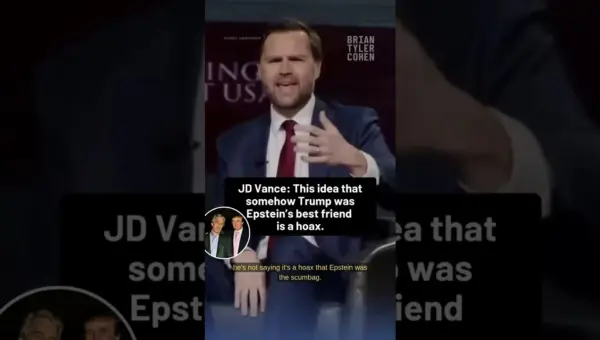
Vance Defends Trump: Epstein Friendship Claim Is A Hoax
Senator JD Vance asserts that claims of Donald Trump being close friends with Jeffrey Epstein are a "hoax." Vance cited emails suggesting a mutual dislike and even Trump reporting Epstein to authorities, arguing this refutes the "best friend" narrative pushed by Democrats.


Trump’s Grip Weakens as Allies Falter, Democracy’s Future Hinges
Donald Trump's approval ratings are plummeting, even among his core supporters, signaling a potential collapse of the MAGA movement. Global events, like Hungary's shift to democracy, and domestic economic woes are fueling discontent and opening doors for broader political coalitions.