Unraveling the Narrative: Scrutiny Mounts Over Donald Trump’s Public Appearances and Cognitive Acuity
Recent public appearances by Donald Trump have intensified scrutiny over his cognitive acuity, with critics highlighting a series of incidents including verbal stumbles, memory lapses, and instances of public drowsiness over a ten-day period. These observations, alongside past concerns and serious allegations related to the Epstein files, fuel a broader debate about his fitness for office amidst his renewed presidential bid. The cumulative effect of these events prompts questions about his capacity for the demanding role of president.

Unraveling the Narrative: Scrutiny Mounts Over Donald Trump’s Public Appearances and Cognitive Acuity
In the whirlwind of contemporary American politics, few figures command as much attention and generate as much debate as former President Donald J. Trump. As he navigates a landscape rife with legal challenges and a renewed bid for the White House, his public appearances and statements have come under intense scrutiny, particularly concerning his cognitive acuity. Recent observations, compiled chronologically over a span of approximately ten days, have fueled a growing discourse among critics and commentators about what they perceive as accelerating signs of decline, marked by verbal stumbles, memory lapses, and instances of public drowsiness.
This article delves into a series of incidents highlighted by a recent media analysis, providing context, exploring potential implications, and examining the broader narrative surrounding a figure whose every move is dissected on the national and international stage. While distinguishing between a long-standing, unconventional communication style and genuine cognitive shifts remains a complex challenge, the cumulative weight of these observations has prompted a renewed focus on the fitness for office of one of the nation’s most polarizing political personalities.
The Unfolding Narrative: A Chronology of Concerns
February 11th: ‘Beautiful Clean Coal’ and Verbal Stumbles
The timeline of recent observations begins on February 11th, with an event at the White House where Donald Trump addressed the topic of coal. In a moment that quickly gained traction online, he was observed struggling with his words, articulating the need for coal to be rebranded as ‘beautiful clean coal.’ The former president stated, “I’m proud to officially name the undisputed… when did this come out, Mr. Speaker? The undisputed champion of beautiful clean coal. We have to proceed always. I don’t use the word coal. You know, it needs a PR job because it had a bad reputation for a while. So, we’re not allowed to say the word coal anymore. It has to be preceded by beautiful clean coal. Okay, we’re cleaning it up. Very good.”
This instance, characterized by apparent hesitation and a somewhat circuitous explanation, immediately drew attention. For critics, it exemplified a pattern of verbal fumbling that they suggest has become more pronounced. While proponents might dismiss such moments as typical of Trump’s improvisational speaking style, detractors view them as indicators of deeper cognitive challenges. The focus on ‘clean coal’ itself reflects a long-standing policy stance of the Trump administration, prioritizing fossil fuels and downplaying environmental concerns, a position that has consistently drawn criticism from environmental advocates and scientists who point to the undeniable environmental impact of coal extraction and combustion.
February 12th: Windmills and Unconventional Claims
The following day, February 12th, saw Trump continue his focus on energy, again at a White House event. During this appearance, he made statements regarding windmills that sparked further bewilderment. He asserted, “Between immigration and because of, you know, environmental things like the windmills which are taking over, the people hate them. The energy is by far the most expensive and we’re fighting very hard to make sure that they don’t get built. I hope we don’t have one built during my administration. We inherited some contracts where they’ve gone down the line a little bit. We’re trying to terminate them and for a lot of different reasons. One of the reasons is you had mentioned it’s endangerment for the military. It’s also endangerment for airliners. So we’re trying to take care of those situations now. They should have never been allowed in the first place.”
The claim that windmills pose a danger to airliners, alongside their perceived high cost and unpopularity, stands in stark contrast to prevailing scientific consensus and the broader global push towards renewable energy. While challenges certainly exist in large-scale renewable energy projects, the notion of windmills endangering airliners is largely unfounded in aviation safety discussions. This statement, coupled with his consistent dismissal of climate change and advocacy for fossil fuels, highlights a persistent divergence from established environmental policy and scientific understanding. For observers concerned about his cognitive state, such claims raise questions about his grasp of factual information and his ability to articulate policy positions based on evidence.
February 13th: Fort Bragg and the Battleship Boast
Later in the week, on February 13th, Trump visited Fort Bragg, North Carolina, where he addressed military personnel. During his speech, he recounted an anecdote about battleship design, making extraordinary claims about his personal involvement and the capabilities of future vessels. He stated, “So I said, ‘What about bringing them back?’ They said, ‘Sir, it would be no good.’ Why do you say that? The new battleship that we have, which I’ve seen and helped design, I put a little more spirit in the hull. A little more give me a little bit more hull and I want that ship to look gorgeous. You know, forget about stealth. They say, ‘Oh, it’s stealth. They design ugly equipment for stealth.’ Well, we’re designing great-looking equipment, also stealth. But I said, ‘Uh, well, what about bringing back, sir?’ The new ships, the new battleships that we have almost very soon under construction will be, listen to this, 100 times more powerful than the ships that we got to see in the 1940s.”
These remarks, combining personal claims of design input with seemingly exaggerated technological advancements, were interpreted by critics as further evidence of a disconnect from reality. While presidents certainly play a role in defense policy and budget allocation, direct involvement in the aesthetic and structural design of advanced naval vessels is highly unlikely. The assertion of a new ship being “100 times more powerful” than 11940s counterparts, while perhaps a rhetorical flourish, was seen by some as an example of hyperbole that borders on the nonsensical, particularly when juxtaposed with the technical realities of modern naval warfare and stealth technology. The commentator observed that such instances make it difficult to discern whether Trump is exhibiting cognitive decline or simply adhering to his characteristic style of grandiosity and self-promotion.
February 13th: Air Force One and Endorsement Amnesia
Still on February 13th, while speaking to the press on Air Force One, a significant memory lapse was observed. Trump discussed the congressional race in Marjorie Taylor Greene’s district, stating, “We have a lot of people that want to take Marjorie Trader Greene’s place and many, many candidates and I have to choose one and they say whoever I endorse is going to win. But we have a lot of good candidates want to take her place.” This statement became problematic because, as highlighted by the media analysis, Trump had, in fact, already endorsed a candidate – Clay Fuller – in that very race approximately ten days prior. The previous endorsement had been a public declaration of support for “America first patriot Klay Fuller who’s running to represent the wonderful people of Georgia’s 14th Congressional District.”
This specific incident, a clear contradiction within a short timeframe regarding a politically significant endorsement, was presented as a particularly concerning sign. In the high-stakes world of political endorsements, forgetting such a recent and public act is unusual for any major political figure, let alone a former president actively campaigning. For those scrutinizing his cognitive state, this memory lapse moved beyond mere verbal stumbles into the realm of concrete factual recall, suggesting a potential impairment in short-term memory or executive function.
February 13th: Fox News Interview and ‘Greatest Period’ Declaration
Rounding out the incidents on February 13th, an interview with Donald Trump aired on Fox News, though its exact recording date was not specified. In this interview, Trump declared, “This is the greatest period of anything that we’ve ever we’ve ever seen. Plus, we have a powerful military, a great military, strong that I rebuilt in my first term because I had a great first term.”
While such broad, self-congratulatory statements are characteristic of Trump’s rhetoric, the commentator drew attention to a broader White House practice during his presidency: the alleged cessation of releasing presidential speech transcripts to the media, providing only video. This, the commentator argued, was precisely because “if you read this guy, like if you have to read what he says, it’s so much worse from a cognitive decline standpoint.” The implication is that the written word exposes a level of incoherence or disjointed thought that can be somewhat masked by the delivery in video format. This observation, if accurate, suggests an awareness within the administration itself of the potential for Trump’s verbal patterns to be perceived negatively when stripped of visual and auditory context.
Skipping the Weekend: A Return to Public Scrutiny
After a brief hiatus from the intense public spotlight over Valentine’s weekend, the observations resumed with renewed intensity.
February 19th: Georgia Rally – Anguish and Executive Overreach
On February 19th, Donald Trump held a rally in North Georgia. According to the commentator, his appearance was notable: “he looks like I mean, he is sweating. He is orange. He is It’s bad.” During this appearance, Trump passionately discussed tariffs, asserting a broad executive authority that he believed he possessed. He declared, “Without tariffs, what would you do? You know what? Everybody would be bankrupt. Everybody, the whole country would BE BANKRUPT. AND I HAVE TO WAIT FOR THIS DECISION. I’VE BEEN waiting forever. Forever. And the language is clear that I have the right to do it as president. I have the right to put tariffs on for national security purposes. Countries that have been ripping us off for years. You know what they were doing? Using tariffs.”
This emphatic declaration of executive power regarding tariffs was later contradicted by legal realities. The commentator pointed out that the Supreme Court would eventually rule against Trump, indicating that he “certainly doesn’t have the broad executive authority he thinks he does.” This incident underscored a recurring theme in Trump’s presidency and post-presidency: a perceived desire to expand presidential powers beyond constitutional limits, often clashing with the legislative authority of Congress and the oversight of the judiciary. His visible distress and aggressive rhetoric at the rally were interpreted by some as signs of frustration and a potential struggle to reconcile his perceived authority with the checks and balances of the American legal system.
February 19th: The ‘Board of Peace’ Meeting and Public Drowsiness
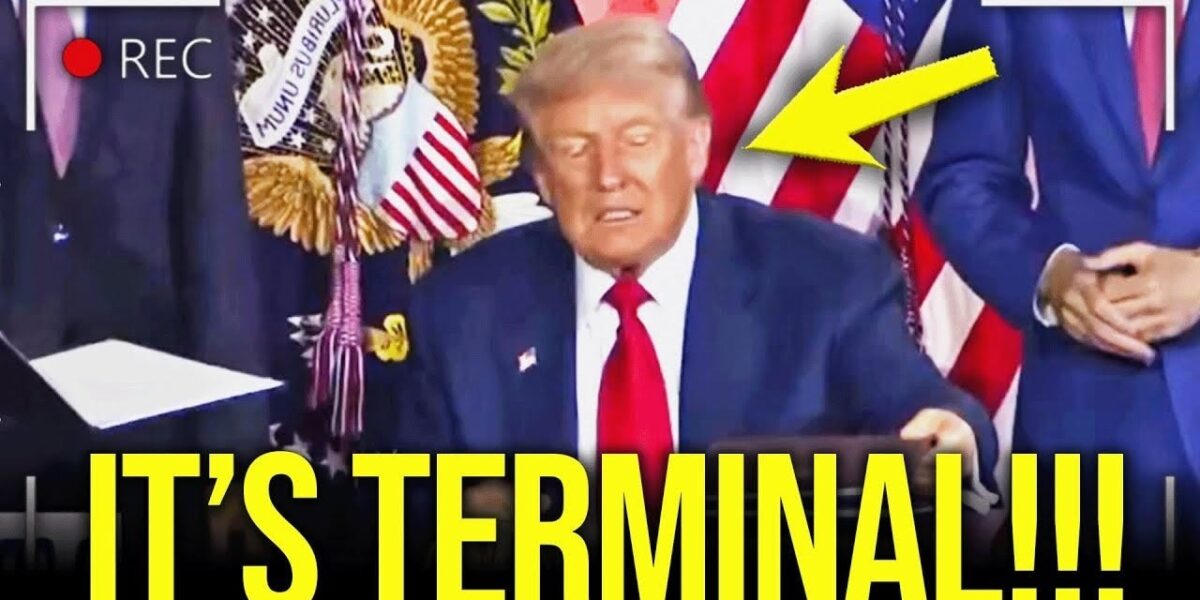
Perhaps one of the most visually striking incidents occurred also on February 19th, when Donald Trump was observed falling asleep during what was described as an “inaugural board of peace meeting” in Washington D.C. Video footage captured him nodding off, with his eyes closing for extended periods. The commentator juxtaposed this with the intense media scrutiny typically directed at President Joe Biden for similar instances, noting, “if Joe Biden even for a second closed his eyes, it was Fox News 24/7. He has very clearly nodded off in multiple meetings over the last few weeks. He is nodding off.”
The visual evidence of public drowsiness, particularly during an official meeting, is a significant concern for any public official, especially one seeking the highest office. While fatigue can affect anyone, a pattern of such incidents, as alleged by the commentator, raises questions about stamina, alertness, and overall capacity to handle the demanding schedule of a president. The perceived disparity in media coverage between Trump and Biden on similar issues also highlights the partisan lens through which much of political discourse is filtered, where actions by one side are scrutinized far more heavily than comparable actions by the other.
A Pattern Emerges: Beyond Recent Incidents
The recent chronological review, according to the commentator, is not an isolated set of events but rather an acceleration of a pre-existing pattern. Past incidents, such as Trump falling asleep next to Senator Marco Rubio during an earlier event, were recalled to underscore the consistency of these observations. The commentator also mentioned other physical signs, such as “bruises of his hands, the swelling of his ankles,” contributing to a broader picture of potential health concerns for a man of his advanced age.
The challenge for observers, as articulated in the analysis, lies in the “double-edged sword” of the relentless news cycle. The sheer volume and speed of political news often mean that individual incidents, no matter how striking, are quickly superseded by the next development, preventing a sustained focus on a consistent pattern. This rapid turnover, according to the commentator, allows many of Trump’s perceived missteps or cognitive slips to be overlooked or quickly forgotten by the wider public and media.
Furthermore, the commentator expressed a personal conviction that watching a full-length Trump speech provides a far more profound insight into his cognitive state than isolated clips. “It is… so much worse watching it for a full hour than these clips… It’s so much worse when you watch him for a full hour. He is truly just awful to listen to. It’s so hard to keep up with.” This sentiment suggests that the cumulative effect of his speaking patterns – the rambling, digressions, and apparent incoherence – becomes much more evident over a longer duration, making it harder to dismiss as mere stylistic quirks.
Broader Implications and Unanswered Questions
The ongoing scrutiny of Donald Trump’s public appearances and cognitive state carries significant implications, both domestically and internationally. The ability of a president to make sound, coherent decisions, to articulate clear policy, and to engage effectively with global leaders is paramount. Any perceived deficit in these areas can undermine public confidence, affect national security, and potentially weaken America’s standing on the world stage.
The Epstein Files: A Lingering Shadow
Beyond the immediate observations of cognitive function, the commentator also raised serious allegations concerning Donald Trump’s purported connection to the Jeffrey Epstein scandal. The analysis highlighted a statement by Congressman Jared Moskowitz, who asserted, “Trump’s name appears more times in the Epstein files than God’s name appears in the book about God… Trump’s name also appears more times in the Epstein file than Harry Potter’s name appears in the seven books about Harry Potter.”
These startling claims, if accurate, suggest a significant and pervasive presence of Trump’s name within the unsealed documents related to the disgraced financier. The commentator further alleged a “cover-up” by the U.S. Department of Justice, contrasting it with other countries that are reportedly “arresting people, launching investigations into these things” associated with the Epstein files. The presenter of the transcript asserts, “there is no question that Donald Trump knew what was happening with Jeffrey Epstein, didn’t say anything about it, and at some level helped facilitate it.” These are grave accusations that, if proven, would have profound legal and political consequences. The public’s demand for full transparency regarding the Epstein files remains high, and any perceived obstruction of justice or cover-up by high-ranking officials would further erode trust in institutions.
Media Scrutiny and Public Perception
The challenges of reporting on a figure like Donald Trump, particularly on sensitive issues like cognitive health, are immense. The media landscape is highly polarized, and observations that might be taken as objective fact by one segment of the population are often dismissed as partisan attacks by another. This environment makes it difficult for any single narrative to gain universal acceptance, even when supported by chronological evidence.
The commentator’s observation about the lack of presidential transcript releases during the Trump administration, allegedly to obscure cognitive issues, underscores the strategic challenges in public communication. When information is tightly controlled or presented in a specific format, it raises questions about transparency and accountability, further complicating the public’s ability to form an informed opinion.
Conclusion
The recent series of public appearances and statements by Donald Trump, spanning just over a week, has reignited a critical discussion about his cognitive fitness. From verbal stumbles and unconventional claims about windmills to significant memory lapses regarding endorsements and instances of public drowsiness, these incidents, when viewed cumulatively, present a pattern that critics find increasingly concerning. While his supporters often attribute such behaviors to his unique communication style or the rigors of campaigning, the observations have prompted a deeper examination of the demands of the presidency and the qualities required for effective leadership.
As the nation approaches another pivotal election, the public discourse around the health and cognitive acuity of its leaders will undoubtedly intensify. The challenge for both the media and the electorate will be to carefully weigh the evidence, consider the context, and engage in an informed assessment of all candidates, ensuring that those who seek to lead are fully capable of meeting the immense responsibilities of the office.
Source: Trump FALLS APART as DECLINE ACCELERATES (YouTube)

Related Articles


Trump’s Allies Rebel: Conservatives Slam President’s Policies
Prominent conservative figures and lawmakers are openly criticizing President Trump's policies in 2026, signaling a growing divide within the movement. From Candace Owens questioning the Iran conflict to Senator Rand Paul challenging trade policy, a wave of dissent is challenging the president's agenda.
Trump Threatens Fed Chair Powell, Faces Nomination Blockade
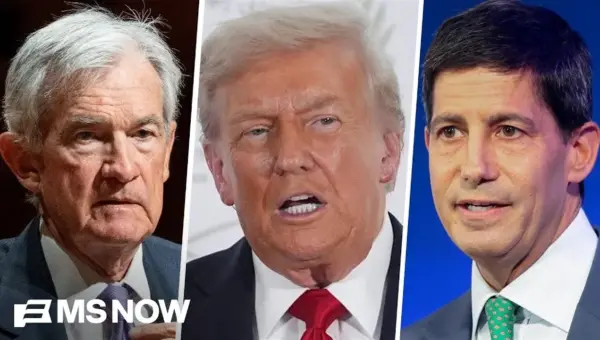
President Trump is threatening to fire Fed Chair Jerome Powell over a renovation probe, creating a political stalemate. Senator Tom Tillis is blocking Trump's nominee, Kevin Warsh, until the investigation concludes. Warsh himself faces scrutiny over his vast personal wealth, estimated between $135-226 million, raising conflict of interest concerns.

Trump’s Grip Weakens as Allies Falter, Democracy’s Future Hinges
Donald Trump's approval ratings are plummeting, even among his core supporters, signaling a potential collapse of the MAGA movement. Global events, like Hungary's shift to democracy, and domestic economic woes are fueling discontent and opening doors for broader political coalitions.