US Claims Victory, But Iran’s Navy Still Disrupts Shipping
Despite US claims of destroying Iran's conventional navy, recent ship seizures and ongoing disruptions in the Strait of Hormuz raise doubts. The situation highlights Iran's continued ability to threaten maritime traffic, challenging narratives of decisive victory and underscoring persistent regional instability.


US Claims Naval Victory Amidst Ongoing Shipping Disruptions
Recent events involving the seizure of international ships have sparked debate about the United States’ claims of a decisive victory over Iran’s naval capabilities. While US officials state that Iran’s conventional navy has been destroyed, the continued disruption of shipping lanes, including the seizure of two Greek and Mediterranean vessels, suggests a more complex reality. These incidents raise questions about the effectiveness of US actions and the true state of regional security.
US media reports have highlighted the seizure of the two international ships, leading to accusations that the situation is being exaggerated to discredit the president’s statements. However, the focus on these seizures also brings attention to Iran’s ongoing ability to disrupt maritime traffic. The argument is that if Iran’s conventional navy is truly gone, why are these disruptions still happening?
Challenging the Narrative of Total Victory
One perspective challenges the assertion that the United States has achieved a decisive win. Critics point out that the US itself has engaged in similar actions in the past, such as seizing tankers off the coast of Venezuela and closing the Strait of Hormuz. This historical context suggests that the lines between legitimate naval action and what might be considered ‘piracy’ can be blurred.
The claim that Iran’s conventional navy has been destroyed is met with skepticism. It’s argued that Iran’s Islamic Revolutionary Guard Corps (IRGC) navy possesses other means, like suicide boats and mines, which can still be used to threaten shipping. The ongoing struggle to keep the Strait of Hormuz open is presented as evidence that the US has not yet restored the previous status quo, let alone achieved a complete victory.
There is no way to say the United States has decisively won this war when the United States is struggling to open the straits. We’re not even back to the status quo yet.
The Humiliation of Unheeded Warnings
The situation is further complicated by the fact that these events occurred shortly after former President Donald Trump extended a ceasefire by three days, urging Iran to stop its aggressive actions. Iran’s continued seizure of ships and disruption of traffic despite this warning is seen as a direct defiance and a source of humiliation. The narrative of victory seems undermined when Iran openly disregards such calls for de-escalation.
The continued seizures and disruptions, even after a direct plea for calm, suggest that Iran’s ability to project power and influence regional stability remains significant. This ongoing challenge to US authority and its stated objectives in the region creates a difficult situation for American policymakers. The public perception of strength is tested when actions on the ground do not align with official declarations of success.
Why This Matters
The ongoing tension in the Strait of Hormuz and the Persian Gulf has direct implications for global trade and energy prices. The strait is a critical chokepoint for oil shipments, and any disruption can lead to significant economic consequences worldwide. The ability of Iran, or any regional actor, to threaten this vital artery of commerce remains a persistent global concern.
This situation highlights the enduring challenges in managing regional security and deterring aggressive actions. It also brings into focus the effectiveness of different military strategies and diplomatic approaches. The constant back-and-forth between claims of victory and ongoing provocations suggests that a lasting resolution remains elusive.
Implications and Future Outlook
The events raise questions about whether Iran’s asymmetric naval capabilities pose a greater threat than its conventional forces. The reliance on methods like mines and suicide boats, which are less costly to deploy, allows Iran to continue challenging larger navies. This suggests a shift in naval warfare tactics in the region.
Moving forward, the focus will likely remain on de-escalation and the secure passage of commercial vessels. The United States and its allies will need to find effective ways to counter Iran’s disruptive tactics without escalating tensions further. Diplomatic efforts to bring Iran to the negotiating table may also be crucial for long-term stability.
Historical Context
The Strait of Hormuz has historically been a flashpoint for conflict and a subject of international concern. Throughout the Iran-Iraq War, both sides targeted shipping, and in more recent decades, Iran has frequently threatened to close the strait in response to international pressure. The US Navy has maintained a significant presence in the region to ensure freedom of navigation.
The dynamic between Iran and the US in the Persian Gulf is a long-standing one, marked by periods of heightened tension and cautious diplomacy. Understanding this history is key to grasping the current challenges and the potential paths forward. The seizure of ships is not an isolated incident but part of a recurring pattern of strategic maneuvering.
The next steps in managing this volatile situation will depend on a variety of factors, including political will in both Tehran and Washington, as well as the actions of regional partners. The ability to ensure safe passage through international waters remains a paramount concern for the global community.
Source: This Is Getting UNREAL… (YouTube)

Related Articles
US Seizes Iranian Oil Tanker Amid Mideast Tensions
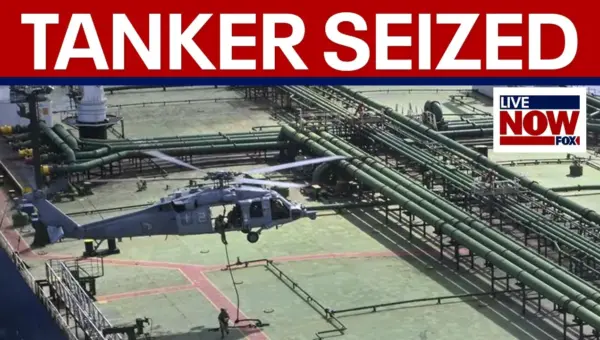
U.S. military forces seized an oil tanker, the M/T Majestic X, in the Indian Ocean for allegedly transporting oil from Iran. This operation occurs amidst rising tensions and recent ship attacks in the Strait of Hormuz, highlighting the U.S. commitment to enforcing maritime sanctions.


Iran Tensions Rise, Navy Secretary Fired Amidst Global Crises
Tensions are high as Iran attacks ships in the Strait of Hormuz, prompting continued U.S. blockades. Meanwhile, the Navy's top civilian leader was fired amidst growing international crises. Wildfires rage across the Southeast, and millions brace for severe weather as the NFL Draft kicks off.
Iran’s Nuclear Program Not Obliterated Despite Attacks, Expert Warns
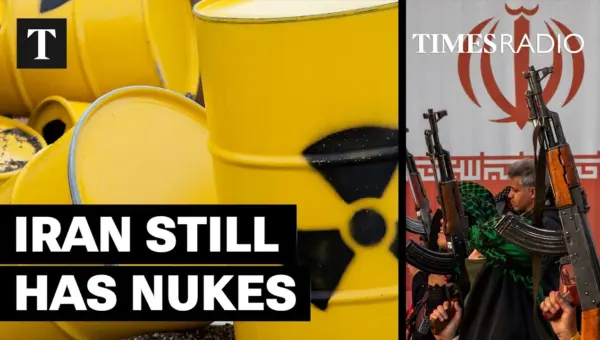
A U.S. nuclear expert believes Iran's nuclear program has not been destroyed by recent attacks, with the country still possessing enriched uranium and demanding the right to enrich more. This stance, driven by geopolitical concerns, makes a better nuclear deal than the 2015 agreement highly unlikely. Tensions also remain high with recent incidents involving shipping in the Gulf and a journalist's death in Lebanon.