Pundits Claim Trump Shows Cognitive Decline, Urge Removal
Political commentators are raising concerns about Donald Trump's cognitive state, with some likening his behavior to King Lear and suggesting he is 'deranged.' Analysts debate whether his recent policy statements, particularly regarding Iran, reflect strategic bluffing or a genuine cognitive decline. Meanwhile, China's perspective on global conflicts highlights its relative energy independence and a pragmatic, non-ideological foreign policy.

Pundits Question Trump’s Mental State Amid Policy Shifts
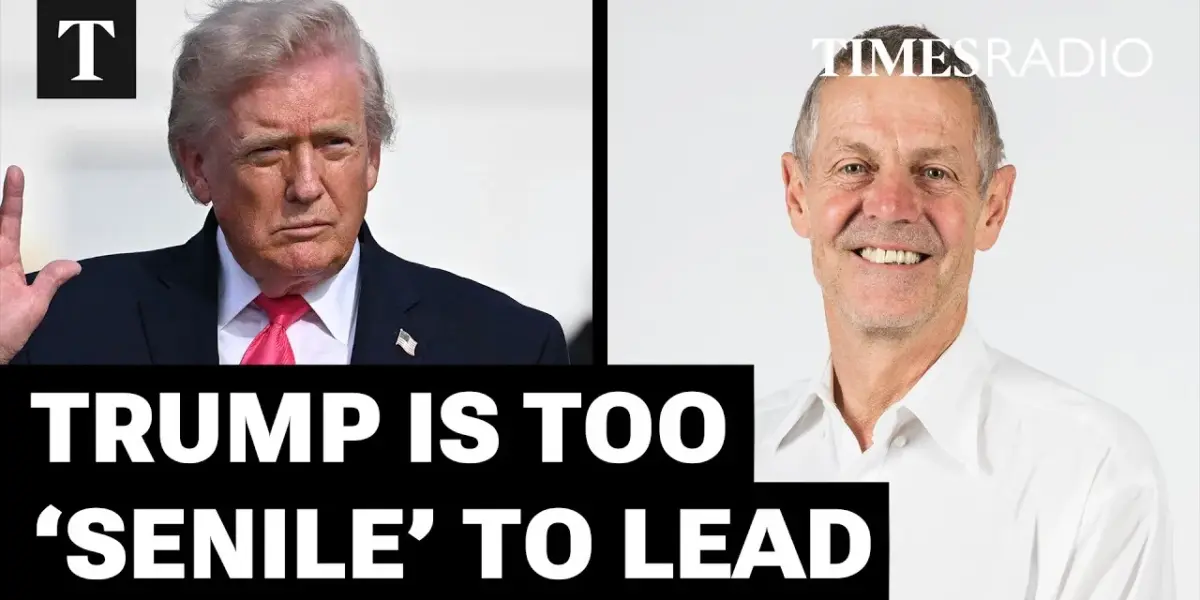
Concerns over Donald Trump’s cognitive abilities and mental state have been voiced by political commentators, who argue his recent actions and statements indicate a decline that could pose a risk. These critics suggest that Trump’s behavior, including making contradictory statements and using aggressive language, is not that of a rational individual. The debate intensified following his remarks on a potential ceasefire with Iran, which analysts described as muddled and lacking clear direction.
Journalist Matthew Parris, writing for The Times, expressed skepticism about trying to decipher Trump’s intentions or game plan. Parris suggested that attempting to analyze Trump’s mind is a futile exercise, likening his behavior to that of King Lear in Shakespeare’s play. He described Trump as becoming “wilder and stranger” in his speeches, but noted this is different from the physical decline seen in others, suggesting a descent into a form of madness rather than simple senility.
Analysis of Trump’s ‘Dealmaking’ and International Stance
On the issue of a potential ceasefire with Iran, pundit Cindy Rowlands pointed out the confusion surrounding potential negotiations. She highlighted conflicting reports about whether JD Vance was traveling to Pakistan to mediate, calling the situation “very very muddled.” Rowlands believes Trump’s statements about having “no time pressure” are an attempt to maximize his leverage as a dealmaker, projecting an image of control.
However, Rowlands argued this is likely bluffing, with both the Iranians and the international community aware of the pressure Trump faces. The implications of these actions for the global and U.S. economies, especially ahead of midterm elections, are significant. Despite wanting the conflict to end, Rowlands suggested Trump lacks a clear strategy for achieving it.
‘Deranged’ or ‘Sane’? Parris Elaborates on Trump’s Condition
Parris elaborated on his strong assertion in a column that Trump is “deranged.” He clarified that this is not merely an insult or a reflection of political disagreement, but a genuine concern about Trump’s mental functioning. Parris distinguished Trump’s condition from that of figures like Nigel Farage, whom he disapproves of but considers sane, or even Napoleon, who was effectively mad but a successful general.
Parris stated Trump is “not operating properly” and “not thinking straight,” which is deeply worrying given the global implications of his decisions. He questioned why other political figures and generals, who might perceive Trump’s condition, have not spoken out more forcefully. Parris suggested that Trump’s inner circle, deeply invested in his success, feels trapped, fearing their own downfall if Trump were to falter.
The King Lear Analogy and Underlying Narcissism
The comparison to King Lear was further explored, with one viewer noting Lear was rational after recovering from episodes. Parris acknowledged this but maintained that the underlying issue for Trump is a potent mix of narcissism and egotism, amplified by cognitive decline. He believes these traits, along with a disregard for truth, are becoming more prominent.
Rowlands added that regardless of the precise diagnosis of his mental faculties, Trump is a “loony with a lot of power.” She expressed concern over reports that Trump allegedly asked for nuclear access codes recently and was denied them by the military. While not believing he would initiate a nuclear strike, Rowlands found the mere request and subsequent denial deeply unsettling, indicating Trump is not in a good place mentally.
China’s Perspective on Global Conflicts and Energy
Iran Conflict’s Impact on China Debated
The discussion shifted to the global implications of the Iran conflict, with some U.S. commentators suggesting it’s primarily driven by competition with Beijing. Rowlands, who recently visited China, found that the conflict was a significant topic of conversation, though the perspective differed from Western views.
Chinese citizens were not primarily concerned about energy bills or petrol prices, unlike in Europe. Rowlands argued that claims of the war being “all about China” are misleading, suggesting it’s a way to rationalize inconsistent policy decisions. She noted that China has been relatively shielded from the war’s economic impact, experiencing fewer negative consequences than many other nations.
China’s Energy Independence and Foreign Policy
Rowlands clarified a common misunderstanding regarding China’s oil imports. While China buys a large percentage of Iran’s oil (around 80%), this constitutes a small fraction (less than 2%) of China’s total energy needs. Even when considering total energy imports from the Gulf, it rises to only 8%, which is uncomfortable but not existential for China.
This relative energy independence, Rowlands stated, is often underestimated. She also described China’s foreign policy philosophy as pragmatic: observing closely, speaking little, and seeking friendships broadly. China maintains strong trade relationships with countries like Saudi Arabia and the UAE, which are more valuable than its ties with Iran.
A Pragmatic, Non-Ideological Approach
Unlike Western nations, which may feel a moral obligation to promote democracy, China adopts a non-ideological stance. It seeks to build relationships with any country that allows Chinese trade, investment, and technology, regardless of their political system. This approach contrasts with the more evangelical or mission-driven foreign policies often seen in Christian-influenced cultures.
Rowlands suggested that China’s current pragmatism stems from the post-Mao era under Deng Xiaoping, who advised focusing on domestic strength and avoiding unnecessary foreign interventions. This strategy has allowed China to remain largely insulated from the direct economic fallout of international conflicts, positioning it differently from nations more dependent on global energy markets.
Source: Trump Is In Cognitive Decline And Must Be Removed | Matthew Parris (YouTube)

Related Articles


Pence Slams Trump’s Pope Feud, Questions US Global Role
Former Vice President Mike Pence has called Donald Trump's use of AI images and language depicting him as Jesus-like "offensive." Pence also criticized current administration policies on Ukraine and questioned the Republican Party's shift towards isolationism.
Is the American Dream Dying? Tariffs, Trump, and Political Distractions
Americans are growing disillusioned as political distractions overshadow real economic struggles. Tariffs burden small businesses, while foreign policy debates obscure domestic needs like affordable healthcare. The promise of the American dream fades as politicians prioritize blame over solutions.
Trump’s Health: Where’s The Physical Report?
Donald Trump's annual physical results from last April remain unreleased, fueling public discussion about his cognitive health. While Trump has spoken about cognitive tests as a challenge he excelled at, experts note these tests, like the MoCA, are designed to detect signs of cognitive impairment, not measure intelligence. The transparency of a leader's health is crucial for public trust.