NASA’s Roman Telescope Set for Early September Launch
NASA's Nancy Grace Roman Space Telescope is fully assembled and set for an early September launch, eight months ahead of schedule and under budget. This powerful observatory will explore dark matter, dark energy, and search for potentially habitable exoplanets with unprecedented speed and detail. Roman's discoveries will complement existing telescopes like Hubble and James Webb, offering a more complete picture of the universe.

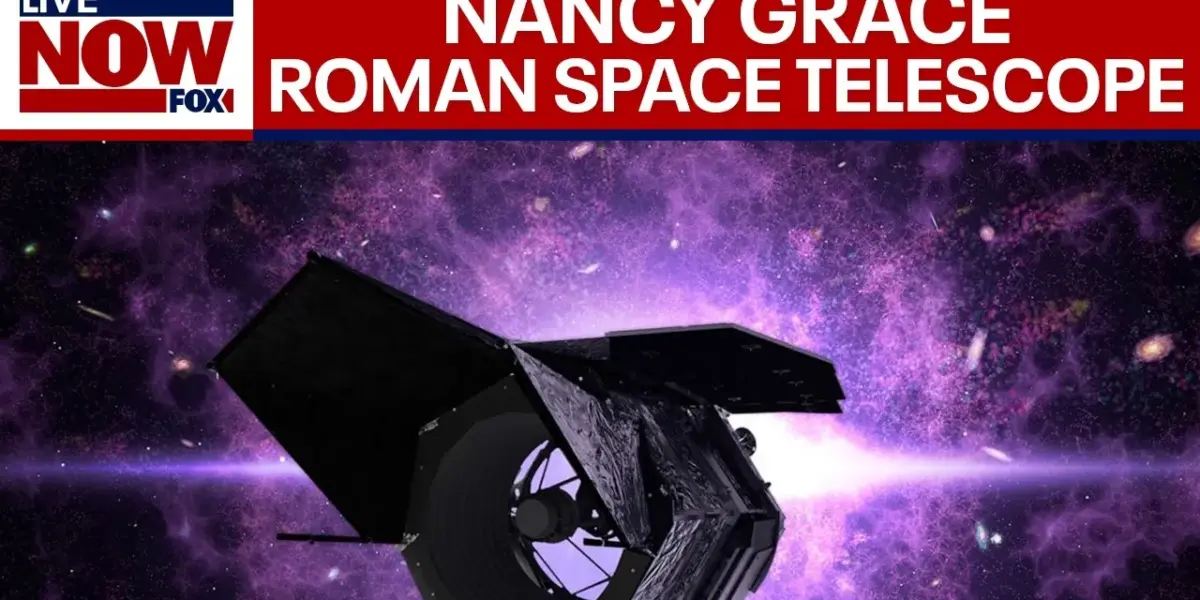
NASA’s Roman Telescope Nears Launch, Promises Cosmic Discoveries
NASA announced today that the Nancy Grace Roman Space Telescope, a powerful new observatory, is fully assembled and has completed testing. The telescope is undergoing final preparations before its shipment to Kennedy Space Center in Florida. It is set to join the ranks of America’s great observatories, including the Hubble and James Webb Space Telescopes.
In a significant development, NASA is now targeting an early September launch for the Roman Telescope. This launch date is eight months ahead of schedule and the project is reportedly under budget. This achievement is the result of over a decade of work and millions of hours dedicated by the NASA team and its partners.
A Leap Forward in Astronomical Observation
The Roman Space Telescope is designed to explore some of the universe’s biggest mysteries. It will investigate dark matter and dark energy, and study the structure of the universe itself. The telescope will also accelerate the search for potentially habitable planets outside our solar system.
Its capabilities represent a major advancement over current technology. Roman’s surveying power is over 1,000 times faster than Hubble.
It can capture images of 200 times more sky in a single shot. Tasks that would take Hubble 2,000 years to process, Roman can accomplish in just one year.
Unlocking the Universe’s Secrets
Dr. Nikki Fox, Director of NASA’s Astrophysics Division, expressed her excitement about the telescope’s readiness. “We’re on track to launch early in September, and that is ahead of schedule and under budget,” she stated. She emphasized the incredible teamwork that brought the mission to this point, involving NASA, industry partners, academia, and international collaborators.
Jamie Dunn, Roman Space Telescope Project Manager, highlighted the immense effort involved. “Millions of hours is no exaggeration,” Dunn said, referring to the work put into the project. He stressed that the telescope’s success is a prime example of how collaboration between NASA, industry, and academia yields results greater than the sum of its parts.
Revolutionary Science Capabilities
Senior Project Scientist Julie McKenry detailed the groundbreaking science Roman will enable. “Roman will be able to confirm these and set us on the path to understanding what’s right,” she explained, referring to current observations that suggest our standard model of the universe may be incorrect.
McKenry elaborated on the telescope’s planet-finding abilities. “We’re going to perform a revolutionary census of planets around other stars in our galaxy.” Roman is expected to discover tens of thousands of new planets, significantly expanding our knowledge of exoplanets. The telescope will also reveal billions of galaxies, thousands of supernovae, and tens of billions of stars.
A New Atlas of the Universe
The scale of Roman’s observations is immense. A single image produced from its main survey would require over half a million 4K televisions to display fully. If laid out, these televisions would cover 45 city blocks or entirely cover El Capitan in Yosemite National Park.
This massive survey will help astronomers study how structures in the universe, like stars and galaxies, have grown and evolved over time. It will also provide crucial data for understanding the expansion of the universe, shedding light on the nature of dark matter and dark energy.
Complementing Existing Observatories
Roman is not intended to replace Hubble or James Webb but to complement them. While Hubble gathered 172 terabytes of data in its first 30 years, Roman will download 1.4 terabytes of science data every single day. This vast amount of data will allow for new discoveries and follow-up observations with other powerful telescopes.
Dr. Fox noted that Roman will also serve as a key demonstration for the future Habitable Worlds Observatory. “Roman isn’t just doing Hubble and Web science faster; it’s doing fundamentally different science that could not be done with either observatory,” she said. Together, the three missions will offer a more complete picture of the cosmos.
Looking Ahead: Future Missions and Innovation
The success of the Roman mission, particularly its on-time and under-budget delivery, offers valuable lessons for future projects. NASA Administrator Bill Nelson emphasized the importance of learning from successes like Roman to improve the execution of other large-scale missions.
The development of Roman has also pushed the boundaries of technology. Innovations in precision optics, stability, and instrumentation are expected to have broader applications in various scientific and industrial fields. NASA plans to continue this legacy of innovation with future observatories like the Habitable Worlds Observatory, aiming to accelerate the pace of discovery.
The Nancy Grace Roman Space Telescope is scheduled to launch in early September, marking a new era in astronomical exploration.
Source: LIVE: NASA news conference on the Nancy Grace Roman Space Telescope with agency leadership (YouTube)

Related Articles

NASA Prepares Artemis 3 for Moon Landing by 2028
NASA has unveiled a major section of its Space Launch System rocket, preparing for the Artemis 3 mission set for 2027. The mission will test lunar landers from SpaceX and Blue Origin, aiming for a human return to the lunar surface by 2028 and the start of a permanent moon base.
NASA Rolls Out Giant Rocket Piece for Next Moon Mission
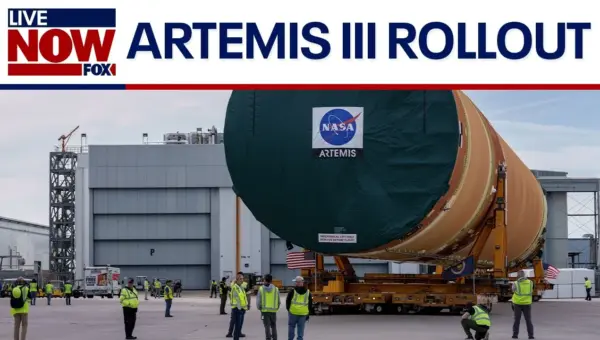
NASA has rolled out the largest section of its Space Launch System (SLS) rocket, the core stage, for the upcoming Artemis III mission. This massive component, built in New Orleans, is now on its way to Florida for integration with other rocket parts. The Artemis III mission, targeting a 2027 launch, is a crucial step towards landing astronauts on the moon for the first time in over half a century.
Astronaut Captures Stunning Earthset View from Moon Orbit
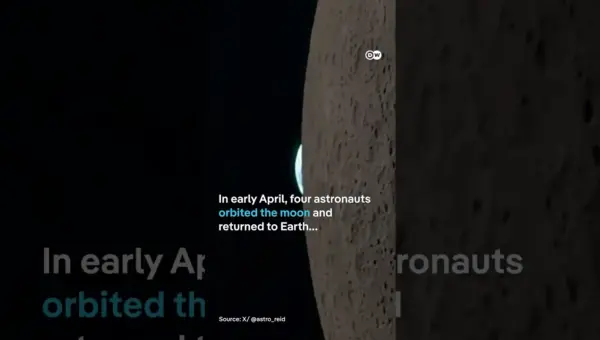
NASA astronaut Reid Wiseman captured a stunning video of 'Earthset' during the Artemis II mission, showing our planet disappearing behind the moon. The footage offers a unique perspective on Earth from lunar orbit. This event highlights the visual wonders of space exploration and builds on the legacy of iconic lunar imagery.