Generals Block Trump from Nuclear Codes Amidst Global Tensions
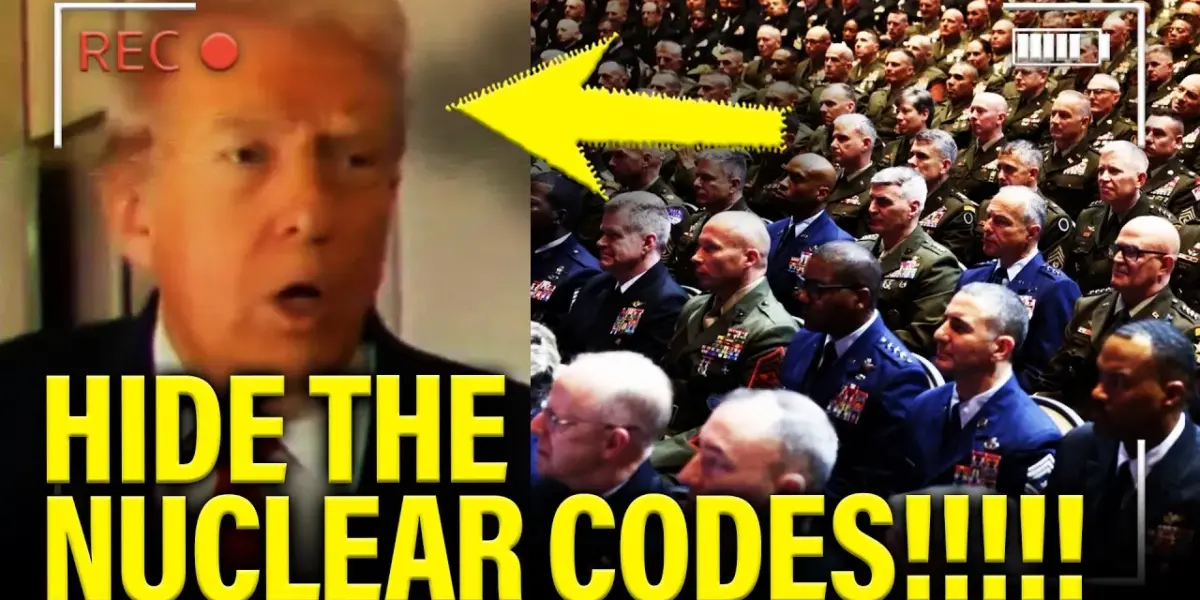
A report claims top generals blocked Donald Trump from accessing nuclear codes, citing his erratic behavior. This alleged incident, coupled with Trump's controversial statements on resuming nuclear testing, raises serious concerns about national security and global stability.

Generals Block Trump from Nuclear Codes Amidst Global Tensions
A recent report alleges that top military officials prevented Donald Trump from accessing nuclear launch codes during a White House meeting. The chairman of the Joint Chiefs of Staff, General Dan Kaine, reportedly told Trump to leave the room and stop discussing nuclear weapons. This event, if true, highlights serious concerns about the handling of sensitive information and decision-making processes during moments of high tension.
The source for this account is a former CIA analyst, Larry Johnson, who shared the details on the YouTube channel Judging Freedom. Johnson claims that during an emergency meeting on a Saturday night, Trump attempted to access the codes, but Kaine refused. According to Johnson, Kaine invoked his authority as head of the military, leading to a significant confrontation.
Concerns Over Nuclear Rhetoric and Testing
This alleged incident follows a pattern of controversial statements and actions by Trump regarding nuclear weapons and testing. For months, Trump has spoken about resuming nuclear weapons testing in the United States, citing actions by other countries like China and Russia. His administration’s under secretary of state for arms control, Thomas Dano, confirmed that no decisions had been made on resuming such tests, indicating a disconnect between Trump’s public statements and official policy.
Trump’s rationale for pursuing nuclear testing appears to stem from his belief that other nations are actively engaged in such activities. However, experts like former military intelligence officer Scott Ritter suggest that Trump misunderstands the nature of these tests.
Ritter explains that tests by Russia and China involved their nuclear propulsion systems for missiles and drones, not actual nuclear detonations. Trump, however, reportedly interpreted these as tests of nuclear weapons themselves, leading to his calls for reciprocal testing.
“The United States of America is governed by one of the dumbest men in the world who doesn’t understand the the power of words… He should probably get better briefed.” – Scott Ritter
Ritter further points out that testing delivery systems, like the Minuteman III missile, is a routine procedure for the U.S. military and does not equate to testing actual nuclear warheads. The confusion and misinterpretation of these events by Trump could lead to dangerous escalations, as other nations might perceive U.S. actions as a direct threat.
International Reactions and Diplomatic Instability
The international community has reacted with concern to Trump’s rhetoric on nuclear testing. Russia’s ambassador to the United Nations, Vitaly Nenzia, described Trump’s statements as serious and warned of potential consequences. Russia’s official position, echoed by Dmitry Peskov, Putin’s spokesperson, is that if any country deviates from the nuclear testing moratorium, Russia will respond accordingly.
Similarly, allies and foreign policy experts have expressed alarm. John Bolton, former national security advisor, suggested that Trump’s public statements create panic and give adversaries like Iran significant leverage. He noted Trump’s contradictory statements regarding Iran’s nuclear capabilities, oscillating between claiming they were obliterated and proposing joint excavation of enriched uranium.
Historical Context and Future Outlook
The debate around nuclear testing has a long history, dating back to the Cold War. The Comprehensive Nuclear-Test-Ban Treaty aimed to halt all nuclear explosions, but its full implementation has faced challenges. Trump’s suggestions to resume testing, even if misinterpreted, revive fears of a return to a more dangerous era of nuclear arms races.
The comments from Professor Robert Kelly suggest that Trump’s withdrawal from the Iran nuclear deal in 2018 may have emboldened North Korea to pursue its nuclear ambitions. This illustrates how shifts in U.S. foreign policy under different administrations can create instability and encourage proliferation among rogue states.
Why This Matters
The alleged incident with General Kaine and the ongoing discourse surrounding nuclear weapons testing are critical for several reasons. Firstly, they raise questions about the stability and security of the U.S. nuclear command and control. Secondly, Trump’s rhetoric and perceived unpredictability can destabilize international relations, potentially leading to miscalculations and conflict.
The repeated claims of obliterating Iran’s nuclear capacity, contrasted with statements about potential joint excavation of uranium, highlight a lack of consistent and clear policy. This inconsistency can be exploited by adversaries and sow distrust among allies. The world watches closely as these events unfold, with the potential for significant global repercussions.
The next steps in this unfolding situation will likely involve further scrutiny of the alleged incident and continued international observation of U.S. nuclear policy. The upcoming elections will also play a key role in shaping the future direction of these critical matters.
Source: Trump PANICS as Generals HIDE NUCLEAR CODES?!! (YouTube)

Related Articles
Politicians’ Harsh Words: Is It Fair to Call Trump Hitler?
The use of extreme labels like "Hitler" and "fascist" in political debates is examined. While some politicians have compared Donald Trump to Hitler, the transcript questions the accuracy and impact of such comparisons, especially when Trump himself uses divisive rhetoric against opponents.
Tucker Carlson Turns on Trump: A Movement’s Unraveling?
Tucker Carlson's public regret over his role in promoting Donald Trump signals a potential fracturing of the MAGA movement. Despite his apology for misleading people, critics question his sincerity, pointing to his long history of controversial rhetoric and privately expressed contempt for Trump. This shift raises questions about the future of Trump's influence and the conservative media landscape.

US Scientists’ Deaths, Disappearances Spark National Security Probe
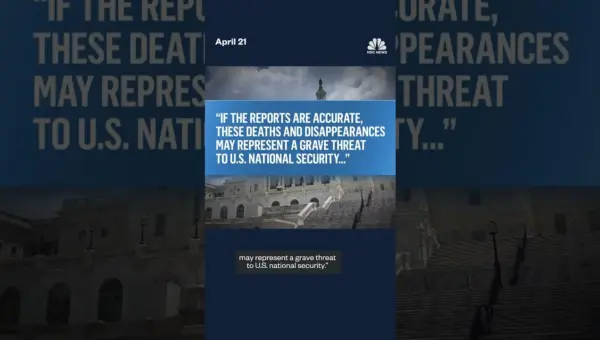
At least 10 American scientists tied to US nuclear and space research have died or disappeared, prompting a national security probe by the House Oversight Committee. President Trump confirmed he was briefed on the deepening mystery, which began in 2023 and has intensified this year. Lawmakers are investigating the potential threat these incidents pose to the nation.