Trump’s Iran Policy Lacks Strategy, Says Journalist
Pulitzer Prize-winning journalist Anne Applebaum criticizes Donald Trump's foreign policy, stating he lacks strategic thinking and a clear "endgame." She points to his unpredictable approach to the Iran conflict and concerns raised within the White House about his decision-making process. Applebaum also discusses allegations of unprecedented corruption and draws lessons from Viktor Orban's recent electoral defeat in Hungary.

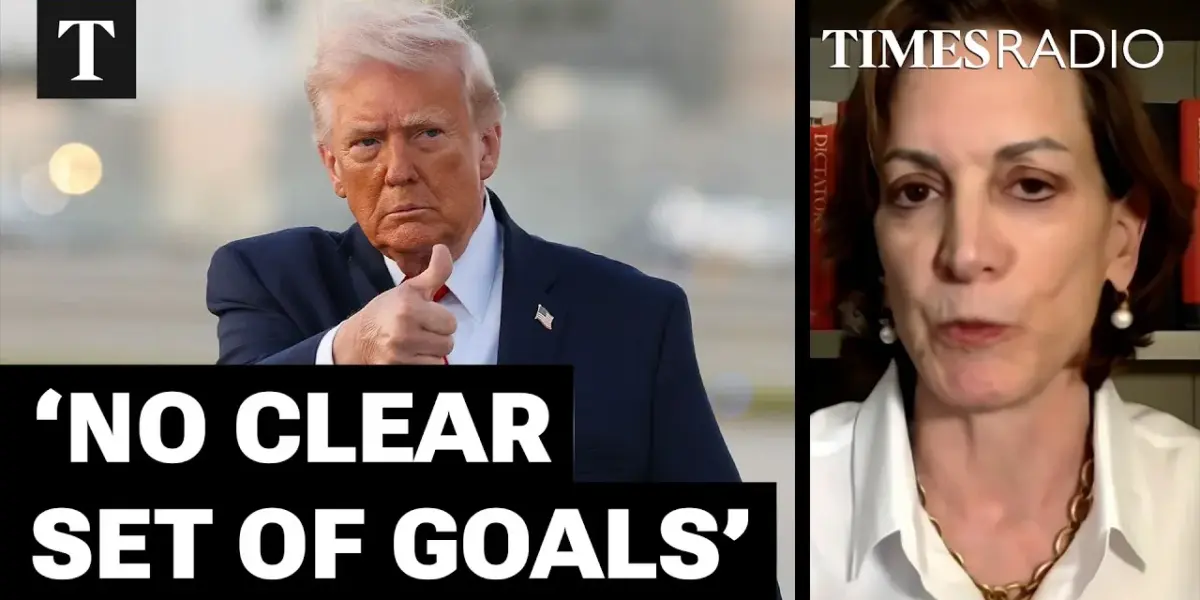
Journalist Critiques Trump’s Unpredictable Foreign Policy Approach
Pulitzer Prize-winning journalist and historian Anne Applebaum has voiced serious concerns regarding Donald Trump’s approach to foreign policy, particularly concerning the Iran conflict. Applebaum stated that Trump does not think strategically and lacks a clear “endgame.” She explained that the former president often starts actions without defining specific goals or consulting widely with the American public or Congress. This approach, according to Applebaum, can lead to unexpected consequences and a reactive rather than proactive stance.
Applebaum noted that Trump seemed surprised by Iran’s ability to use drones against Gulf States, suggesting a lack of foresight regarding potential responses. She believes that Trump’s current actions on the international stage are based on real-time guesswork rather than a well-defined strategy. This unpredictability, she argued, creates instability and makes it difficult to understand the long-term implications of his decisions.
Concerns Over Trump’s Decision-Making Process
A report from The Wall Street Journal highlighted concerns within the White House about Trump’s impatience and tendency for sudden decisions. The report suggested that Trump was sometimes kept out of the Situation Room unless his direct input was absolutely necessary. This was reportedly due to fears among military leaders about his potential for impulsive actions during critical moments.
Applebaum cited an incident where an American plane went down in Iran, resulting in lost crew members. She described Trump as being more concerned about the personal political fallout, comparing it to a potential “Jimmy Carter disaster,” rather than focusing on the well-being of the soldiers. This personal focus, she explained, created added pressure for the military teams making difficult rescue decisions.
Debate Over Trump’s Mental Fitness and Unsuitability for Office
The discussion also touched upon commentary regarding Donald Trump’s mental state and fitness for the presidency. Applebaum acknowledged that opinions about Trump’s stability have been part of mainstream discourse since 2016. She referenced his two impeachments during his first term, one concerning alleged bribery of Ukraine and the other following the events of January 6th, as examples of actions considered outside the bounds of presidential conduct.
While acknowledging that calls for Trump’s removal exist, Applebaum expressed skepticism about the feasibility of such actions. She pointed out that the Republican party has largely stood by him, making impeachment or invoking the 25th Amendment, which requires cabinet cooperation, unlikely. She stated that many people have found it difficult to accept the possibility of an American president exhibiting unstable behavior.
Allegations of Corruption and Kleptocracy
The conversation addressed long-standing accusations of corruption and the use of the presidential office for personal gain. Applebaum described the scale of alleged corruption and kleptocracy under Trump as something unprecedented in American history. She mentioned instances like the procurement of a jet from Qatar and alleged million-dollar payments for presidential pardons.
She highlighted the existence of a cryptocurrency company called World Liberty Financial, associated with Trump, where anonymous payments are reportedly made. Applebaum suggested these payments could be a way of bribing the president, a situation she found to be entirely new and outside the scope of previous presidential conduct. She noted that while many ordinary Americans express anger through protests and polls, those in positions of power within the Republican party and the cabinet have not acted.
Lessons from Victor Orban’s Defeat in Hungary
Applebaum drew parallels between Trump’s political style and that of Hungarian Prime Minister Viktor Orban, who recently lost an election. Orban, who styled himself as an “illiberal leader,” was supported by figures like JD Vance and Marco Rubio, and endorsed by Trump himself. Applebaum noted that Orban’s political approach, which involved framing ordinary problems as emergencies requiring constitutional changes, was admired by many around Trump.
Orban’s defeat, Applebaum explained, was due to a broad social movement that united people from various backgrounds. The successful opposition argued that problems like immigration could be addressed within the framework of a normal democratic government, without needing to dismantle democratic institutions. This, she suggested, is a model that could be applied to counter what she termed “autocratic populism” in other countries.
Concerns Over Midterm Elections and Electoral Reform
Looking ahead to the midterm elections, Applebaum expressed concerns about potential attempts to manipulate the results. She referenced the “SAVE Act,” an electoral reform proposal requiring voters to show specific documents like birth certificates or passports, which she argued is designed to suppress voting rather than ensure normal electoral processes. Current identification requirements typically involve a driver’s license.
Applebaum stated that the Trump administration is pursuing policies aimed at preventing Democrats from winning, including demanding voter information from states, which has led to numerous lawsuits. She described these tactics as reminiscent of methods used by Viktor Orban, with the hope that high voter turnout could overcome such attempts, as seen in Hungary. However, she noted that the SAVE Act itself is currently unlikely to pass through Congress.
Excerpt
Pulitzer Prize-winning journalist Anne Applebaum criticizes Donald Trump’s foreign policy, stating he lacks strategic thinking and a clear “endgame.” She points to his unpredictable approach to the Iran conflict and concerns raised within the White House about his decision-making process. Applebaum also discusses allegations of unprecedented corruption and draws lessons from Viktor Orban’s recent electoral defeat in Hungary.
Source: Trump Has No “Endgame” In Iran Conflict | Anne Applebaum (YouTube)

Related Articles

Dem Lawmaker Clashes with Maria Bartiromo Over Iran Deal
Maria Bartiromo and a Democratic lawmaker engaged in a heated debate over the Obama administration's Iran policy. The lawmaker defended the previous administration's approach, citing broad international support, while Bartiromo questioned the effectiveness of those policies.

Trump Seeks Medal of Honor: A Tarnished Legacy?
A report suggests Donald Trump is considering awarding himself the Medal of Honor, the U.S.'s highest military award. This potential move has sparked debate about presidential power and the integrity of military honors. Critics argue it would devalue the medal and disrespect genuine heroes.
Trump’s Iran Standoff: Diplomacy or Dangerous Game?
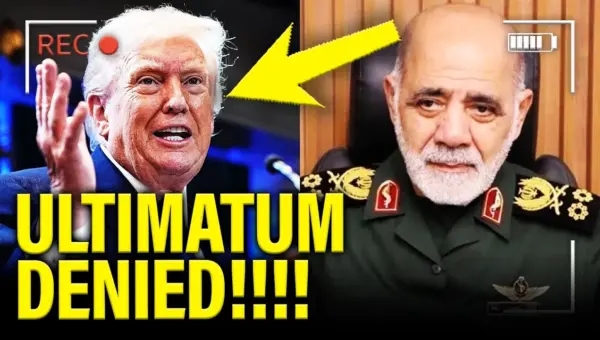
Iran has publicly defied President Trump's demands, refusing to attend negotiations unless the U.S. lifts its Persian Gulf blockade and stops issuing threats. Despite Iran's stance, the U.S. has sent an advance team, highlighting a tense diplomatic standoff. The situation is further complicated by conflicting public statements and social media rhetoric from both sides, raising questions about the path forward.