US Seizes Iranian Ship Amid Escalating Tensions
US forces have seized an Iranian ship attempting to breach a naval blockade, escalating tensions ahead of crucial peace talks. Iran has vowed retaliation, while the US warns of further action if a deal isn't reached. The Strait of Hormuz remains a flashpoint, impacting global energy markets.

US Seizes Iranian Ship Amid Escalating Tensions
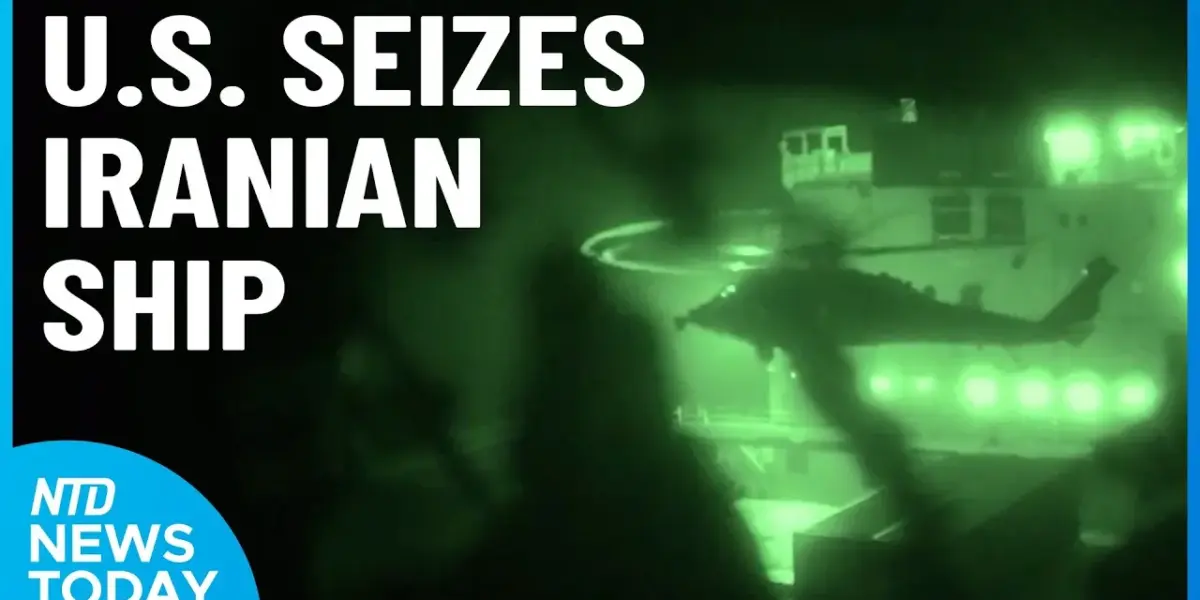
Tensions between the United States and Iran have reached a critical point as US forces seized an Iranian ship attempting to breach a US naval blockade. This action occurred just as a new round of peace talks between the two nations was set to begin, with an existing ceasefire agreement nearing its expiration. The situation remains volatile, with both sides issuing warnings and threats.
President Trump has accused Iran of violating the ceasefire, stating that the seized vessel failed to heed US warnings for six hours before US Marines boarded it from a helicopter. Footage released by the US Central Command shows the tense moments of the boarding. Iran has vowed retaliation, though there are mixed messages from Iranian officials, with some emphasizing diplomacy while others threaten a response.
Strait of Hormuz Standoff Intensifies
The Strait of Hormuz, a vital waterway for global oil transport, has become a focal point of the conflict. The US Navy has already turned away four commercial vessels in the area as its blockade continues.
Iran had previously promised to fully reopen the strait but has since backtracked, stating it will return to its previous state. This reversal adds to the uncertainty surrounding maritime traffic and international trade.
Peace Talks Hang in the Balance
A new round of US-Iran peace talks was scheduled, with Vice President JD Vance expected to travel to Pakistan. However, the Iranian foreign ministry has indicated no plans for a second round of talks, leaving the actualization of these negotiations uncertain. President Trump urged Iran to come to the negotiating table, suggesting a prosperous future for Iran if its leaders are wise.
US Ambassador to the UN, Mike Walls, warned that President Trump might escalate the situation to deescalate tensions. He stated that the President is prepared to board and turn around Iranian ships, even those far into the Pacific Ocean. This signals a firm stance from the US, willing to take assertive actions to achieve its objectives.
Context and Historical Background
The current standoff is rooted in a long-standing conflict between the US and Iran. The transcript mentions that the President’s decision to act against Iran was influenced by the events of October 7th and his long-held belief that Iran should never possess nuclear weapons. This indicates a complex web of geopolitical factors influencing current US policy.
Captain James Fenel, former director of intelligence with the US Navy’s Pacific Fleet, commented on Iran’s negotiating tactics. He suggested that Iran often pushes to the brink to gain concessions. He also highlighted the potential significance of the seized ship, the Motor Vessel Toxa, noting its connection to the Office of Foreign Asset Control sanctions list and its potential links to China and ballistic missile precursors.
Potential Impact on Future Relations
If investigations reveal that the seized ship was carrying chemical precursors for ballistic missiles from China to Iran, it could significantly impact relations between the US and China. Captain Fenel suggested that President Trump would view this as a sign of disrespect from President Xi, especially after assurances that China would not send such materials.
The situation is further complicated by internal factions within Iran, creating an appearance of disunity. However, some analysts suggest this might be a strategic delay tactic.
President Trump has reiterated threats to strike Iran’s energy infrastructure, including power plants and bridges, if a deal is not reached by Wednesday evening Washington D.C. Time.
Broader Implications and Future Outlook
The US military presence in the region has been strengthened with the arrival of additional aircraft carrier strike groups. Alongside the naval blockade, the US is employing a comprehensive approach, including potential further sanctions by the Treasury Department, to pressure Iran into negotiations and cease its “belligerent activity.”
Energy Secretary Chris Wright suggested that Americans might continue to pay over $3 a gallon for gas through the end of the year and into next year. He described these higher prices as a necessary sacrifice, but noted they are still lower than during the previous administration. He also reiterated that regime change in Iran is necessary, partly due to Iran’s past actions of closing the Strait of Hormuz.
The report also touches upon unrelated but significant news, including a tragic shooting in Louisiana where eight children died, the Supreme Court taking on a case about religious freedom in Colorado’s preschool program, and an Iranian woman arrested in Los Angeles for allegedly brokering weapons on behalf of the Iranian government.
Why This Matters
The escalating tensions between the US and Iran, particularly concerning the Strait of Hormuz, have significant global implications. Control over this vital shipping lane directly impacts global energy prices and the stability of international trade. The seizure of the Iranian ship and the ongoing peace talks represent a critical juncture, where diplomatic efforts could either de-escalate the situation or lead to further conflict.
The potential involvement of China in supplying Iran with materials for ballistic missiles adds another layer of complexity, potentially impacting US-China relations. The economic consequences, such as rising gas prices, directly affect everyday citizens. The outcome of these events will shape regional security and international relations for the foreseeable future.
The next few days are crucial, with the ceasefire deadline approaching. All eyes will be on whether Iran participates in the peace talks and what actions the US will take if negotiations fail. The world watches to see if diplomacy can prevail or if further military action will ensue.
Source: US Seizes Iranian Ship Ahead of Peace Talks; Kash Patel Sues the Atlantic | NTD News Today April 20 (YouTube)

Related Articles

Dem Lawmaker Clashes with Maria Bartiromo Over Iran Deal
Maria Bartiromo and a Democratic lawmaker engaged in a heated debate over the Obama administration's Iran policy. The lawmaker defended the previous administration's approach, citing broad international support, while Bartiromo questioned the effectiveness of those policies.

Hungary’s Orbán Loses Kremlin Ally Amid EU Sanctions Probe
Hungary's alignment with Russia is under scrutiny following accusations of document shredding related to EU sanctions. This development, coupled with ongoing Russian influence efforts elsewhere in Europe, signals a potential setback for Moscow. Meanwhile, optimism surrounding Ukraine peace talks is tempered by strategic messaging and unresolved territorial disputes.
Trump’s Iran Standoff: Diplomacy or Dangerous Game?
Iran has publicly defied President Trump's demands, refusing to attend negotiations unless the U.S. lifts its Persian Gulf blockade and stops issuing threats. Despite Iran's stance, the U.S. has sent an advance team, highlighting a tense diplomatic standoff. The situation is further complicated by conflicting public statements and social media rhetoric from both sides, raising questions about the path forward.