PM Grilled on National Security Risk Appointment
Prime Minister faces intense questioning over the appointment of Peter Mandelson as US ambassador, following revelations that he failed security vetting. Downing Street admits the PM inadvertently misled Parliament, sparking accusations of a ministerial code breach and national security concerns.

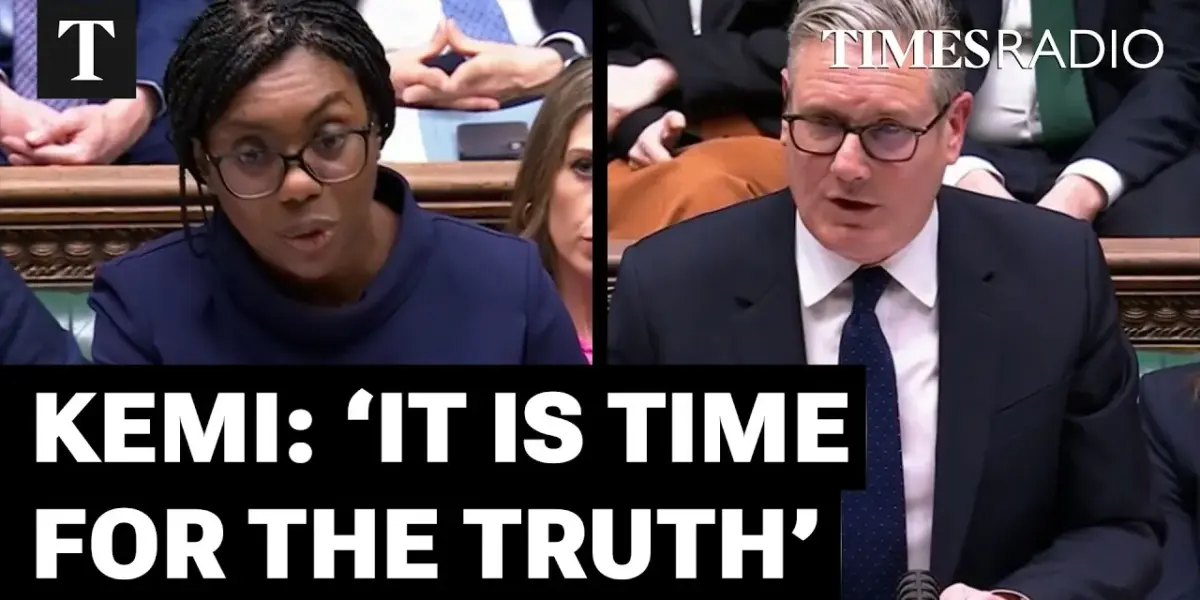
Prime Minister Faces Scathing Questions Over Vetting Scandal
In a heated exchange at Prime Minister’s Questions, the leader of the opposition launched a fierce attack on the Prime Minister, demanding answers regarding the appointment of Peter Mandelson as ambassador to the United States. Downing Street admitted the Prime Minister had inadvertently misled the House, a statement that fueled accusations of a breach of the ministerial code. The opposition leader highlighted that the Prime Minister learned of Mandelson’s failed security vetting only recently, yet failed to correct the record promptly, a duty required by the code.
Key Facts Emerge in Vetting Controversy
The opposition leader laid out several known facts that deepened the controversy. Peter Mandelson was personally appointed to the key role of US ambassador by the Prime Minister.
It was revealed that Mandelson had significant connections to a convicted pedophile and concerning links to Russia and China, which had already raised alarms. Astonishingly, the Prime Minister announced the appointment before the security vetting process was even finished, an unusual step for such a high-profile position.
Ministerial Code and Security Concerns
The opposition argued that Mandelson, having been dismissed from government twice for dishonesty, should have undergone a thorough security review. Despite failing this vetting process, he was allowed to continue in the role, gaining access to top-secret intelligence.
This situation was described as more than just an ethical lapse; it was presented as a direct threat to national security. The core issue became not just a failure of process, but a potential risk to the country.
Unanswered Questions Plague the Government
Crucially, the reasons behind Peter Mandelson’s failure to pass the security vetting remain unknown. The opposition questioned the extent of the risks the country faced due to this situation.
They also expressed disbelief that the Prime Minister, despite stating the vetting had failed, seemed unaware of critical details. The government’s explanations were consistently described as becoming more confusing and contradictory, demanding a clear and truthful account.
Six Burning Questions for the Prime Minister
In a move to ensure clarity, the opposition leader presented six specific questions to the Prime Minister, which were provided in advance. These questions aimed to unravel the timeline and the Prime Minister’s knowledge of the vetting process. They probed whether the Prime Minister accepted that his earlier statements about ‘full due process’ were inaccurate, given evidence from the then Cabinet Secretary, Lord Casease, that vetting should precede appointment.
The Appointment Timeline and Media Inquiries
Further questions focused on why Number 10 did not deny media reports in September of the previous year regarding Mandelson’s failed vetting. The opposition demanded the Prime Minister repeat his earlier assertion that no one in Number 10 was aware of the vetting failure before a specific Tuesday. This challenged the Prime Minister’s timeline and the internal communication within his office.
Fury Over Vetting Process and Ministerial Role
The opposition also questioned the Prime Minister’s expressed fury over not being informed of the vetting recommendations. They cited a Foreign Office minister’s statement that such processes are independent of ministers, who are only informed of the final outcome. This highlighted a potential contradiction in the Prime Minister’s stance and the government’s own stated procedures.
Access to Security Information and Due Diligence
A key point of contention was the Prime Minister’s statement in February of the previous year, claiming he had received security vetting information revealing Mandelson’s links to Epstein. The opposition questioned how he could make this statement if he had not seen the actual security vetting file. They suggested he might have confused vetting with broader due diligence checks, indicating a possible misrepresentation to Parliament.
Links to Russian Defense Company
The final question delved into Mandelson’s directorship of Systema, a Russian defense company tied to the Kremlin. The opposition asked if the Prime Minister was aware of this connection before the appointment, especially given Russia’s invasion of Crimea. This raised concerns about potential conflicts of interest and national security implications related to foreign entanglements.
Prime Minister’s Defense and Staff Dismissals
Responding to the accusations, the Prime Minister stated that upon discovering the situation on Tuesday evening, his priority was to find answers regarding who made the decision to clear Mandelson against advice and who was aware. He asserted that the exercise conducted since then aimed to provide a full account to the House. He explained that his earlier statements on ‘full due process’ were based on information he had at the time, confirmed by a review he commissioned.
Clarification on Vetting Information
Regarding the failure to pass vetting, the Prime Minister distinguished between the information within the review and the recommendation itself, stating the former must be protected for system integrity, while the latter should not have been. He clarified that he had not seen the security vetting file when he spoke in February, but knew about the due diligence concerning Epstein, which is what he shared with the House. He admitted he should have had more information and that the House should have been informed sooner.
Accountability and Staff Changes
The opposition criticized the Prime Minister for dismissing staff, including his Cabinet Secretary, Director of Communications, Chief of Staff, and the Permanent Secretary of the Foreign Office, for a decision he made. They accused him of deflecting responsibility, contrasting it with his past statements about taking responsibility for mistakes. The Prime Minister maintained that officials followed the correct procedure in seeking legal advice and bringing the matter to his attention within the last few weeks.
Future Actions and Next Steps
The Prime Minister acknowledged he should have been informed earlier about the vetting process and its outcome. He stressed that he acted on the information available to him but recognized that more information should have been provided. The ongoing scrutiny highlights the critical importance of transparency and rigorous vetting for all high-level appointments, especially those involving national security and sensitive diplomatic roles.
Source: Keir Starmer Faces Scathing Questions From Kemi Badenoch Over Mandelson Vetting Scandal (YouTube)

Related Articles
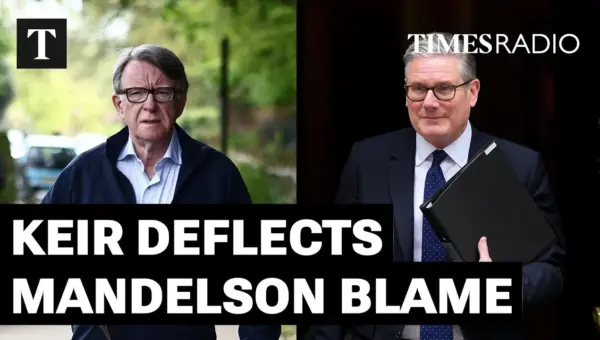
PM Blamed Civil Servant for Mandelson Envoy Role
Prime Minister Keir Starmer has blamed Sir Ollie Robbins, a top civil servant, for issues surrounding Peter Mandelson's failed appointment as US ambassador. Labour MPs view the initial political appointment itself as the 'original sin,' despite Starmer's claims of not being fully aware of vetting concerns.


Ex-Air Force Chief Saw Unexplained Objects Over Nuclear Base
Former Air Force Master Sergeant Ronald Bilac reports seeing unexplained, high-speed objects over Barksdale Air Force Base, a site believed to house nuclear weapons. His testimony challenges official explanations and raises serious national security questions. The government's continued lack of transparency fuels public demand for answers about what is happening in our skies.
China Aids Iran, Fuels Geopolitical Tensions
China's alleged provision of targeting satellite data and advanced weaponry to Iran has significantly heightened geopolitical tensions. This support includes enabling Iran to operate a Chinese satellite and supplying supersonic missiles, placing China on an opposing side to U.S. interests.