George Takei: Trump Is a ‘Menace to the World’
Actor George Takei has strongly criticized Donald Trump, labeling him a "fascist president" and a "menace to the whole world." Takei drew parallels between current American politics and the hysteria leading to Japanese American internment during WWII, emphasizing the dangers of repeating history. He also reflected on Star Trek's role in promoting social progress and his own journey as an activist.

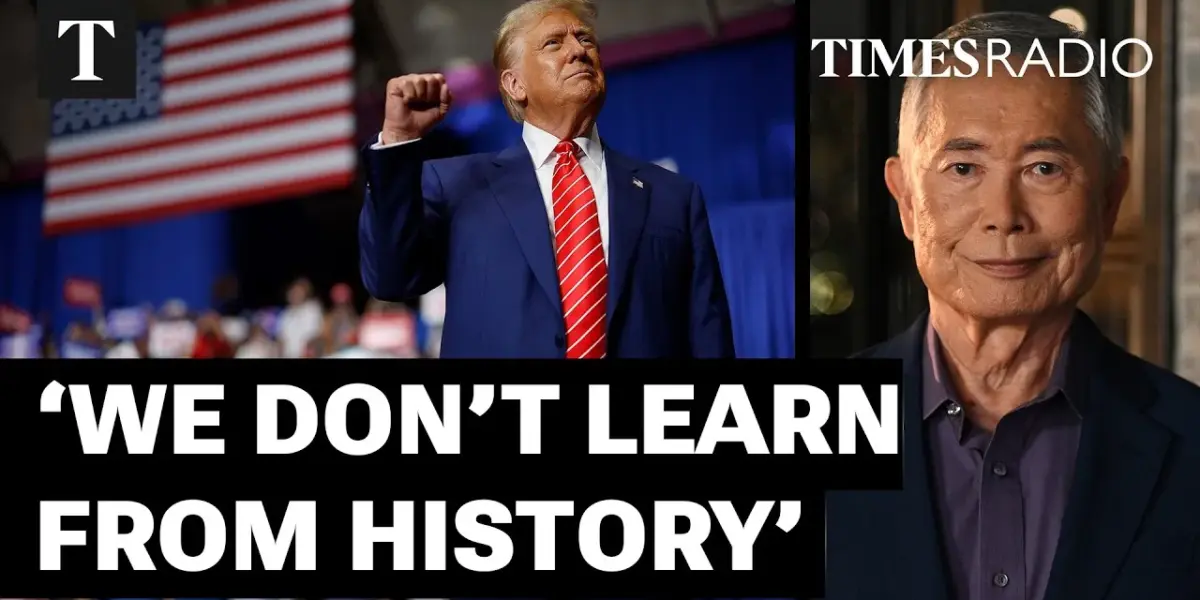
George Takei Slams Trump as ‘Fascist President,’ Compares Current U.S. to WWII Era
Actor and activist George Takei has issued a stark warning about the current state of American politics, describing Donald Trump as a “fascist president” and a “menace to the whole world.” Takei, speaking from Los Angeles, drew parallels between the nation’s current political climate and the hysteria that led to the internment of Japanese Americans during World War II. He believes that a lack of education about history is causing the country to repeat past mistakes.
‘Ignorant Americans’ Led by a ‘Fascist President’
Takei expressed deep concern over what he perceives as a dangerous political trajectory, directly blaming what he calls “ignorant Americans” for following a “fascist president.” He described Trump as a “wild animal out of its cage,” responsible for global turmoil and a “menace to the whole world.” Takei suggested that Trump’s actions, driven by an “uneducated egoist” with a “Barnum and Bailey salesman” approach, have misled many Americans.
Despite his strong criticism, Takei acknowledged that Trump’s election was democratic, though he characterized it as a victory “by the skin of his teeth.” He predicted that Republicans would lose in the midterms due to the burden of Trump’s presidency, but noted that Trump would remain in office until 2029. “He has all that time yet to do,” Takei lamented, citing daily crises like the blockade at the Strait of Hormuz.
Lessons Unlearned from History: WWII Internment Camps
Takei’s critique is heavily informed by his personal history. As a child, he and his family were forcibly removed from their home in California and sent to internment camps for Japanese Americans. He recalled his father quoting Abraham Lincoln, emphasizing that America is a government “of the people, by the people, and for the people.” However, his father also warned that people are fallible and can be swept up by the times.
The bombing of Pearl Harbor by Japan, which killed about 2,000 Americans and sank eight battleships, plunged the nation into hysteria. Despite being third-generation Americans, Japanese Americans were rounded up without due process. “We believe in a system of due process,” Takei stated, highlighting the lack of legal recourse for those accused.
These citizens were labeled “enemy aliens,” a categorization Takei vehemently rejected. “We were neither,” he asserted.
“We were Americans of Japanese ancestry.” Soldiers forced them from their homes, destroyed his father’s business, and took their belongings. The family was then sent to camps in the swamps of Arkansas.
Loyalty Questionnaires and Denied Patriotism
Eight months after their internment, Japanese Americans were given a loyalty questionnaire. Takei questioned why such a test wasn’t administered before their forced relocation. He pointed out the irony that many young Japanese Americans, eager to serve their country after Pearl Harbor, were denied military service and instead imprisoned.
These “barbwire prison camps” were located in harsh environments across America, including the desolate plains of Idaho and Utah, and the blistering deserts of Arizona. Takei noted the chilling similarity between these historical events and current political rhetoric, stating, “It is remarkable how we know history repeat itself. But I think what’s more profoundly disturbing is what how little we learn.”
Star Trek’s Role in Social Commentary
Takei also reflected on his iconic role as Mr. Sulu in the original Star Trek series. He explained that the show, created by Gene Roddenberry, was more than just entertainment; it served as a powerful tool for social commentary during a turbulent era. The series aired during the height of the Cold War and the Civil Rights Movement in the United States.
Star Trek featured an integrated cast, including an Asian American, an African American, and a Russian character during the Cold War. This reflected a hopeful vision of overcoming international and domestic divisions. “The suggestion there was even this horrific stalemate between two great powers could be overcome,” Takei said.
The show tackled issues of racism and inequality, mirroring the struggles of the Civil Rights Movement. Takei, who was part of the peace movement against the Vietnam War, saw Star Trek as a way to explore these complex themes through allegory.
“It was storytelling at its finest. It’s education at its finest,” he stated.
From Internment Camp to Activism
Takei’s path toward activism was shaped by his childhood experiences and his father’s guidance. His father instilled in him the importance of an “informed citizenry” and active participation in democracy. This led Takei to engage in school leadership roles, volunteer work with the Junior Red Cross, and eventually, political campaigns.
He was inspired by Adlai Stevenson’s presidential campaign, learning that volunteering could be enjoyable and impactful. “My father guided me into being an activist American,” Takei recalled. This foundation fueled his later work advocating for human rights and social justice.
A Life of Activism and Personal Truth
Takei also discussed his personal journey as a gay man. He spent much of his adult life closeted to protect his acting career, acknowledging the Hollywood industry’s intolerance at the time. He felt guilt for prioritizing his career while others risked their safety and freedom fighting for LGBTQ+ equality.
The landmark marriage equality bill in California in 2005 was a significant moment, but its veto by then-Governor Arnold Schwarzenegger was a major disappointment. Takei sharply criticized Schwarzenegger, calling him “irresponsible” and a “dumb hypocrite” for vetoing the bill despite claiming to have no problem with it, while simultaneously engaging in hypocrisy in his personal life.
Now 88 and approaching his 89th birthday, Takei remains passionate and engaged. He looks forward to continuing his work, stating, “I am going to be older me with more experience and more knowledge and in the arena campaigning.” He concluded with the iconic Star Trek phrase, “Live long and prosper,” a fitting sentiment from a man who has dedicated his life to progress and understanding.
Source: George Takei: Donald Trump Is ‘A Menace To The Whole World’ Who Is Leading ‘Ignorant Americans’ (YouTube)

Related Articles

Trump Halts Vance’s Iran Peace Talks Amidst New Developments
Former President Donald Trump has unexpectedly withdrawn Senator JD Vance from upcoming peace talks with Iran just hours before they were scheduled to begin. Citing undisclosed new information, Trump's decision introduces uncertainty into the critical diplomatic negotiations. The reasons behind Vance's exclusion and its potential impact on the talks remain a subject of intense speculation.
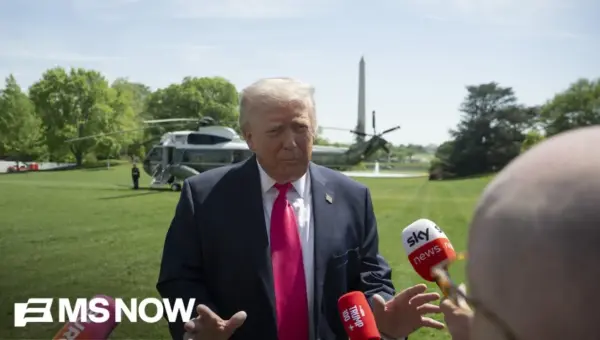
Democrats Unite Against Trump, Eyeing Midterm Gains
Democratic leaders and activists in Michigan are aligning with a unified message against Donald Trump, viewing him as a central threat ahead of the midterm elections. High energy and record attendance at a recent convention signal a motivated base focused on countering Trump's influence. The party plans to leverage concerns about corruption and economic hardship as key campaign themes.
Trump’s Cryptic Posts Signal Deep Personal Struggles
Donald Trump's recent surge in cryptic and repetitive social media posts, including a video of Frank Sinatra singing "My Way," has sparked widespread concern. Analysts suggest these actions signal a struggle with mortality and a disconnect from reality, raising questions about his fitness for office.