Taiwan Invasion Risks Rise Amid Global Conflicts
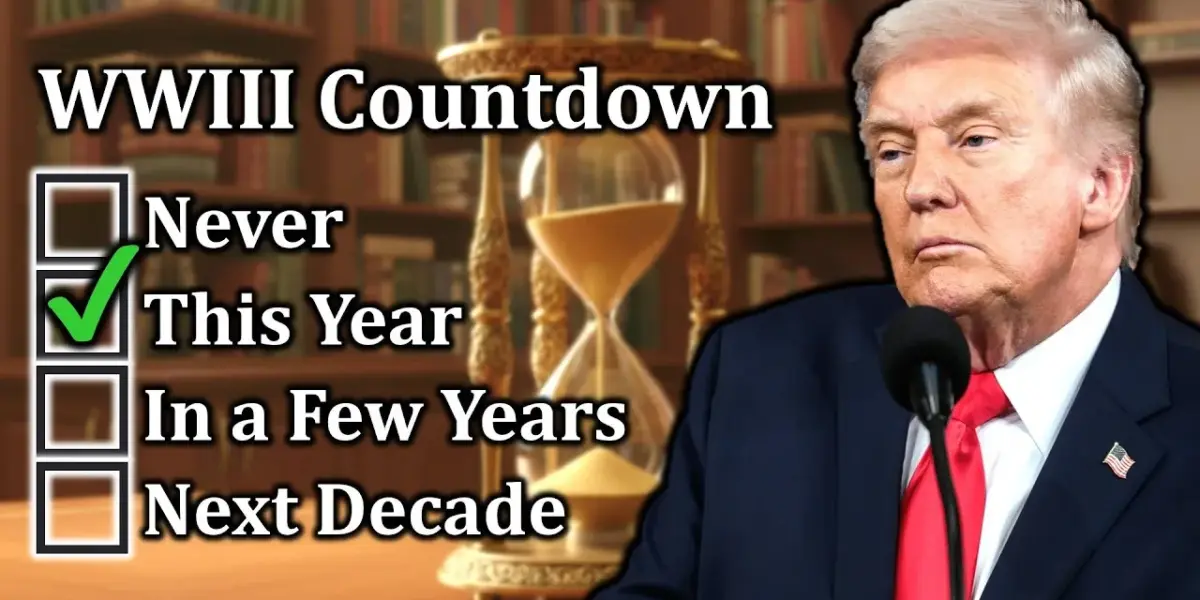
Global conflicts in Ukraine and the Middle East are creating a volatile environment, with a potential PRC invasion of Taiwan posing the greatest risk of World War III. Experts analyze four timelines for conflict, ranging from never to within the next decade, considering factors like demographics, military readiness, and geopolitical maneuvering.

Taiwan Invasion Risks Rise Amid Global Conflicts
The world is witnessing a complex web of interconnected conflicts, raising concerns about a potential global war. While the exact start date remains debated, the ongoing clashes in Ukraine and the Middle East, coupled with military aid flowing between nations like Russia, Iran, and North Korea, paint a grim picture. China’s growing assertiveness towards Taiwan, however, remains the most significant factor that could escalate these tensions into a widely recognized World War III.
The current geopolitical situation is characterized by a dangerous interplay of alliances and proxy support. Russia’s war in Ukraine involves drone technology from Iran and soldiers from North Korea, while China offers trade assistance.
Iran, in turn, uses funds from weapons sales to Russia to support groups that flank Israel, contributing to events like the October 7th attack. The United States’ increased military aid to Israel for the Gaza War further complicates this dynamic.
This intricate network of support and conflict could soon involve Iran and Russia directly. If a war erupts in Iran, Russia has reportedly offered drone assistance to Tehran.
The United States has also seen several Arab allies support the fight against Iran, with Ukraine even providing drone defense support to these nations. This interconnectedness suggests that a conflict in one region can quickly draw in others.
The Taiwan Factor
The most critical flashpoint that could ignite a global conflict is a potential invasion of Taiwan by the People’s Republic of China (PRC). Such an event would pit the world’s two largest militaries against each other directly. This scenario has always been considered the main event in discussions of global war, and it is the primary concern for national security experts.
For the people of Taiwan, the PRC’s constant presence near their territorial waters has become a daily reality. The decision by Beijing to cross the Taiwan Strait is seen as the trigger for what would undoubtedly be called World War III. The focus has shifted from simply understanding why the PRC might invade to analyzing specific timelines based on current global events.
Four Potential Timelines for Conflict
Experts are considering four main possibilities regarding a PRC invasion of Taiwan and the broader risk of World War III.
Timeline 1: Never
The most optimistic scenario suggests that a global war might be avoided altogether. This outlook relies on the immense costs associated with modern warfare, particularly a conflict between the U.S. and China. Such a war could mirror the scale of destruction seen in the 1940s, with devastating human and financial consequences.
The core dispute centers on Taiwan’s sovereignty. Taiwan desires self-expression, while the PRC views it as an offshore province. The potential for a failed invasion, a stalemate, or a successful takeover all carry enormous human and economic costs.
The disruption of global semiconductor production alone would cripple worldwide supply chains. The loss of a generation’s only child would create immense political problems for Beijing.
These high costs act as a deterrent, encouraging both sides to find diplomatic solutions. Historically, Taiwan has maintained a de facto independent status without provoking Beijing into military action.
If these costs were perceived as absolutely extreme, a peaceful resolution could be maintained. However, other factors are at play.
Timeline 2: Within the Next Few Years
A more concerning scenario, even before the recent escalation in the Middle East, points to a potential invasion within the next few years. This theory is driven by the PRC’s demographic crisis, a consequence of its former one-child policy. The window for a feasible invasion is narrowing as the mainland’s population ages and shrinks.
This demographic decline could force Beijing to act sooner rather than later. As the PRC’s power diminishes, the perceived benefit of invading now, even with high costs, might outweigh the potential gains in a weaker future. This dynamic can override standard cost-benefit calculations for leaders.
China’s leadership, under Xi Jinping, has set goals for the People’s Liberation Army (PLA) to be ready for an invasion. While 2027 was a target date for readiness, recent intelligence suggests this timeline might be delayed by a couple of years. A major hurdle is the lack of sufficient landing ships, with current capacity to transport only about 20,000 troops, far short of the estimated 300,000 to 1 million needed for a successful invasion.
The PRC is aggressively expanding its shipbuilding capacity, aiming to capture a significant portion of the global market to address this deficit. The strategy appears to be waiting for the United States to become heavily engaged in conflicts like the one in Iran, then launching an invasion before its demographic challenges become insurmountable.
Timeline 3: This Year (Least Likely)
The least probable scenario involves an invasion occurring this year. For this to happen, there would need to be significant intelligence failures on the part of the United States. This would include underestimating the PRC’s actual amphibious assault capabilities, potentially through the use of civilian vessels, and overlooking serious corruption issues within the PRC’s rocket forces.
The timing of the Iran War could be a factor here. If U.S. weapons stockpiles are significantly depleted, Beijing might see an opportunity to launch a less-than-perfect invasion against a weakened defense. The ideal window for such an operation would be during the calmer weather months of October and November, avoiding the typical fog, monsoons, and rough waters of the Taiwan Strait.
Some analysts believe the U.S. initiated the Iran conflict partly to neutralize a potential second front, should the PRC invade Taiwan. The fact that the U.S. proceeded with action against Iran suggests intelligence indicated the PRC was not imminently ready to invade. However, intelligence can be flawed, and prolonged U.S. attrition in the Middle East could alter calculations.
Timeline 4: Next Decade
A more distant possibility places a conflict in the next decade. In this scenario, the PRC might allow its demographic challenges to worsen while semiconductor production continues to shift away from Taiwan. This trend is already visible with companies like TSMC establishing operations in the United States.
As economic dependence on Taiwan decreases, the PRC might attempt a swift, low-profile annexation, similar to Russia’s approach with Crimea. This move could be based on intelligence suggesting a future U.S. president might be less inclined to intervene militarily, prioritizing other domestic or international concerns.
However, miscalculations are always possible. A U.S. president determined to defend Taiwan, regardless of economic ties, could still lead to conflict.
This pathway aligns with the PRC’s historical approach of gradual expansion and exploiting opportune moments. The risk remains that Chinese intelligence could be wrong about U.S. resolve, leading to an unintended global confrontation.
Strategic Implications
The interconnected nature of current global conflicts means that events in one theater can significantly impact others. The ongoing war in Ukraine has already strained Western resources and attention, potentially creating opportunities for adversaries. The conflict in the Middle East, particularly if it draws in Iran, further divides global attention and military assets.
For Taiwan, the PRC’s increasing military activities near its shores are a constant threat. The island’s strategic importance, particularly in semiconductor manufacturing, makes it a vital interest for global economic stability. Any conflict there would have far-reaching consequences for international trade and technology.
The demographic trends in China, while a long-term challenge, also create a sense of urgency for Beijing’s leadership. The desire to achieve reunification with Taiwan before its military and economic power declines could drive aggressive actions. The PRC’s rapid expansion of its naval capabilities, especially its amphibious assault fleet, is a clear indicator of its intentions.
Ultimately, the possibility of a World War III scenario hinges on a complex interplay of geopolitical rivalries, economic interests, and demographic pressures. While the costs of such a conflict are immense, the potential for miscalculation and escalating tensions remains a significant concern for global security.
Source: The Four Timelines for World War III (YouTube)

Related Articles
Iran Reopens Strait of Hormuz, Then Closes It Again
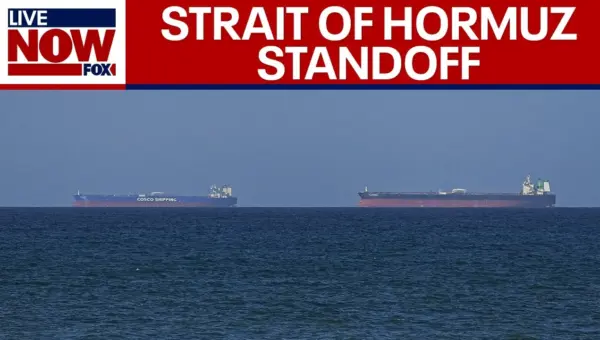
Iran has reimposed restrictions on the Strait of Hormuz, reversing a previous decision to reopen it. This move, linked to U.S. blockades, creates confusion over global energy supplies and impacts international trade. The situation highlights Iran's control over vital shipping lanes and potential shifts in global financial power.


US Actions Spark Global Despair, Undermining World Order
US foreign policy is causing global suffering and undermining international stability, according to a critical analysis. The article argues that Americans are detached from the real-world consequences of their government's actions, which include economic devastation and potential famine for millions worldwide. This approach is eroding global trust and questioning the future of the 'American experiment'.
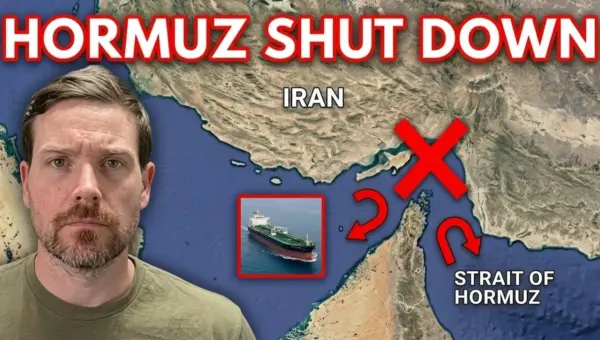
Iran Reclaims Hormuz; US Claims Unravel
US claims of a resolved conflict with Iran and an open Strait of Hormuz are being challenged by Iranian military actions and statements. Discrepancies in official narratives, concerns about market manipulation, and confusing sanction policies raise serious questions about US strategy and communication.