Putin’s Anger Flares as Russian Economy Stumbles
Russian President Vladimir Putin expressed frustration over his country's declining economy, revealing cracks in his administration. Meanwhile, Russia is escalating its military tactics in Ukraine with new drone and missile strategies. The political shift in Hungary and continued U.S. support for Ukraine add further complexity to the evolving geopolitical situation.

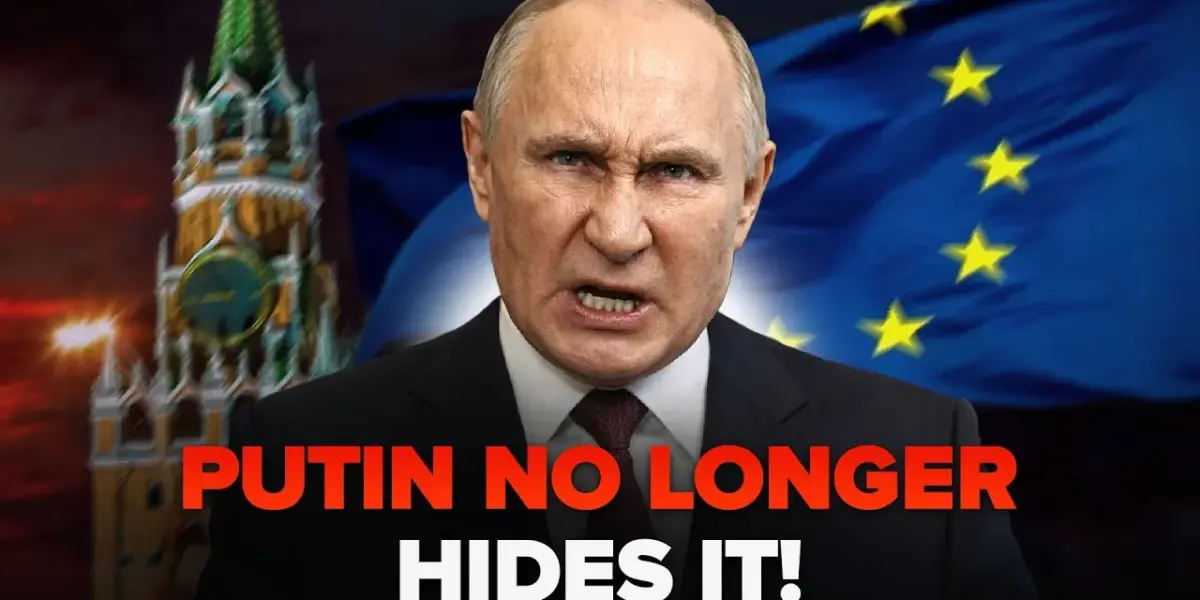
Putin’s Anger Flares as Russian Economy Stumbles
Cracks in Russia’s economy are becoming impossible to ignore. Vladimir Putin recently showed visible frustration during a Kremlin meeting, openly criticizing his officials for falling economic numbers and weak explanations. This marks a rare public display of anger from the Russian leader, suggesting significant pressure is building within his government.
Russia’s economic decline has now stretched for two consecutive months, with the Gross Domestic Product (GDP) falling by 1.8% at the start of the year. Officials attempted to attribute this downturn to seasonal factors and a shorter working calendar. However, Putin swiftly dismissed these justifications, highlighting the disconnect between official narratives and economic reality.
Russia’s Evolving Strike Tactics
Meanwhile, Russia continues its military campaign in Ukraine with evolving tactics. The Institute for the Study of War (ISW) reports that Russia used a pause in fighting on April 11-12 to stockpile missiles and drones. This allowed for two major strike waves in under 48 hours, demonstrating a strategy aimed at overwhelming and exhausting Ukraine’s air defenses.
On April 15-16, Russian forces launched one of the largest attacks of the war. They deployed over 700 strike weapons, resulting in at least 17 deaths and over 100 injuries. Energy infrastructure, civilian sites, and residential areas in cities like Kyiv, Dnipro, Odesa, and Kharkiv were targeted.
ISW analysis points to a new Russian approach: first, waves of drones and cruise missiles to wear down Ukrainian air defenses, followed by ballistic missile barrages. This tactic aims to exploit Ukraine’s air defense capabilities. Ukraine relies heavily on U.S.-provided Patriot systems to intercept ballistic missiles, underscoring its urgent need for interceptors and a comprehensive air defense network.
Russia appears to be capitalizing on a global shortage of Patriot interceptors and the ongoing conflict in the Middle East. This situation may allow Moscow to escalate its strike campaign against Ukraine. The use of cruise missiles in initial waves, followed by harder-to-intercept ballistic missiles in a second wave, is a deliberate strategy to deplete Ukraine’s defensive resources.
Hungary’s Political Shift and Russia’s Response
In Eastern Europe, Hungary’s political landscape has dramatically shifted following its April 12 parliamentary elections. The Madis party is projected to win a significant majority, potentially allowing for constitutional amendments. This outcome represents a major setback for Viktor Orban’s Fidesz party, signaling the end of a political era.
Russia is already seeking to re-establish ties with a future Hungarian government. Foreign ministry spokeswoman Maria Zakharova stated that Moscow is ready to engage in dialogue with a government led by Peter Magyar. Russia emphasizes a pragmatic approach and mutual consideration of interests for future discussions on bilateral and international matters.
Orban himself has acknowledged the scale of his party’s defeat, admitting that the previous form of the right-wing community can no longer continue. He spoke of pain and emptiness, indicating a need for a full renewal of his political movement. The final election results are expected by April 18.
Geopolitical Tensions and Potential Escalation
The Washington Post suggests that an increasingly cornered Putin may become more dangerous. Facing a bogged-down military in Ukraine, a weak economy, and fading international support, he might feel a shrinking window of opportunity. This could lead him to take greater risks, potentially testing NATO’s resolve, especially in the Baltic states.
Russia’s defense ministry has publicly identified European companies supplying drones to Ukraine, with former Russian President Dmitry Medvedev hinting at potential targets. This raises concerns about escalating tensions between Russia and European nations.
The article also notes Russia’s recent call for its citizens to cancel trips to Turkey, labeling it an unfriendly country. Officials claim Turkey is involved in producing drones, such as the Bayraktar and Akinci, whose engines are allegedly linked to Ukrainian factories. This move appears to be a retaliatory measure following perceived pressure on Russia.
U.S. Support for Ukraine and Sanctions
The United States continues its commitment to supporting Ukraine. Ukrainian Prime Minister Yulia Videnko met with top U.S. officials in Washington, emphasizing high-level support. U.S. Treasury Secretary Janet Yellen affirmed the importance of maintaining sanctions against Russia and preventing their evasion.
Financial support for Ukraine is progressing, with work on an $8 billion IMF program moving forward. An IMF mission is expected in Kyiv in May, potentially offering Ukraine more economic flexibility during the war. G7 countries have also reaffirmed their commitment to continued support, including assistance for the upcoming winter.
The defeat of Viktor Orban in Hungary could also unblock crucial decisions within the European Union, including new sanctions and financial packages that were previously delayed. This political shift may allow for a more unified EU approach to supporting Ukraine.
Despite Russian claims that sanctions do not impact them, the U.S. has tightened its sanctions regime on Russian oil. The license temporarily suspending certain restrictions expired on April 11 and was not renewed. Russia’s insistence that sanctions are not the primary issue suggests they are indeed feeling the economic pressure.
Space Competition and Future Conflicts
Looking ahead, the U.S. Space Force predicts intensifying rivalry with China, with space becoming a key arena for confrontation. A report outlines a future where the lines between peace and conflict blur, extending beyond land into space, cyberspace, and the electromagnetic spectrum.
China is investing heavily in space technologies to enhance its military power and potentially disrupt adversaries’ communication and navigation systems. Future conflicts may involve constant pressure below the threshold of war, including cyber attacks and interference with satellite operations.
While Russia has a weaker economic base, it is expected to continue employing disruptive and asymmetric tactics. These strategies aim to exert pressure through unconventional means, even as major powers like China focus on advanced space capabilities.
The article concludes by noting that the war in Ukraine remains unfinished business for Moscow. Russia’s perception of threats is likely to intensify, shaping European security for years to come. The Kremlin views Europe as its primary theater, and its decisions will continue to be influenced by the ongoing conflict.
Source: Problems in Kremlin! Putin addressed Russians. Russia’s terrifying plan against EU has been exposed (YouTube)

Related Articles

Trump’s Vendetta Politics Distract From Real Issues
Donald Trump's communication strategy appears to prioritize personal vendettas over addressing national issues like inflation. His social media activity shows an obsessive focus on perceived enemies, overshadowing economic concerns and raising questions about his leadership priorities.
Ukraine Conflict: Early Signs of Russian Influence
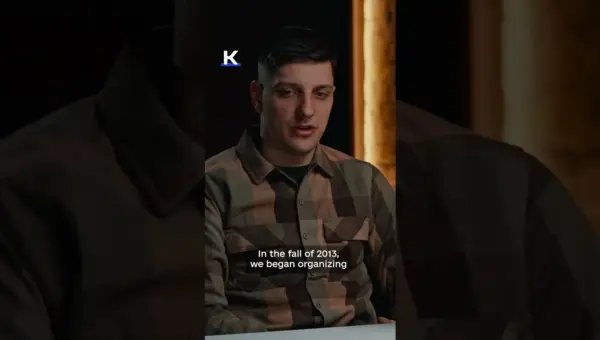
Early signs of Russian influence in Ukraine became apparent before the full-scale conflict, with Russian flags appearing on public transport in some cities. Tensions escalated following the 2013 Euromaidan Revolution, leading to confrontations between pro-Ukrainian activists and opposing groups. A violent incident in spring 2014, where activists raising a Ukrainian flag were shot at, forced pro-Ukrainian groups to operate underground.
Kremlin’s Fear: Russia Controls Thoughts, Not Just Words
Russia's government is escalating information control by targeting not just speech, but thoughts. This shift, rooted in historical patterns of control, signals deep paranoia and a loss of faith in propaganda. The move affects all citizens and may accelerate societal instability.