50 Unsolved Murders: Chilling Cases Haunt America
A new video series, "50 Unsolved Murders in 50 States," begins its grim journey from Alabama to Missouri. It uncovers heartbreaking cold cases, from the disappearance of Shannon Nicole Pulk to the community-driven justice in Ken Rex Moyer's death, leaving families and investigators searching for answers.

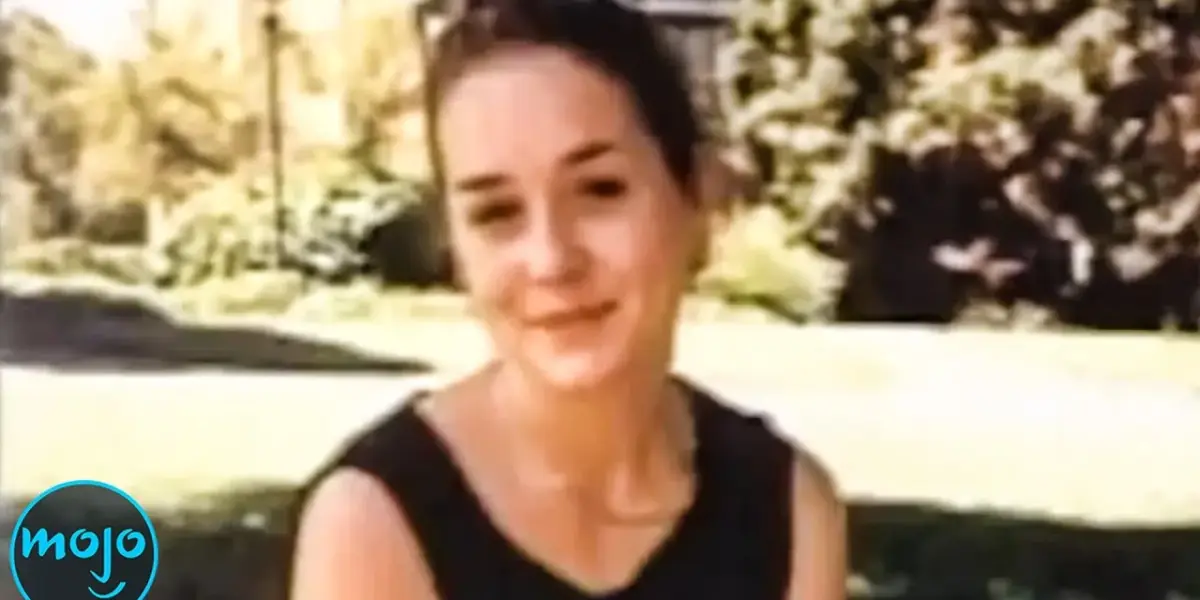
50 Unsolved Murders: Chilling Cases Haunt America
America’s history is filled with mysteries, and some of the most chilling involve unsolved murders. A new video series, “50 Unsolved Murders in 50 States,” dives into these dark corners, starting with Part 1, which covers cases from Alabama to Missouri. These stories are more than just statistics; they are heartbreaking accounts of lives cut short and families left searching for answers.
Alabama: The Case of Shannon Nicole Pulk
In 2001, 11-year-old Shannon Nicole Pulk vanished from her trailer park in Prattville, Alabama. Her remains were found months later in a nearby field.
Witnesses saw her talking to a man in a car, but despite composite sketches and many leads, the driver was never found. Investigators believe someone in the tight-knit community knows what happened, but silence has kept the killer free for over two decades.
Alaska: The Investor Murders
The fishing vessel Investor was found burning off the coast of Craig, Alaska, in 1982. Inside, eight people, including a captain’s family, had been shot before the boat was set on fire.
The extreme violence shocked the small fishing village. While a former crew member, John Peele, was arrested, two trials failed to convict him, leaving the case officially unsolved and the terrifying possibility of a mass murderer at large.
Arizona: The Mysterious Death of Chuck Morgan
Businessman Chuck Morgan disappeared in 1977 near Tucson, Arizona, and was later found dead. He was wearing a bulletproof vest and had a $2 bill with cryptic codes.
Authorities claimed he died by suicide, but his family believes he was killed because he was involved in money laundering for the mafia. The strange clues left behind continue to puzzle investigators nearly 50 years later.
Arkansas: The Boys on the Tracks
In 1987, teenagers Kevin Ives and Don Henry were found dead on railroad tracks near Alexander, Arkansas. Initially ruled an accidental drug overdose, a second autopsy revealed they had been stabbed and beaten before being placed on the tracks.
This led to theories of drug trafficking and political cover-ups, especially as several witnesses connected to the case died mysteriously. No charges have ever been filed, leaving this a disturbing example of how corruption can hide the truth.
California: The Zodiac Killer
The late 1960s saw the rise of the Zodiac Killer, who terrorized the San Francisco Bay Area and claimed at least five victims. He taunted police and newspapers with complex ciphers.
While Arthur Lee Allen was a suspect, forensic evidence was never conclusive. The killer eventually stopped his activities, and his identity remains one of America’s most notorious cold cases.
Colorado: The JonBenét Ramsey Case
The 1996 murder of 6-year-old beauty queen JonBenét Ramsey in her Boulder, Colorado, home shocked the nation. A long ransom note was found inside, yet her body was discovered in the basement.
The investigation was complicated by early police errors and a media frenzy that divided public opinion. Although the parents were eventually cleared, no DNA match has ever been found, leaving the killer’s identity a mystery.
Connecticut: The Murder of Suzanne Jovin
In December 1998, Yale student Suzanne Jovin was found stabbed to death on a New Haven street corner. The initial focus on her thesis adviser ruined his career before he was cleared.
With robbery ruled out and no DNA match, the motive remains unknown. Witnesses heard a man and woman arguing moments before the attack, but their identities are still a mystery.
Delaware: Jane Marie Pritchard’s Unsolved Homicide
In September 1986, master’s student Jane Marie Pritchard was shot and killed while conducting botany research in Blackbird State Forest, Delaware. Despite the area being filled with campers and hunters that day, no one reported seeing or hearing anything.
Investigators initially suspected hunters, but evidence pointed to an intentional shooting. Without a motive or weapon, her death remains a senseless tragedy.
Florida: The Walker Family Murders
In 1959, the Walker family—Cliff, Christine, and their two young children—were shot and killed in their Osprey, Florida, farmhouse. The murders have long been speculated to be the work of Perry Smith and Richard Hickok, the killers from Truman Capote’s “In Cold Blood,” who were in Florida at the time. However, no physical evidence has ever linked them to the scene, leaving the massacre officially unsolved.
Georgia: The Atlanta Child Murders
Between 1979 and 1981, Atlanta, Georgia, was gripped by a series of abductions and murders of at least 28 children and young adults. Wayne Williams was officially blamed and convicted of two adult murders, but never tried for the deaths of the youths. This has left many parents believing the true killer was never caught, making the cases technically cleared but tragically unsolved.
Hawaii: The Disappearance of Lisa Al
In 1982, 19-year-old hairdresser Lisa Al vanished while driving home in Hawaii during a heavy downpour. Her car was found abandoned with the window down and her purse inside.
Her body was discovered 10 days later, but the cause of death was impossible to determine. Witness reports of a car with flashing blue lights following her fueled speculation of a rogue police officer, but no arrests were ever made.
Idaho: The Christopher Ree Murder
In 1984, Christopher Ree, a 27-year-old gas station employee in Sun Valley, Idaho, was shot and killed during a robbery. Intruders stormed the station, shot him, and stole the safe.
Ree managed to call 911 before dying but couldn’t identify his attackers. The stolen safe was found years later in a river, but no physical evidence ever linked it to a suspect, leaving the case frozen in time.
Illinois: The Lane Bryant Massacre
In 2008, a robbery at a Lane Bryant store in Tinley Park, Illinois, turned into a deadly ambush. An unidentified man forced six women, including customers and employees, to the back of the store, bound them, and opened fire.
Five women died, making it one of the deadliest unsolved mass shootings in U.S. history. The killer’s voice was captured on a 911 call, but he has never been identified.
Indiana: The Burger Chef Murders
The 1978 Burger Chef murders in Speedway, Indiana, remain a defining “stranger danger” case. Four young employees disappeared during closing shift and were found murdered two days later.
The crime scene suggested a botched robbery, but the brutal executions pointed to something darker. The investigation was hampered by a compromised crime scene, as cleaners had accidentally wiped away crucial evidence.
Iowa: The Villisca Axe Murders
In 1912, eight people were bludgeoned to death in their sleep with an axe in the small town of Villisca, Iowa. The killer covered mirrors and locked doors before vanishing.
Suspects ranged from a traveling minister to drifters, but trials ended in hung juries or acquittals. The house still stands as a morbid tourist destination, but the victims’ spirits have never received justice.
Kansas: The Disappearance of Randy Leach
In April 1988, 17-year-old Randy Leach vanished from a graduation party in rural Kansas. Not only did Randy disappear, but so did the car he was driving. Witness accounts from the party were conflicting.
Rumors of satanic cults and police cover-ups swirled, fueled by the fact that the party site was quickly cleaned up. Neither Randy nor the vehicle has ever been found.
Kentucky: The Murder of Betty Gail Brown
In October 1961, 19-year-old Transylvania University student Betty Gail Brown was found strangled in her car on campus. There were no signs of assault or robbery, leaving the motive unclear.
A drifter confessed in 1965, but his details were inconsistent, and charges were dropped. To this day, no one knows if he was a confused man or a killer who got away with murder.
Louisiana: The Jeff Davis 8
Between 2005 and 2009, the bodies of eight women were found in swamps and canals around Jennings, Louisiana. Known as the Jeff Davis 8, the victims were connected, leading to theories of a serial killer.
However, disturbing connections to local law enforcement and allegations of evidence tampering emerged. The case involves drug trade, police misconduct, and a community too afraid to speak, leaving families without justice.
Maine: The Disappearance of Ayla Reynolds
In 2011, 2-year-old Ayla Reynolds disappeared from her father’s Waterville, Maine, home. Her father claimed she was abducted, but police found a significant amount of Ayla’s blood in the basement. Her body has never been recovered.
Despite grim findings and the father’s lack of cooperation, no murder charges were filed. A judge declared Ayla dead in 2017, but the circumstances remain a mystery.
Maryland: Sister Kathy Cesnik’s Murder
Sister Katherine Cesnik, a nun and teacher in Baltimore, disappeared in November 1969 and was found murdered months later. The official investigation stalled, but former students alleged she was killed for planning to expose a ring of sexual abuse within the church and police. While the Netflix documentary “The Keepers” sparked renewed interest, the question of who committed the murder remains legally unanswered.
Massachusetts: The New Bedford Highway Murders
In the late 1980s, nine women vanished along the highways of New Bedford, Massachusetts, with their bodies later found near Interstate 195. All victims had connections to substance abuse or sex work, suggesting a serial killer.
Two main suspects were investigated, but no charges were filed. The investigation faced criticism for its handling of evidence, and the highway killer remains a phantom.
Michigan: The Oakland County Child Killer
In the late 1970s, four children were abducted, held, and then killed in suburban Detroit by the Oakland County child killer. The killer’s ritualistic care for the children before their deaths earned him the nickname “the babysitter.” Despite a massive task force and thousands of tips, the investigation was plagued by jurisdictional infighting and conspiracy theories. Over 40 years later, families still await the killer’s identity.
Minnesota: The Glensheen Mansion Murders
In 1977, Aerys Elizabeth Congdon and her nurse were murdered inside the Glensheen mansion in Duluth, Minnesota. Investigators focused on Elizabeth’s adopted daughter, Marjorie, and her husband, Roger Caldwell, motivated by inheritance.
Roger was convicted but later released, and Marjorie was acquitted. The legal outcomes left the public stunned, with no one currently serving time for the double homicide.
Mississippi: The Burning of Jessica Chambers
In 2014, 19-year-old Jessica Chambers was found stumbling away from her burning car in Courtland, Mississippi, with severe burns. She managed to whisper a name to first responders, sounding like “Eric” or “Derek,” but this did not match the prime suspect, Quinton Tellis. Tellis was tried twice, but both resulted in hung juries, leaving the case in a frustrating limbo.
Missouri: The Extrajudicial Killing of Ken Rex Moyer
Ken Rex Moyer was a local villain in Skidmore, Missouri, known for assault, arson, and theft, yet he always evaded conviction. In 1981, fed up residents took matters into their own hands.
Moyer was shot and killed in broad daylight outside a bar by an estimated 40 townspeople. When police arrived, no one admitted to the shooting, and the community’s vow of silence keeps the case officially unsolved.
This first part of “50 Unsolved Murders in 50 States” highlights the enduring pain and unanswered questions surrounding these tragic cases. The series continues to explore more mysteries from across the nation.
Source: 50 Unsolved Murders in 50 States | Part 1 (YouTube)

Related Articles

Stranger’s Quick Aid Saves Tourist’s Life in Toronto
A tourist couple's vacation took a terrifying turn when the husband suffered a severe neck injury on a Toronto street. Two strangers, including actor John Malkovich, provided immediate aid. Their quick actions were credited with saving the man's life.

Missing Mom Case: Friend Demands Answers from Husband
Friends of missing mom Lynette Hooker are questioning her husband Brian's actions after he left the Bahamas while the search for her continues. Despite claims of focusing on finding her, Brian's departure and lack of information sharing have raised serious concerns among those close to Lynette.

Doctor Sees Grim Reaper, Then Dies of Cancer
In 1974, Dr. Julian Kirschner reported seeing a figure resembling the Grim Reaper in his backyard. Weeks later, he was diagnosed with incurable blood cancer and soon passed away. His story raises chilling questions about life, death, and unexplained encounters.