Trump Readies Cuba Invasion: Military Plans Revealed
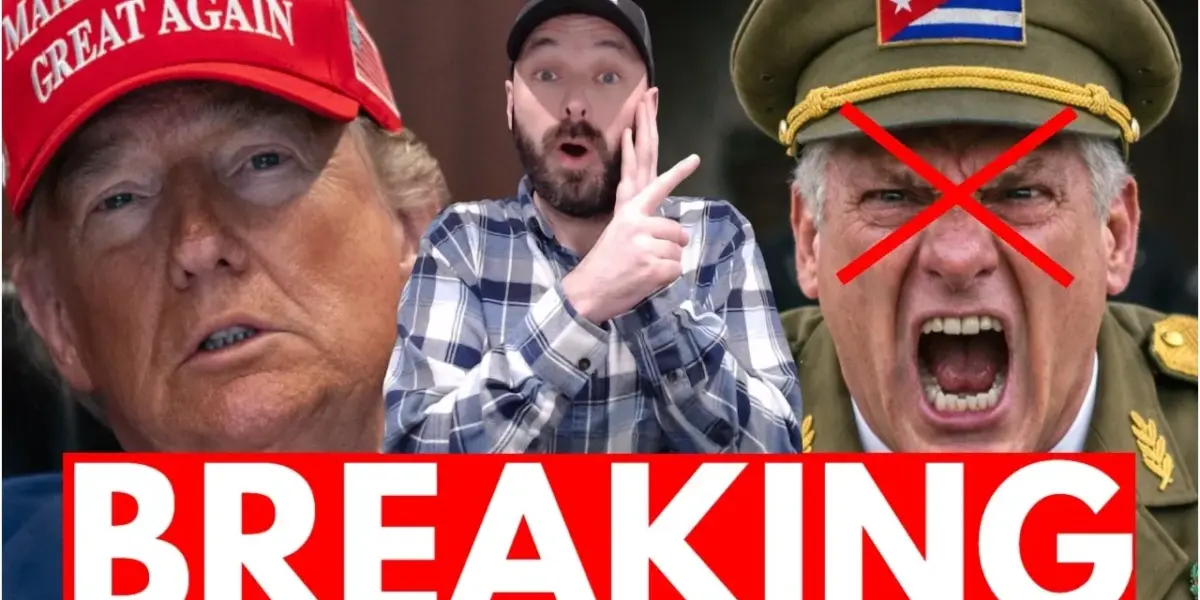
A new report reveals the US military is secretly preparing invasion plans for Cuba under President Trump's directive. Despite Cuba's outdated defenses, its leader vows to fight, raising regional and global concerns.

Trump Readies Cuba Invasion: Military Plans Revealed
A new report suggests the United States military and President Trump are secretly preparing for a major military action against Cuba. This news comes amid rising global tensions and follows past US actions aimed at influencing regimes in Latin America. The United States has a long history of engaging with Cuba, particularly since Fidel Castro took power.
Reports indicate that President Trump views overthrowing the Cuban communist regime as a top priority. A directive allegedly given to his administration suggested a deadline of the end of 2026 to achieve this goal. The current date is mid-April, meaning the clock is ticking on this potential timeline.
Pentagon Ramps Up Cuba Planning
USA Today published an exclusive report detailing that the Pentagon is quietly increasing its planning for possible military operations in Cuba. This surge in preparation is contingent on President Trump giving the order to intervene. The sources speaking to USA Today did so anonymously, as they were not authorized to speak to the media.
These directives appear to be an escalation of recent tensions. These tensions began in January when the Trump administration reduced oil shipments to Cuba. This action was part of a larger effort to force significant political changes on the communist island nation.
Cuba previously relied heavily on Venezuela for oil, with only minor amounts coming from Russia. After the US intervened in Venezuela, those oil shipments to Cuba were halted. This move aimed to apply maximum pressure on the Cuban government.
In a statement to USA Today, the Pentagon confirmed its readiness. They stated that they plan for a range of potential situations and are prepared to carry out the president’s orders. Reports about these escalated plans first surfaced on Zitto’s Substack and quickly spread across Washington.
Mysterious Fires and Setting the Stage
Coinciding with these military preparations, Cuba has experienced mysterious fires that disrupted its infrastructure. These fires, which began in late March, affected the island’s essential services. The cause of these fires remains unexplained, drawing comparisons to similar unexplained incidents in Iran prior to recent conflicts.
The timing of these events suggests a deliberate effort to create specific conditions. Such incidents are often described as “setting the table” for future actions. This pattern of unexplained disruptions can be a precursor to larger geopolitical moves.
Trump’s Stated Intentions
President Trump has made public statements indicating his intentions regarding Cuba. He has referred to Cuba as a “failing nation” and has suggested that action might be taken after resolving the situation in Iran. He stated, “We’re gonna do Iran before Cuba.”
In mid-March, Trump elaborated on his outlook, saying, “We may be planning for an invasion.” He also mentioned that Cuba “wants to make a deal.” Trump highlighted the large Cuban diaspora in the US, many of whom have expressed strong anti-communist sentiments and long-held desires for change in Cuba.
He further noted the strong support he receives from Cuban-Americans, many of whom fled the island due to political persecution. He believes they have been waiting for decades for a change in their homeland. Trump predicted that “something will happen with Cuba pretty quickly.”
Cuba’s Response and Defenses
Cuban President Miguel Diaz-Canel has responded firmly to the possibility of US aggression. He stated that the Cuban people are prepared to defend their revolution and are willing to “give our lives for the homeland to live.” He believes there is no justification for US military action against Cuba.
Diaz-Canel emphasized that the Cuban government would defend itself if attacked. He also noted that the US often tries to personalize the revolution’s leadership, but the commitment to defend the island is widespread. He expressed hope that the American people would not support an invasion of a small island nation that poses no national security threat.
Assessing Cuban Air Defenses
The transcript details Cuba’s air defense capabilities, describing them as significantly outdated. The primary systems mentioned are the Soviet-produced S-125 (operational since 1961), the S-75 (operational since 1957), and the 2K12 Kub (operational since 1967). These systems are considered relics from the Cold War era.
Cuba possesses the Igla shoulder-fired missile system, which entered service in 1981. While these systems were once formidable, they are unlikely to pose a significant threat to modern US air power. Advanced aircraft like the B-2, F-22, and F-35 would likely overwhelm these defenses quickly.
The analysis suggests that Cuba’s air defenses would be neutralized early in any conflict. This would allow for subsequent operations, such as helicopter-based assaults similar to past operations in Venezuela. A larger-scale troop landing would involve even more extensive military action.
Why This Matters
The prospect of US military intervention in Cuba carries significant weight. Historically, US-Cuba relations have been fraught with tension, dating back to the Cuban Revolution. The US has previously attempted to isolate and influence Cuba, most notably through the economic embargo.
This potential military action, if it occurs, would mark a dramatic shift in US foreign policy towards Cuba. It could reignite Cold War-era dynamics and potentially destabilize the region. The Cuban government’s defiant stance suggests a willingness to resist, which could lead to significant conflict and loss of life.
The timing is also critical, occurring while other international conflicts are ongoing. The mention of “covert ops” and “mysterious fires” also raises concerns about the methods being employed and their potential for escalation or miscalculation. The effectiveness of outdated air defenses against modern military might is a clear reminder of the evolving nature of warfare.
Implications and Future Outlook
If military action is taken, the immediate impact on Cuba would be severe. The country’s infrastructure, already strained, could face further damage. The human cost of such a conflict could be substantial, given the Cuban government’s declared readiness to fight.
Regionally, such an intervention could influence relations with other Latin American countries. Some may view it as an assertion of US power, while others might see it as an unwelcome intrusion. The long-term implications for Cuban sovereignty and self-determination are profound.
The future outlook depends heavily on whether President Trump gives the order to proceed. The planning itself signals a heightened level of readiness and intent. The situation remains fluid, with potential for diplomatic solutions or a rapid military escalation.
As of April 16th, the United States military is actively developing plans for potential military action in Cuba. The Cuban government has vowed to defend itself, and the outcome remains uncertain. This situation demands close observation as events unfold.
Source: Trump SECRETLY Prepares Cuba INVASION – Dictator PANICS (YouTube)

Related Articles
US Imposes Naval Blockade on Iran Amid ‘Operation Epic Fury’
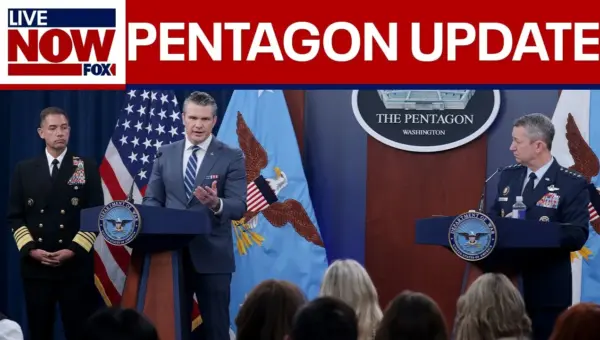
The U.S. has implemented a naval blockade against Iran as part of 'Operation Epic Fury,' aiming to pressure the Iranian regime while maintaining combat readiness. Officials revealed the operation includes an 'ironclad blockade' and a direct message to Iran's leadership about dwindling military capabilities. The U.S. Navy is enforcing the blockade on all ships entering or leaving Iranian ports, with escalating force options available.
US Threatens China Banks with Sanctions Over Iran Ties
The U.S. Treasury has warned Chinese banks of severe secondary sanctions if they are found to be facilitating financial transactions with Iran. This action comes amid reports of China providing Iran with military-grade satellite technology, raising concerns about Beijing's support for Tehran's activities. The U.S. is employing strong financial measures to pressure Iran and its financial enablers.
US Warns Iran: Choose Deal or Face Blockade and Bombs
The U.S. military has issued a stark warning to Iran, urging the regime to choose a diplomatic deal or face a combination of naval blockade and targeted strikes. Admiral Bradley Cooper detailed Operation Epic Fury, highlighting U.S. military superiority and intelligence capabilities. The U.S. also criticized negative media coverage, praising troops' achievements.