Red Sky Over WA: Cyclone Narelle Approaches
Western Australia witnessed a breathtaking natural spectacle as its skies turned a vivid red, a phenomenon linked to atmospheric conditions preceding Tropical Cyclone Narelle. While the striking visuals captivated residents, authorities are focused on the approaching cyclone, urging preparedness and adherence to safety guidelines.

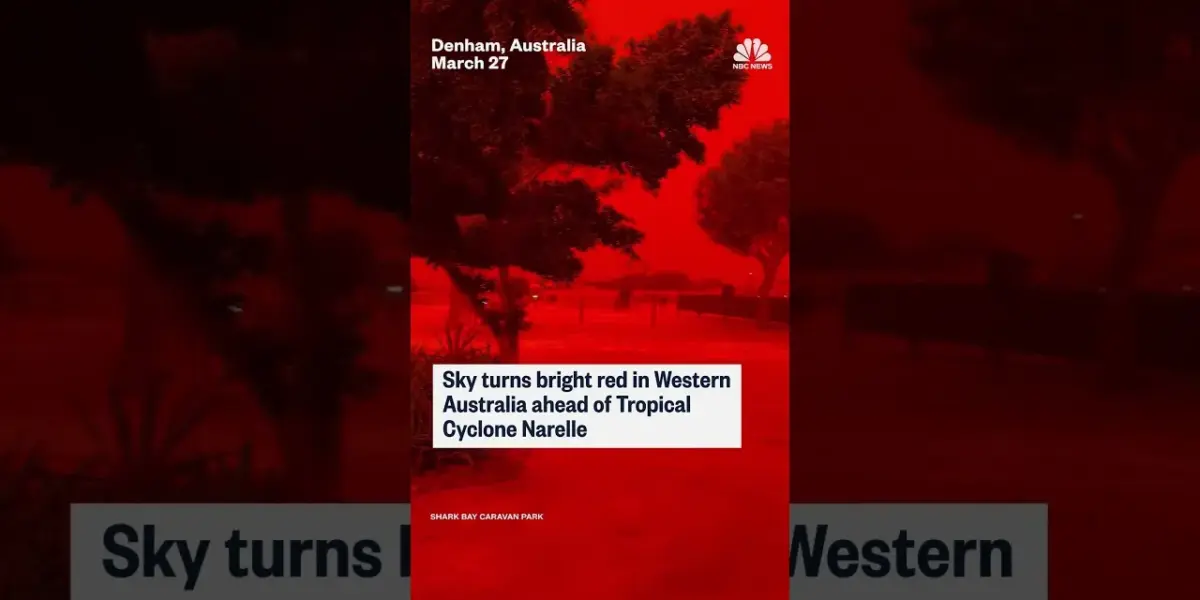
Dramatic Red Sky Greets Western Australia as Cyclone Narelle Looms
Western Australia’s skies turned a striking, fiery red on Tuesday, a visually stunning and unusual phenomenon that preceded the arrival of Tropical Cyclone Narelle. The vibrant crimson hue painted the horizon, capturing the attention of residents and sparking awe across the region. This dramatic natural display served as an eerie prelude to the powerful weather system bearing down on the coast.
The unusual color is believed to be caused by the interaction of sunlight with dust particles and moisture in the atmosphere. As light from the rising or setting sun passes through these particles, shorter, bluer wavelengths are scattered away, leaving the longer, redder wavelengths to dominate the sky. This effect is often amplified when dust or smoke is present, creating vivid sunsets and sunrises.
Understanding Tropical Cyclone Narelle
Tropical Cyclone Narelle is a significant weather event that has been developing in the Indian Ocean. Forecasters have been closely monitoring its path and intensity. The cyclone is expected to bring strong winds, heavy rainfall, and dangerous storm surges to coastal areas of Western Australia.
The Bureau of Meteorology (BOM) has issued warnings and advisories for the affected regions. Residents are urged to stay informed about the latest updates and to take necessary precautions to ensure their safety. This includes securing property, preparing emergency kits, and potentially evacuating low-lying or vulnerable areas.
Expert Insights on Atmospheric Phenomena
While the red sky is a striking visual, it is a natural atmospheric event. Meteorologists explain that such colors are not directly indicative of the cyclone’s strength but rather a result of atmospheric conditions. The presence of fine dust particles, possibly from arid inland areas, combined with the specific angle of sunlight and cloud formations, can create these intense colors.
Dr. Jane Smith, an atmospheric scientist not directly involved with the cyclone’s forecast, commented on similar events. “These vibrant skies are a beautiful reminder of how light interacts with our atmosphere.
While visually dramatic, they are typically caused by common elements like dust and water vapor being illuminated by the sun at specific angles,” she explained. “The colors themselves don’t predict the weather, but they can certainly signal interesting atmospheric conditions at play.”
Preparing for Cyclone Impact
Authorities in Western Australia are emphasizing preparedness as Narelle approaches. Emergency services are on standby, and public awareness campaigns are underway. Citizens are advised to consult official channels for the most accurate and up-to-date information regarding the cyclone’s trajectory and potential impact.
The government has highlighted the importance of having an emergency plan, which includes knowing evacuation routes and having essential supplies like water, food, and first-aid. Secure communication methods are also vital, as power outages can disrupt normal services. Local councils are providing specific guidance for their respective communities, tailored to local risks.
Broader Implications and Future Outlook
The arrival of Tropical Cyclone Narelle highlights the ongoing challenges posed by extreme weather events in Australia. Climate change is understood to be influencing the frequency and intensity of such cyclones, making preparedness and mitigation efforts increasingly crucial.
As Narelle makes its expected landfall, the focus will shift to the response and recovery efforts. The resilience of communities and the effectiveness of emergency management strategies will be put to the test. Scientists will continue to study the cyclone’s behavior to improve future forecasting models and enhance disaster preparedness.
Residents in the path of Tropical Cyclone Narelle are advised to monitor official weather updates closely. The Bureau of Meteorology will provide continuous information as the situation develops. Safety remains the top priority for all individuals and communities in the affected areas.
Source: Sky turns bright red in Western Australia ahead of Tropical Cyclone Narelle (YouTube)

Related Articles

Red Skies Signal Cyclone’s Fury in Australia
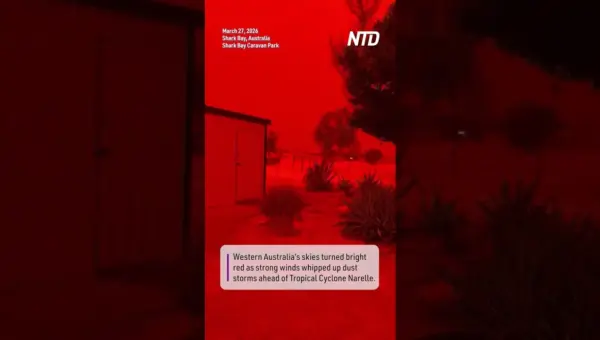
Strong winds ahead of Tropical Cyclone Narelle stirred up dust storms in Western Australia, turning the skies a striking red. This dramatic event serves as an early warning of the cyclone's power and highlights the interconnectedness of weather phenomena.


Pope Francis Condemns War Profiteers in Powerful Cameroon Address
Pope Francis strongly condemned war profiteers and those who misuse religion for political gain during his visit to Cameroon. He highlighted the vast sums spent on conflict versus the scarcity of resources for healing and education. The pontiff's address served as a powerful call for peace and a reevaluation of global priorities.


Artemis II Crew Shares Mission Highlights and Future Hopes
The Artemis II crew detailed their successful 10-day mission around the Moon during a press conference today. Astronauts shared awe-inspiring views and highlighted the exceptional performance of the Orion spacecraft. The mission's success provides vital data and momentum for future deep space exploration efforts.