Senator Tillis Criticizes Trump’s War Advice, Cites Cabinet Lapses
Retiring Senator Thom Tillis has voiced concerns about the White House's lack of clear objectives regarding U.S. military operations in Iran. In a recent interview, Tillis also offered his opinions on who is giving President Trump bad advice, including Stephen Miller and Pete Hegseth, while noting his own departure from re-election pressures allows for more candid commentary.

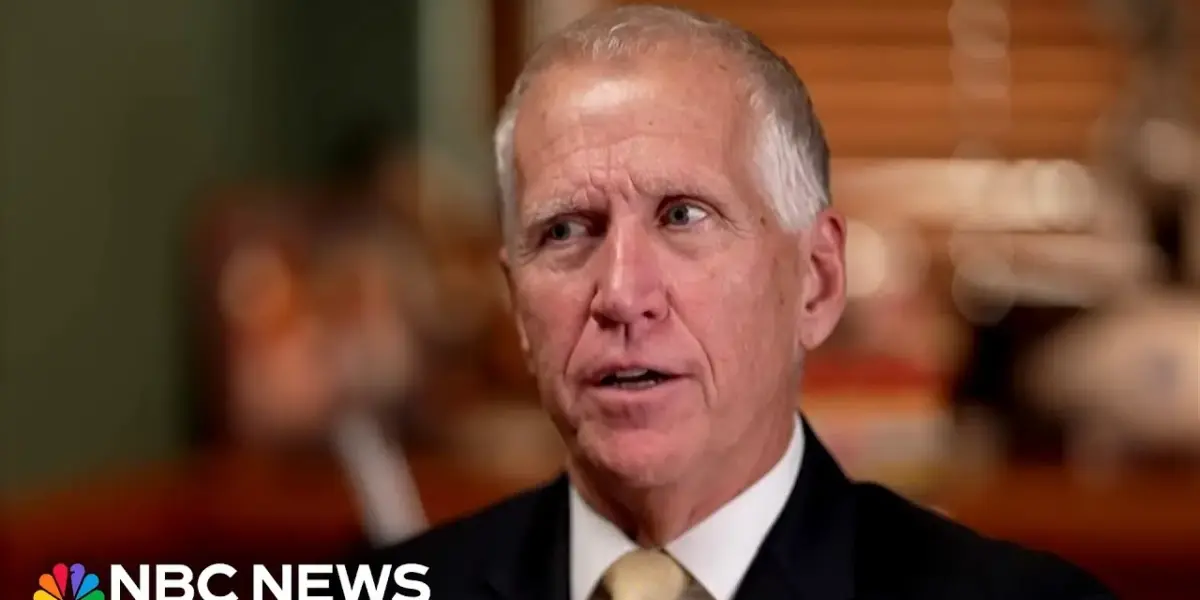
Senator Tillis Questions White House on Iran War Strategy
As the Senate once again rejected a War Powers Resolution aimed at blocking U.S. military operations in Iran without explicit congressional approval, a growing frustration is evident among some Republican senators. They are calling for clearer details from the White House regarding the objectives of the ongoing conflict. North Carolina Senator Thom Tillis, who is retiring, recently spoke with NBC News Capitol Hill Correspondent Julie Tsirkin about these concerns.
Tillis expressed his uncertainty about the strategic goals of the Iran operations, especially as the 60-day mark under the War Powers Resolution approaches. He indicated that while a 30-day extension might be considered, it would require significant details that have not yet been provided. “It’s going to be difficult to get my support,” Tillis stated, highlighting the administration’s lack of transparency.
When pressed by Tsirkin on how constituents should understand the reasons for the U.S. presence in Iran and the subsequent 38% jump in gas prices without public information, Tillis responded, “Well, they would have to be psychics, right? I mean, they would have to possess information that hasn’t been shared publicly.” He emphasized the need for this information to justify continued involvement.
Tillis on Post-Retirement Candor and Trump’s Advisors
With his pending retirement, Senator Tillis has become notably more outspoken about Trump administration policies. He told Tsirkin that he feels more freedom to speak his mind without the constraints of a re-election campaign. “I don’t have to think about the words that I use anymore, right?” Tillis explained. “If I were running for re-election, I’d probably use a few different words, try to communicate the same thing like I did in Trump one, but I just don’t have to deal with that filter.” He sees this as a way to “optimize our chances in November and in the future” by removing unnecessary “overhead.”
Tillis acknowledged that being a statewide Republican in a purple state like North Carolina requires building a broad coalition. He believes that adopting extreme positions or running as an extreme candidate makes winning statewide elections very difficult.
Assessing Trump’s Inner Circle
During the interview, Tsirkin asked Tillis to weigh in on whether certain individuals around President Trump were giving good or bad advice. Tillis labeled Stephen Miller as giving “bad advice.” Regarding Tulsi Gabbard, he suggested it was more like “no advice,” as he hadn’t seen her around the President much. For Vice President JD Vance, Tillis stated, “I don’t know. It’s harder for me to judge exactly what role JD is playing in advising the president.”
Tillis was particularly critical of Pete Hegseth, calling his advice “bad advice.” He elaborated, “In the United States, we are not war mongers. We go in and try and end wars. We try not to start them. Right. And I thought that that’s just an example of where he gets caught up on the war thing and him being the top warrior.”
Reaction to President Trump’s ‘Annihilation’ Comments
Tillis also addressed President Trump’s controversial posts calling for the “annihilation of Iranians.” He described receiving a flood of concerned texts from constituents, friends, and family members asking, “What’s going on? Because I mean, that was pretty profound.”
While President Trump suggested these posts brought Iranians to the table, Tillis advised, “If I were coaching him, I’d say, Mr. President, people believe literally every word that comes out of your mouth.” He believes the President likely did not intend to “destroy civilization” but suggested that such rhetoric could be misconstrued.
The ‘Jesus AI Photo’ and Papal Relations
The conversation touched upon President Trump’s use of an AI-generated image of Jesus, which he later took down. Trump claimed he thought it was a doctor and that taking it down was a sign of apology. Tillis stated he would “take it at face value, his his confusion with it being a doctor.”
However, Tillis expressed concern about engaging with the Pope as a head of state. “I think that you don’t engage the Pope as a head of state, particularly the most powerful head of state in the world,” he said. When asked if the President should apologize, Tillis noted, “I, for one, think apology is an underused art and politics. I think it’s actually something that’s very, very invigorating when you get used to it. When you’re wrong, you’re wrong.” He stressed the importance of focusing on the President’s “positive things” to ensure a strong path to re-election.
January 6th Stance and Future Political Aspirations
Tillis reiterated his “red line” for nominees: they should not have expressed support for January 6th rioters or those jailed for their actions. He explained this stance comes from his personal experience witnessing the events of January 6th. “I was here on January the 6th, so I think it’s really rich for everybody who watched it on TV to tell me what happened on January the 6th,” he stated.
When questioned about President Trump calling January 6th participants “peaceful protesters” and how that aligns with Tillis’s red line, the Senator responded, “Because President Trump got elected by a majority of the American people?” He clarified that his red line applies to nominees seeking confirmation, not to the President himself, stating, “He’s not actually seeking confirmation in my capacity as a US Senator.”
Confirming his retirement from politics, Tillis stated he has “no intention” of returning. He explained his reasoning: “The U.S. Senate, there’s really not much else to go. And whether it’s Governor or President, it requires a security detail. And I never want a job that requires the security detail.” He values his privacy and prefers to be “low maintenance.”
The Interview’s Underlying Theme
Julie Tsirkin observed that a key theme of the interview was Tillis’s consistent effort to attribute missteps or problematic advice to the President’s advisors rather than the President himself. “Every opportunity that he had to blame the chief executive… makes it so hard to be a Republican in nowadays,” Tsirkin noted. She pointed out that the President is ultimately responsible for choosing his advisors and that Tillis’s framing avoids direct criticism of Trump.
Despite his criticisms, Tillis admitted he still has dialogue with President Trump, which Tsirkin found surprising. This ongoing communication, she suggested, might explain why Tillis stopped short of more direct condemnation of the former President.
Looking Ahead
As the election cycle intensifies, Senator Tillis’s candid remarks offer a glimpse into the internal discussions and frustrations within the Republican party regarding leadership and strategy. The administration’s ability to provide clear objectives for foreign policy actions and address public concerns about economic impacts will be crucial. Furthermore, the ongoing debate over the January 6th events and the vetting of future nominees will continue to shape political discourse leading up to November.
Source: Thom Tillis opens up on which Cabinet secretaries are giving Trump bad advice (YouTube)

Related Articles

DOJ’s Jan. 6 Move Sparks Outrage: ‘Reads Like The Onion’
The Department of Justice is facing backlash for reportedly seeking to erase convictions of Oath Keepers and Proud Boys leaders involved in the January 6th Capitol attack. Critics decry the move as undermining justice and acting as political theater. Simultaneously, the DOJ's continued investigation into Fed Chair Jerome Powell, despite judicial warnings, fuels concerns about the legal system being used for political aims.
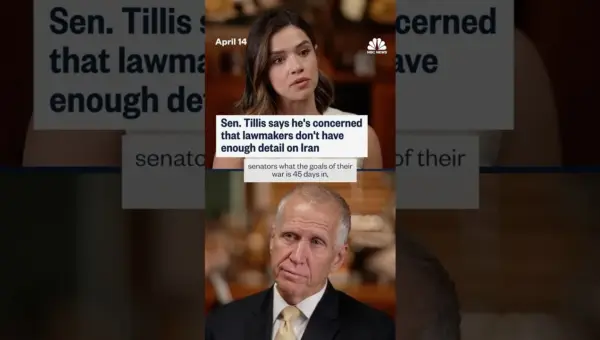
Senator Tillis Demands Clarity on US Goals in Iran Conflict
Senator Thom Tillis is demanding more details from the White House about U.S. goals in the Iran conflict, citing a lack of information for senators and rising gas prices. He stressed that Congress needs specifics before approving significant funding requests.
Vance Urges Pope to Be Anchored in Truth; Critics Question Trump
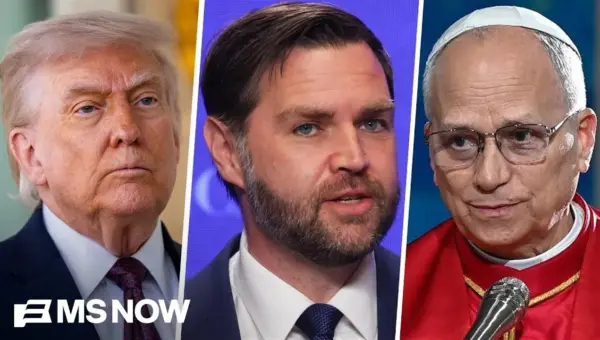
Vice President J.D. Vance's call for the Pope to be "anchored in truth" has sparked debate, with critics questioning the consistency of this standard when applied to President Trump. The article examines numerous instances of alleged falsehoods attributed to Trump, suggesting a potential hypocrisy in demanding theological truthfulness from the Pope while overlooking perceived untruths in the White House. The core argument centers on the critical need for truthfulness in leadership, especially for those commanding immense military power.