Oil Prices Surge to $91 Amid Geopolitical Tensions
Oil prices have surged to $91 a barrel, driven by disruptions in the Strait of Hormuz. This is leading to higher gas prices across the U.S., with California facing particularly steep costs. The situation is fueling debate on energy policy, exports, and the transition to renewable fuels.

Oil Prices Hit $91 a Barrel as Strait of Hormuz Disruptions Loom
Oil prices are climbing, with crude oil reaching $91 a barrel. This sharp increase is largely driven by concerns over the Strait of Hormuz, a vital waterway for global oil transport. The closure or disruption of this strait can significantly impact the world’s oil supply, leading to higher prices at the pump for consumers.
Economists suggest that taking about 20% of the world’s oil supply off the market could force consumers to adjust their lifestyles. This means people may have to get used to paying higher prices for gasoline, potentially reaching $4.00 to $4.50 per gallon in the United States. The current price of $91 per barrel, before the recent conflict, would typically translate to about $3.90 to $3.95 per gallon.
Geopolitical Events Drive Market Volatility
Recent geopolitical events, particularly those involving the Middle East, are a major factor in the rising oil prices. The situation in the Strait of Hormuz is a critical indicator for the oil market. When ships can pass through this strait smoothly, oil prices tend to drop. However, any disruption or threat to this passage causes immediate concern and pushes prices higher.
“The score card is the Strait of Hormuz, once the ships run smoothly through the Strait, these prices will drop. But that’s the score card and we have to watch that closely.”
Some analysts believe that the current conflict may be nearing an end. This optimism suggests that oil prices could decrease significantly once the situation is resolved and normal shipping routes are restored. The expectation is that a peaceful resolution will lead to a dramatic drop in oil prices.
California Gas Prices Soar Amid Export Debate
Gas prices are particularly high in California, leading to discussions about potential government actions. One proposal being considered is a bill to stop U.S. oil exports. This idea has sparked debate, with some arguing it could help lower domestic prices.
However, others argue that U.S. oil exports are not the primary cause of high gasoline prices in certain regions like California. They point to state-specific regulations and policies as the main drivers. For example, California’s state government has implemented policies that result in residents paying significantly more for gasoline compared to the national average, sometimes as much as 75% higher.
The Climate Change Debate and Energy Policy
The conversation around energy prices has also become intertwined with the debate on climate change and renewable energy. Some lawmakers are advocating for a strong push towards solar, wind, and battery technology to solve the global climate crisis. They aim to eliminate fossil fuel subsidies and prevent new permits for fossil fuel projects, emphasizing environmental justice.
This perspective suggests that focusing on renewable energy is the path forward, viewing it as a significant investment in the future. However, this viewpoint is met with strong opinions from others who believe that such policies are misguided. Critics argue that focusing solely on renewable energy overlooks the immediate need for affordable energy and that policies restricting fossil fuel production can harm consumers, especially when state-level regulations already inflate prices.
Market Impact and What Investors Should Know
The current oil price situation presents a complex picture for investors. Geopolitical risks in the Middle East are a primary driver of short-term price movements. The Strait of Hormuz remains a critical choke point; any escalation or de-escalation in the region will likely cause significant volatility in oil prices.
For investors, understanding the interplay between global supply, demand, and geopolitical events is crucial. While optimism about a swift resolution to conflicts can lead to expectations of lower prices, the reality on the ground can be different. The long-term outlook for oil prices may also be influenced by global energy policies, including the transition to renewable energy sources and the potential impact of domestic energy regulations.
The debate over U.S. oil exports and domestic energy policies, especially in states like California, highlights the regional variations in energy costs. Investors should pay attention to how these policy discussions evolve, as they can affect the profitability of energy companies and the overall energy market.
Source: WALLET WARNING: Americans under EXTREME pressure as gas prices climb (YouTube)

Related Articles


China’s Iran Gambit: Deception or a New World Order?
President Trump claims China will stop sending weapons to Iran, but deep skepticism remains due to China's past support and use of spy satellites to aid Iran. This move could be a strategic ploy to weaken the US military.

China Aids Iran Amid US Conflict Escalation
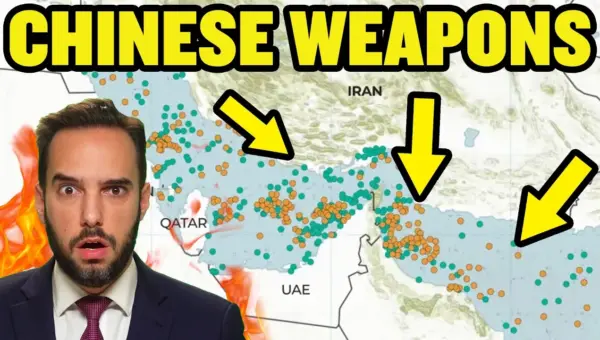
Recent intelligence suggests China is secretly supplying Iran with weapons like MANPADS and sharing critical intelligence, a significant escalation from its previous stance. This move, if confirmed, could deepen regional conflict and lead to severe US economic retaliation, while highlighting long-standing strategic ties between Beijing and Tehran.


China Backs Strait of Hormuz Blockade, Halts Iran Arms
China has agreed not to supply weapons to Iran and is not opposing the U.S. naval blockade in the Strait of Hormuz. This significant development comes as President Trump prepares for a state visit to China and aims to pressure Iran by controlling vital shipping lanes. The move impacts global trade and reshapes regional power dynamics.