Ukraine War Robots Make Russian Tech Obsolete, Expert Says
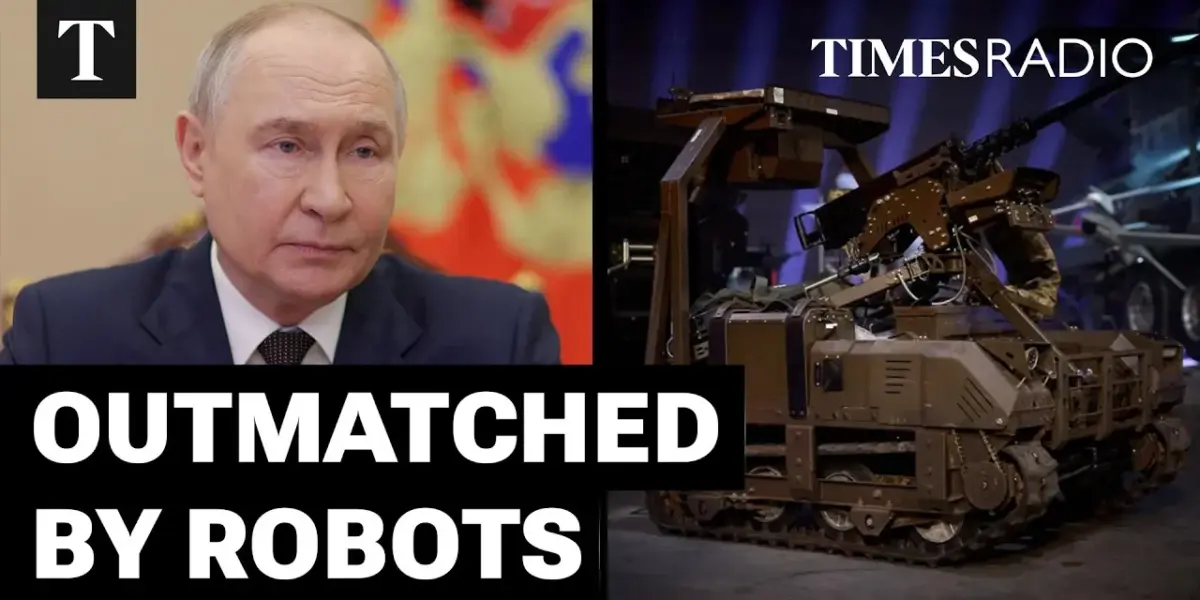
Ukraine has achieved a historic military victory using ground robotic systems, marking a potential turning point in warfare. Defense tech expert Igor Novikov described the event as groundbreaking, highlighting the rapid evolution of conflict and Ukraine's role in pioneering its future. The conversation also touched upon concerns regarding UK defense spending and the global implications of proliferating autonomous weapon systems.

Ukraine’s Robotic Warfare Revolution
Ukraine has achieved a historic military victory using ground robotic systems, marking a potential turning point in warfare. In an operation that involved no human soldiers and resulted in zero friendly casualties, Ukrainian forces successfully captured an enemy position using only unmanned platforms and drones. This groundbreaking event, announced by President Zelenskyy on social media, highlights the rapid evolution of conflict and Ukraine’s role in pioneering its future.
Defense tech expert Igor Novikov, former advisor to President Zelenskyy, described the event as historic, emphasizing that the future of warfare is already here on the battlefield and Ukraine is actively creating it. He noted that for the past two years, individuals with laptops have been responsible for an unimaginable number of enemy casualties, a feat that would have astounded even heroes of past wars. Novikov stated, “The warfare is evolving and now it’s becoming autonomous.” While this autonomous future presents a scary prospect, he believes it could also be beneficial for global security if wielded by the right hands.
Autonomous Systems and Future Threats
The capabilities of these fighting robots are advancing rapidly, with many systems becoming increasingly autonomous. Novikov explained that the competitive nature of the defense technology landscape in Ukraine means changes happen weekly, pushing innovation to what he described as “Hollywood kind of type sci-fi level.” He anticipates fully autonomous drones, both on land, in the air, and at sea, will become commonplace very soon.
One striking example of this innovation involves a British startup working in Ukraine. Instead of traditional landmines, they are developing autonomous “sleeper drones.” These drones lie dormant until they detect an enemy, at which point they automatically activate, take off, identify targets, and destroy them without human intervention. Novikov explained, “With that kind of border security, I mean the old style kind of military attacks are becoming obsolete.”
“The future is here on the battlefield and Ukraine is creating it. These are our ground robotic systems. For the first time in this war’s history, an enemy position was taken exclusively by unmanned platforms and drones. The occupiers surrendered and this operation was completed without infantry involvement and without losses on our side.”
President Volodymyr Zelenskyy
Affordable and Scalable Technology
The effectiveness of these new robotic systems is matched by their affordability. Novikov stated that the cost of this technology is magnitudes cheaper than anything used in warfare even three years ago. He believes these systems can be produced at scale, even through “garage based production,” unlike traditional military hardware. For the cost of around 100 top-of-the-line tanks, Ukraine can acquire technology comparable to the fictional Terminator 2, minus the Skynet AI. This makes advanced warfare capabilities accessible and potentially disruptive.
Global Implications and Proliferation Risks
While this technology offers Ukraine a significant advantage, Novikov also raised concerns about its global implications and the risk of proliferation. He warned that this type of technology, unlike tanks or aircraft, is highly prone to spreading into civilian life. “FPV drones, they’re ubiquitous. They can appear out of nowhere. They could be launched by anyone, you know, terrorist, a bored student, an alcoholic, whatever. And they can cause damage at mass scale.” Currently, only a few countries possess the technology to counter these threats effectively.
An even bigger concern, according to Novikov, is the development of autonomous sea drones. He predicted a resurgence of piracy within a year, as explosive autonomous sea drones are extremely difficult to detect. Future pirates could potentially deploy tens of these drones to surround a cruise ship and demand ransom. He noted that the technology to stop these sea drones is also currently available to very few nations.
UK Defense Spending Concerns
The conversation then shifted to defense spending in the United Kingdom, with concerns raised about potential shortfalls. Reports suggest Chancellor Rachel Reeves is planning an increase of less than 10 billion pounds over the next four years, a figure criticized by experts as potentially insufficient to meet growing threats.
Matthew Savill, director of military sciences at the security think tank RUSI, discussed the challenges in assessing the true financial needs of the UK’s defense program. He highlighted that the Ministry of Defence (MOD) has struggled to publish its equipment plan, leading to uncertainty about funding gaps. The National Audit Office previously identified a potential 10-year gap ranging from billions to nearly 30 billion pounds. Savill noted that the government’s target of raising defense spending to 2.5% of GDP by 2027 and then to 3% could be difficult to achieve without significant increases in real terms spending, particularly on operational costs.
Ambition vs. Reality in Defense Funding
Savill explained that the current defense spending increase rate is described as “leisurely,” with a more significant increase planned only after 2027. This slow pace presents a challenge for adapting to rapidly evolving threats. He also pointed out that resource spending, which covers running costs like personnel and logistics, is increasing at a very low level, remaining virtually flat. This imbalance between capital spending (buying equipment) and resource spending could hinder the military’s readiness and deployability.
The discussion touched upon potential funding solutions like war bonds or increased private sector involvement, but Savill cautioned against relying solely on efficiency savings. He recalled past instances where aggressive efficiency drives, aimed at cutting backroom support, inadvertently reduced essential infrastructure, personnel, and logistics, ultimately weakening military capabilities and readiness.
Looking Ahead
The ongoing developments in Ukraine underscore a profound shift in modern warfare, driven by accessible and increasingly autonomous robotic systems. As nations grapple with these new realities, the focus will be on how quickly defense spending can adapt to these technological advancements and whether effective strategies can be developed to counter the risks of proliferation. The UK’s upcoming defense investment plan will be crucial in determining its ability to meet future threats in this rapidly changing global security landscape.
Source: Russian Capabilities Made 'Obsolete' By Ukrainian War Robots | Igor Novikov (YouTube)

Related Articles


Sweden’s RBS-15 Missile Strikes Black Sea Targets
Ukraine has reportedly deployed the Swedish-made RBS-15 anti-ship missile, striking a Russian-occupied oil platform in the Black Sea. The missile's distinctive launch signature confirmed its origin, marking a significant escalation in Western arms transfers. The RBS-15's advanced capabilities, including long-range land-attack options, enhance Ukraine's ability to threaten Russian assets.


Ukraine Strikes Russia’s Oil Assets
Retired U.S. Army officer General Ben Hodges believes Ukraine's strikes on Russian oil and gas infrastructure are a key to victory. He urges continued attacks to cripple Russia's war funding, while dismissing Russian threats and questioning U.S. policy.


Exposed: Duo Behind Pro-Russia Podcast Funded Paramilitaries
An investigation has revealed the identities of the hosts behind the pro-Russia podcast "Russians with Attitude." The hosts, identified as Kiril Kamyki and Eldar Darlov, not only promoted pro-war narratives but also fundraised for Russian paramilitary groups. Some platforms have taken action, while others have not.