Mars Rover Detects Mysterious Lightning Signals
NASA's Perseverance rover has detected mysterious crackling sounds, providing the first tantalizing evidence of lightning on Mars. This discovery, along with a faint whistler wave detected by the MAVEN spacecraft, suggests that electrical discharges occur in Martian dust storms, impacting atmospheric chemistry and posing new challenges for future human exploration.

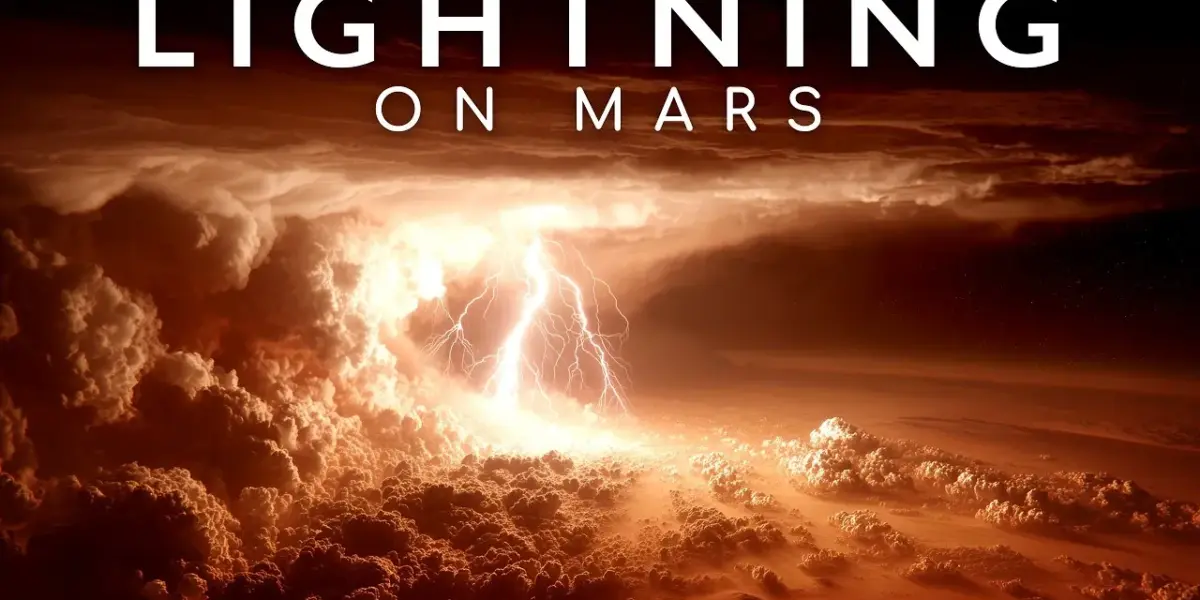
Mars Rover Captures First Hint of Lightning on Red Planet
For centuries, humanity has gazed at Mars, wondering about its secrets. Today, thanks to a fleet of orbiters and rovers, we know more about the Red Planet than any other world beyond Earth. We’ve uncovered vast canyons that once held water, witnessed colossal dust storms, and found intriguing signs that life may have once existed there. Yet, Mars continues to surprise us. NASA’s Perseverance rover has now detected something completely unexpected, something it wasn’t designed to find, and something scientists had almost given up hope of discovering.
A Faint Crackle in the Martian Air
That tiny crackle, like a faint static discharge, could be the first ever evidence of lightning on Mars. This phenomenon has eluded detection for decades, despite dedicated missions searching for it. So, why are we only hearing it now? What does this mean for Mars, and what are the implications for future human missions?
The journey to understand Mars began with NASA’s Viking 1 lander in 1976, followed by Viking 2. These probes sent back the first close-up color images of the Martian surface, revealing a dusty, red-brown world under an orange sky. Since then, eight more landers and rovers have successfully touched down. Two, NASA’s Curiosity and Perseverance, are still active today. These robotic explorers have shown us that Mars was once a watery world, with vast reservoirs of ice still hidden beneath its surface.
Lightning: A Cosmic Detective Tool
Our rovers have braved Martian sunshine, fierce winds, and raging dust storms. But one element has been conspicuously absent: lightning. We’ve seen it on other planets, like Jupiter and Saturn, where it can be incredibly powerful. Voyager 1 spotted flashes on Jupiter in 1979, and NASA’s Juno probe has captured stunning images of Jovian lightning. Saturn experiences storms that stretch for thousands of kilometers, unleashing lightning ten thousand times more powerful than Earth’s. A single storm observed by the Cassini spacecraft in 2009 lasted a full eight months. But on Mars, nothing. Until now.
The detection of lightning is a significant event because it’s more than just a weather event. On Earth, lightning plays a crucial role in our atmosphere’s chemistry. It forms when ice particles collide in storm clouds, gaining or losing electrons and becoming charged. When the electrical charge builds up, the air can no longer contain it, and electricity discharges as a lightning bolt. This bolt heats the surrounding air to over 27,000°C, hotter than the surface of the Sun. This intense energy can break apart nitrogen and oxygen molecules, which then recombine into nitrogen oxides. These oxides dissolve in rainwater, acting as a natural fertilizer for plants. Lightning also produces ozone, which shields Earth from harmful UV rays. It’s even possible that lightning helped create the organic molecules necessary for life’s origin.
Mars’s Thin Atmosphere and Dusty Storms
If lightning is so important on Earth, could it be the same on Mars? Mars has a very thin atmosphere, over a hundred times lighter than Earth’s. This makes lightning as we know it unlikely. However, lightning isn’t exclusive to storm clouds. On Earth, volcanic eruptions can also generate lightning. As ash and dust particles swirl in a volcanic cloud, they collide and create electrical charges, similar to ice particles in storm clouds. Mars has plenty of dust. Martian winds whip it up into towering dust devils, some reaching up to 19 kilometers tall. Giant dust storms also occur, sometimes engulfing the entire planet. These global dust storms happen roughly every three Martian years (about 5.5 Earth years). They are driven by seasonal heating, with rising warm air creating continent-sized storms. The planet’s orbit being less circular than Earth’s means its southern hemisphere gets much hotter during its summer, leading to these massive storms. While wind speeds may only reach about 100 km/h, the fine dust can block out the Sun, posing a threat to solar-powered rovers. The Opportunity rover, for example, was lost in 2018 after a global dust storm.
Decades of Searching, Finally a Clue
All this swirling dust creates ideal conditions for lightning. For decades, scientists have tried to detect it. The European Space Agency’s Mars Express orbiter spent five years scanning Martian dust storms for electrical activity, but found nothing. The ESA’s Schiaparelli lander was equipped with an instrument to measure electrical activity, but it crashed in 2016 due to a software malfunction.
Now, after decades of searching, the Perseverance rover has provided tantalizing evidence. It was a stroke of luck, as Perseverance wasn’t looking for lightning. Its SuperCam instrument analyzes Martian rocks by zapping them with a laser and studying the resulting light and sound. The SuperCam microphone picked up a strange crackling and popping sound, along with the echoes from rocks. A team of Mars scientists, led by Baptiste Chide, analyzed nearly 45 months of data from the SuperCam microphone. They found 55 acoustic pops recorded over two Martian years, most occurring during storms or within dust devils. This strongly suggested the sound of Martian lightning.
Testing the Martian Mystery
But were these tiny pops truly evidence of lightning, or was there another explanation? The research team systematically assessed possible alternatives. Could the sound come from the rover itself? The noises didn’t match any known rover sounds. Could a grain of dust have hit the microphone? That couldn’t explain the electrical interference. To test their findings, the team recreated Martian storm conditions on Earth. Using a replica of the SuperCam instrument, they generated static charge by rubbing particles together and recorded the microphone’s output. The result was incredibly similar to the electromagnetic spikes detected by Perseverance. The team concluded that the 55 mysterious pops were best explained by electrical discharges from lightning on Mars.
A Whistler Wave Confirms the Signal
In February 2026, another team added further support to the findings. Scientists from Charles University in the Czech Republic were analyzing a decade’s worth of data from NASA’s Mars Atmosphere and Volatile Evolution (MAVEN) spacecraft. They discovered a single, faint “whistler wave.” On Earth, whistler waves are low-frequency radio signals that travel along our planet’s magnetic field lines and are a tell-tale sign of lightning. They’ve been detected on planets with strong magnetic fields and atmospheric electrical discharges, like Jupiter, Saturn, and Neptune, but never before on Mars.
Mars lacks a global magnetic field, which disappeared billions of years ago. However, it does have localized crustal magnetic fields, stronger in the southern hemisphere. It’s now thought that whistler waves can travel along these localized fields when lightning-like activity occurs in dust storms. So far, only one whistler wave, lasting just 0.4 seconds, has been found in MAVEN’s data. These waves are difficult to detect due to Mars’s transient magnetic fields and MAVEN needing to be in the exact right place at the right time. However, this fleeting signal, combined with Perseverance’s acoustic data, strongly suggests that lightning does indeed exist on Mars.
Implications for Mars and Future Explorers
Martian lightning may not be powerful bolts like those on Earth. It’s more like static electricity, similar to what you feel after walking on carpet. But with millions of storms and dust devils, these tiny charges likely occur frequently. This has significant implications for our understanding of Mars. Electrically charged dust is easier for the wind to lift, and it alters how particles clump together. Lightning, therefore, doesn’t just result from Martian weather; it helps drive the storms themselves.
The presence of lightning could also solve a long-standing mystery: the origin of Mars’s oxidizing chemicals. These highly reactive substances, found in abundance on Mars, were difficult to explain. The electrical discharges may provide the missing mechanism. Even weak Martian lightning can break apart molecules and create new ones, such as hydrogen peroxide and perchlorates, both found on Mars. This is crucial for the search for life, as these oxidants destroy organic molecules, essentially sterilizing the surface. If life once existed on Mars, these harsh chemicals could have altered or erased its traces. Future missions seeking evidence of life will need to look beneath the surface, in protected rocks and sediments.
The discovery also impacts current and future rovers. Electrically charged dust is “clingy.” Like tiny polystyrene beads from a bean bag, it can stick to surfaces. On Mars, this charged dust can coat rover instruments and solar panels. NASA’s InSight lander, for instance, lost power in December 2022 due to accumulated dust on its solar panels. Future missions like ESA’s Rosalind Franklin rover (launching 2028) and ISRO’s Mangalyaan-2 (launching 2030) are planned.
Humans on Mars: A New Challenge
Perhaps most excitingly, humans may soon join rovers and landers on Mars. Both NASA and SpaceX have ambitious plans to send astronauts within the next decade. SpaceX aims to send its first Starships in 2026, while NASA’s Artemis missions to the Moon are paving the way for lunar settlements and testing technologies for deeper space travel. However, the Moon cannot prepare us for Martian lightning. While astronauts are unlikely to be struck by direct lightning bolts due to their weakness, frequent small electrical discharges could interfere with equipment. This discovery presents a genuine engineering challenge for future human missions to Mars.
Much more research is needed to fully understand Martian lightning. But this chance discovery by the Perseverance rover has opened new avenues of research. It proves that even after decades of close observation, Mars continues to surprise us. The rovers are still exploring, and who knows what they will discover next.
Source: Perseverance Finally Detected Lightning on Mars (YouTube)

Related Articles


Artemis II: Humanity Reaches for the Moon Again
Artemis II marks humanity's return to lunar exploration, sparking public excitement and practical questions. The mission signifies progress and inspires future generations. It's a crucial step toward deeper space exploration.
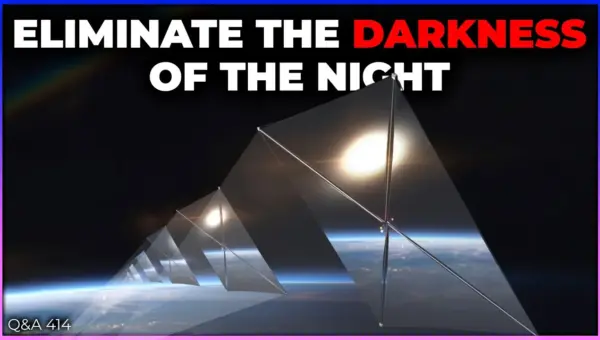
Orbital Mirrors Could Light Up Nights, Voyager’s Power Fades
Scientists explore using orbital mirrors to light up the night, while the aging Voyager probes near the end of their journey. The James Webb Space Telescope continues its search for habitable exoplanets, facing challenges in detecting atmospheres.


NASA Rockets to Moon’s South Pole After Crew’s Victorious Return
NASA's Artemis II astronauts have returned safely from lunar orbit, marking a major milestone after 50 years. The agency is now setting its sights on Artemis III, which aims to land humans on the moon. This program is building towards a sustained lunar presence and future Mars missions.