Ballet & Opera Sees Ticket Surge After Chalamet Comments
The Royal Ballet and Opera has experienced a surge in ticket sales following actor Timothée Chalamet's comments suggesting a lack of public interest. Data reveals a strong young audience base, while dynamic pricing strategies aim to fund operations amidst lower public funding. Experts suggest a shift towards positive promotion and accessible formats to further engage new audiences.


Royal Opera House Reports Increased Sales Following Actor’s Remarks
The Royal Ballet and Opera has seen a significant boost in ticket sales following comments made by actor Timothée Chalamet, who suggested that opera and ballet no longer capture public interest. Alex Beard, the Chief Executive of the Royal Opera House, stated that the online reaction to Chalamet’s remarks actually helped to increase engagement, particularly with younger audiences.
Young Audiences Flock to Opera, Data Suggests
Contrary to Chalamet’s assertion, data from the Royal Opera House indicates that the largest portion of their audience members are between the ages of 20 and 30. Blanca Schofield, a music critic and Assistant Culture Editor at The Sunday Times, shared her initial surprise at this data, noting that her personal experiences at the Royal Opera House sometimes made her feel like she was among an older crowd. However, she acknowledged that the institution’s data is likely accurate.
The High Cost of Opera Tickets
The cost of attending the opera has long been a topic of discussion and controversy. Tickets can reach upwards of £400, a figure that Schofield describes as “eye-watering.” Alex Beard explained that the Royal Opera House uses a system of dynamic pricing. This means that while cheaper tickets are available, especially for those who plan ahead or are under 25, prices for certain seats can increase if demand for a specific show is high. Beard justified this practice by stating that the extra revenue is necessary to fund the opera’s operations. The Royal Opera House receives less public funding compared to similar institutions in other countries.
Schofield likened the dynamic pricing to the argument for first-class airplane seats. She noted that filling premium seats can help subsidize the cost of flights and potentially allow more people to afford the experience. However, she expressed concern that the high ticket prices, particularly the £400 figure, might discourage younger people or those from lower socioeconomic backgrounds from attending. She suggested that institutions need to actively promote the availability of affordable tickets and exciting events to attract a broader audience.
Shifting the Narrative: Positivity Over Decline
Blanca Schofield emphasized the importance of the ballet, opera, and classical music world adopting a more positive and optimistic outlook. She argued that constantly portraying these art forms as struggling or facing financial difficulties can create a perception of them as “dusty, dying institutions.” Instead, she believes that an “energizing campaign” highlighting collaborations with celebrities, events in exciting venues, and a general message of vibrancy could be more effective in drawing in new audiences.
Schofield also shared a personal anecdote about her own background. Despite coming from a privileged, middle-class upbringing where classical music was present, she admits to not actively engaging with it. This, she feels, highlights how disconnected many people, even those from supportive environments, can feel from the world of classical music. While acknowledging the steps these institutions are taking to engage younger people, she believes more effort is needed.
‘No Such Thing as Bad Publicity’
The public backlash to Chalamet’s comments, rather than harming the Royal Opera House, has ironically served as a publicity boost. Alex Beard confirmed that they have utilized the online reaction to drive engagement. This has allowed institutions to create memes and engaging social media content, which contributes to increasing popularity among younger demographics. Schofield agreed with the adage that there is often “no such thing as bad publicity,” especially when it leads to increased ticket sales and public interest.
Innovations for a New Generation
Schofield also touched upon personal deterrents to attending the opera, such as the lengthy performance times. She suggested the idea of “condensed versions” or “edited highlights” of operas, allowing audiences to experience the most impactful arias and musical pieces in a more accessible format. She framed this not as a lack of appreciation for the art form, but as a potential gateway for new attendees to discover and enjoy the best of opera.
This idea of “greatest hits” evenings, Schofield believes, could appeal to a broad audience, even those who might feel intimidated by the traditional opera experience. She concluded by stating that such innovative approaches sound “really fun” and could be a key to making opera and ballet more accessible and appealing to a new generation.
Source: Backlash To Chalamet’s Ballet Comments Has ‘Energised’ Opera | Blanca Schofield (YouTube)

Related Articles


Dune 3 Footage Hints at Paul’s Dark Reign
New footage from Dune: Part Three shown at CinemaCon reveals a dark future for Paul Atreides, 17 years into his reign. The film will explore Paul's galactic holy war and his transformation into a tyrannical emperor, with Chani questioning his humanity. Director Denis Villeneuve confirms it's his last Dune film.


NY Officials Hail Shen Yun’s Cultural Revival Mission
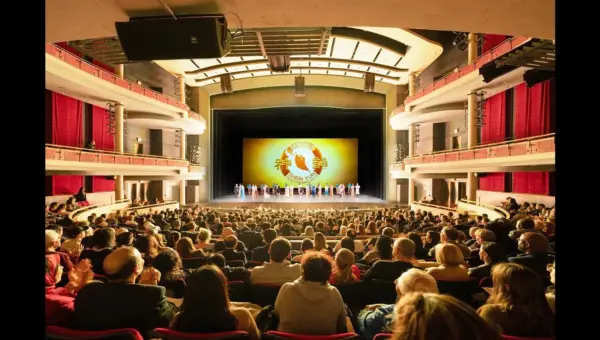
Nearly 70 New York officials have honored Shen Yun Performing Arts with proclamations and letters, recognizing its 20th anniversary and its mission to revive traditional Chinese culture. The widespread support highlights the group's impact and its narrative of China before communism.
Shen Yun Revives Ancient China Amid Communist Suppression
Shen Yun Performing Arts has launched a new tour, aiming to revive 5,000 years of traditional Chinese culture suppressed by the Communist Party. The group's mission has garnered significant support from 70 New York state officials, highlighting a global interest in pre-communist Chinese heritage.