Trump’s AI Jesus Photo Sparks Outrage at Conservative Event
Former President Donald Trump's use of an AI-generated image depicting him as Jesus Christ has sparked significant backlash. Supporters at a Turning Point USA event expressed mixed reactions, with some calling for an apology. The incident highlights the growing role of AI in political messaging and the ethical debates it raises.

AI-Generated Jesus Photo Sparks Outrage
Former President Donald Trump’s recent use of an artificial intelligence (AI)-generated image depicting him as Jesus Christ has ignited a firestorm of criticism. The image, which circulated online, shows Trump with a halo and in a pose reminiscent of religious art. This controversial imagery surfaced during a Turning Point USA event in Georgia, a conservative student organization. Many attendees and observers found the photo deeply inappropriate, sparking debate about its purpose and the former president’s judgment.
Supporters Divided Over Controversial Image
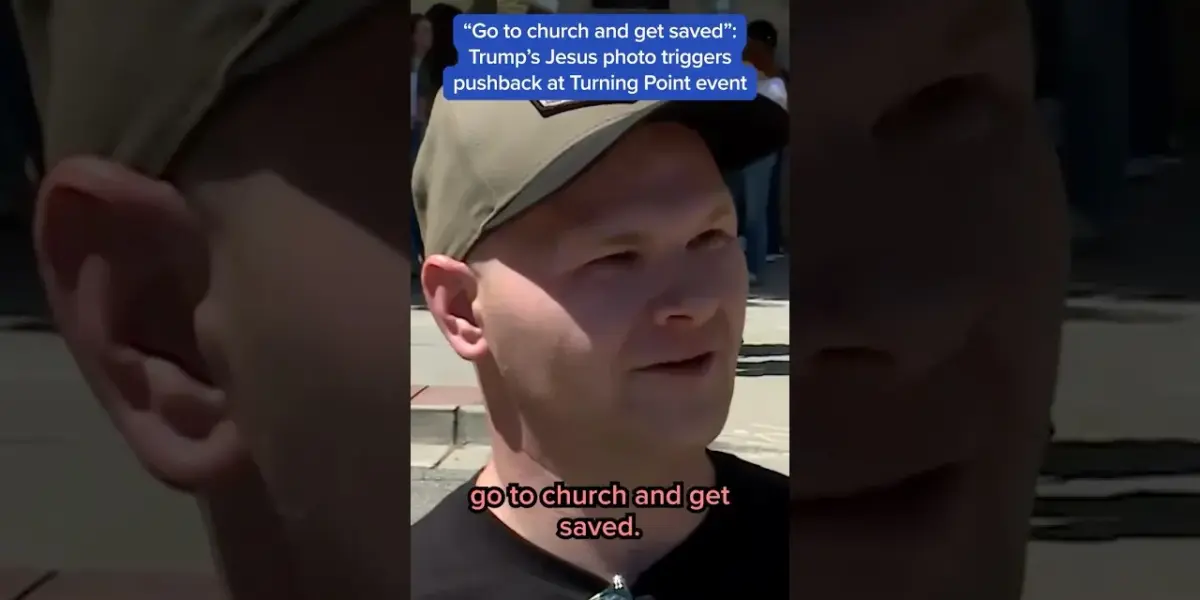
During a recent Turning Point USA event in Georgia, MS NOW correspondent Jake Traylor spoke with Trump supporters about the AI-generated Jesus photo. The reactions were mixed, with some expressing discomfort and others defending the former president. One supporter, when asked about Trump’s decision to use the image, stated, “I would prefer to have him just say, you know, ‘that was inappropriate of me. I shouldn’t have done it, and I’ll try not to do that in the future.'” This sentiment highlights a desire for acknowledgment and a potential apology from Trump regarding the photo’s use. It suggests that even within his base, there are reservations about blurring the lines between political figures and religious iconography.
The Rise of AI in Political Imagery
The incident involving Trump’s AI-generated Jesus photo brings to the forefront the growing influence of artificial intelligence in creating and disseminating political imagery. AI tools can now generate highly realistic or stylized images with remarkable speed and ease. This technology allows for the rapid creation of campaign materials, memes, and even controversial visuals that can spread quickly across social media platforms. While AI offers new avenues for creative expression and political messaging, it also raises significant ethical questions. The ability to easily generate convincing, yet fabricated, images can be used to mislead the public, spread disinformation, or create divisive content. This particular instance, where a political figure is depicted as a religious icon, touches upon sensitive religious beliefs and cultural values, amplifying the potential for backlash.
Turning Point USA and Political Engagement
Turning Point USA is a prominent conservative organization that aims to promote conservative principles among high school and college students. The group frequently hosts events featuring conservative leaders and activists, including former President Trump. These events serve as platforms for political engagement, recruitment, and the dissemination of conservative viewpoints. The presence of the AI-generated Jesus photo at a Turning Point USA event underscores the organization’s role in the broader conservative movement and its connection to the political strategies employed by figures like Trump. The choice to associate Trump with religious imagery, even through AI, reflects a strategy to appeal to religious voters and reinforce a particular image of the former president as a defender of traditional values.
Broader Implications and Public Reaction
The controversy surrounding Trump’s AI Jesus photo extends beyond his immediate supporters and touches upon broader societal discussions about the intersection of religion, politics, and technology. Critics argue that such imagery trivializes religious figures and sacred beliefs, potentially offending deeply held convictions. Others view it as a calculated political move designed to court religious voters or to project an image of divine endorsement. The rapid spread of the image online highlights the power of social media in shaping public opinion and amplifying controversial content. As AI technology continues to advance, similar situations are likely to arise, prompting ongoing debates about the responsible use of AI in political discourse and the potential for its misuse in manipulating public perception and religious sentiment.
What’s Next?
Moving forward, it will be crucial to observe how Donald Trump and his campaign address the backlash from the AI-generated Jesus photo. The public will be watching to see if there is any official statement or apology, or if the campaign chooses to ignore the criticism. Furthermore, the incident serves as a case study for the ethical considerations surrounding AI-generated content in politics. Future campaigns and political figures will need to navigate these new technological capabilities carefully, balancing innovation with the potential for public offense and the spread of misinformation.
Source: "Go to church and get saved": Trump's Jesus photo triggers pushback at Turning Point event (YouTube)

Related Articles


Trump Threatens Fed Chair Powell, Faces Nomination Blockade
President Trump is threatening to fire Fed Chair Jerome Powell over a renovation probe, creating a political stalemate. Senator Tom Tillis is blocking Trump's nominee, Kevin Warsh, until the investigation concludes. Warsh himself faces scrutiny over his vast personal wealth, estimated between $135-226 million, raising conflict of interest concerns.


Trump’s Grip Weakens as Allies Falter, Democracy’s Future Hinges
Donald Trump's approval ratings are plummeting, even among his core supporters, signaling a potential collapse of the MAGA movement. Global events, like Hungary's shift to democracy, and domestic economic woes are fueling discontent and opening doors for broader political coalitions.


Trump’s Jesus Image Backfires, Staged Delivery Fails
Donald Trump's attempt to control the narrative after posting a Jesus-like image backfired spectacularly. A staged DoorDash delivery event meant to highlight economic policy instead drew scrutiny due to its implausibility and the exaggerated savings claimed.