China’s Top Cop Vanishes: Is Xi Jinping Losing Control?
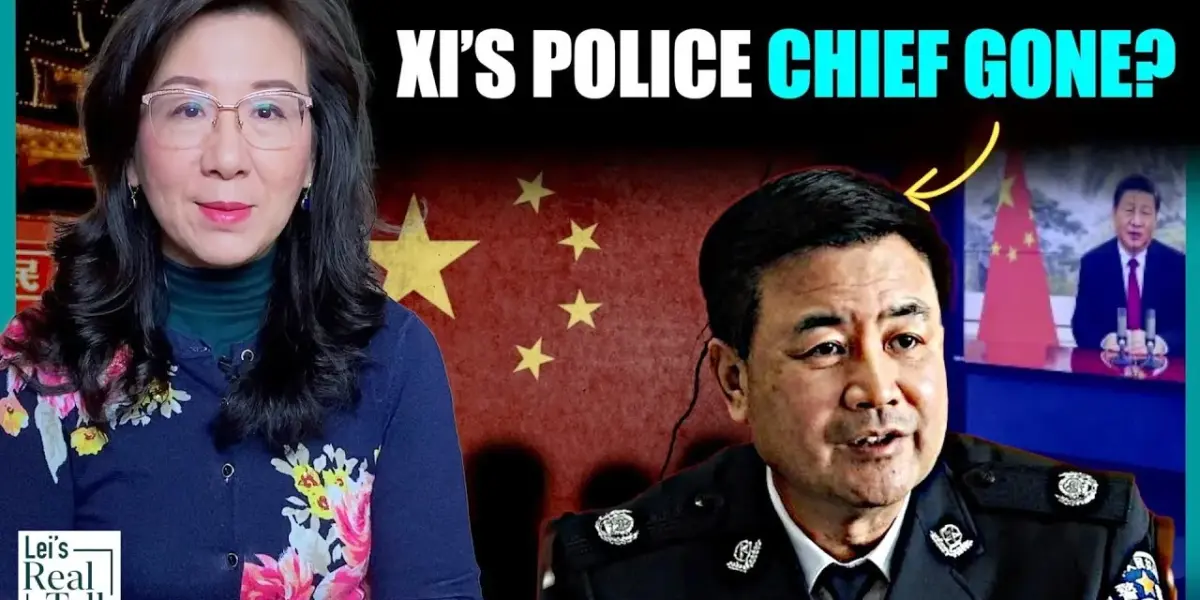
China's top police chief, Wang Xiaohong, has reportedly vanished, sparking rumors of a political purge. This disappearance raises critical questions about President Xi Jinping's grip on power and the stability of the Chinese Communist Party.

China’s Top Cop Vanishes: Is Xi Jinping Losing Control?
Wang Xiaohong, the man in charge of China’s vast police force, seems to have disappeared. This isn’t just a minor personnel change; it’s a move that’s sending shockwaves through the Chinese Communist Party (CCP). In China’s political system, when high-ranking officials vanish without a clear explanation, it often signals a major shake-up, a purge. The silence surrounding Wang’s absence is deafening, leading to intense speculation about his fate and, more importantly, about the stability of President Xi Jinping’s authority.
Wang Xiaohong holds a critical position. He heads the Ministry of Public Security, essentially the country’s top law enforcement agency. This ministry is often referred to as the “knife handle” of the party because it controls the instruments of state power, including the police and the intelligence services. It’s the tool Xi Jinping uses to maintain order and enforce his will across the nation. If Wang, the keeper of this “knife handle,” is out of the picture, it raises serious questions about who has the power to make such a drastic decision.
The Specter of Purges
History within the CCP is filled with examples of officials who disappeared, only to re-emerge later as victims of political purges. These purges are not about finding guilt in a Western legal sense. Instead, they are about consolidating power, removing rivals, and sending a clear message to others within the party. The sudden absence of such a key figure suggests that something significant is happening behind the closed doors of Beijing’s leadership.
The timing of Wang’s disappearance, if it is indeed a purge, is particularly telling. Xi Jinping has spent years consolidating his power, removing potential challengers, and placing loyalists in key positions. He has overseen anti-corruption campaigns that, critics argue, were also used to eliminate political opponents. Now, for a figure as central as the police chief to potentially fall, it implies that the internal power struggles might be far from over. It could indicate that Xi’s control, while appearing absolute, might be facing internal challenges.
Who Holds the Power?
The central question surrounding Wang Xiaohong’s disappearance is: who has the authority to remove him? In a system where Xi Jinping is the paramount leader, any significant action against a minister of public security would almost certainly require his direct approval, or at least his tacit consent. However, the fact that such a move is even being discussed, and that it’s happening in such a secretive manner, could suggest a more complex power dynamic at play.
One possibility is that Xi is orchestrating this himself to eliminate a perceived threat or to replace Wang with someone even more loyal. This would be a demonstration of his continued iron grip. Another, more unsettling, interpretation is that other factions within the party are testing Xi’s authority. If Wang’s removal was initiated by someone else, it would signal a significant weakening of Xi’s personal control. It would mean that the “knife handle” might be slipping from his grasp, or at least that its control is being contested.
Xi’s Grip on Power: A Closer Look
Xi Jinping has cultivated an image of supreme authority. He has removed presidential term limits, positioning himself to rule indefinitely. He has centralized decision-making and promoted a cult of personality around himself. The narrative presented by the state is one of unwavering leadership and national strength under his guidance. However, political systems, especially authoritarian ones, are rarely as stable as they appear on the surface.
The whispers about Wang Xiaohong’s disappearance challenge this carefully constructed image of unassailable power. If Xi is still firmly in control, why the secrecy? Why the rumors? A strong leader would typically manage such personnel changes with decisive, public action. The current ambiguity suggests that either Xi is facing internal resistance, or he is employing a more subtle, perhaps desperate, tactic to maintain his grip. The CCP thrives on projecting an image of unity and control, and any sign of internal discord can be deeply destabilizing.
Why This Matters
The potential downfall of Wang Xiaohong is not just an internal CCP matter; it has significant implications for China and the world. The Ministry of Public Security is responsible for maintaining social stability within China. Its leadership is crucial for the smooth functioning of the state. If there is turmoil or a power struggle at the top of this ministry, it could lead to unpredictable consequences within China, potentially affecting everything from law enforcement effectiveness to social unrest.
Furthermore, China’s role on the global stage is increasingly assertive. Its economic power, military might, and diplomatic influence are shaped by its domestic stability and leadership. Any sign of internal weakness or power struggles at the highest levels of the CCP could affect how China interacts with other nations. It could lead to shifts in foreign policy, economic strategy, or regional security approaches. Understanding these internal dynamics is key to understanding China’s outward actions.
Historical Context and Future Outlook
The CCP has a long history of internal purges and power struggles. From Mao Zedong’s Cultural Revolution to Deng Xiaoping’s rise and fall, leadership changes have often been dramatic and sometimes violent. Xi Jinping himself rose to power after a period of perceived stagnation and corruption under his predecessors. His anti-corruption campaign was initially popular but also served to remove many potential rivals.
The current situation with Wang Xiaohong echoes past events, but it also presents a unique challenge. Xi has amassed more personal power than any leader since Mao. If he is indeed facing a challenge, it suggests that even his extensive control might not be absolute. The future outlook depends on how this situation resolves. If Wang is reinstated or if a clear successor is appointed smoothly, it might suggest Xi is still in command, perhaps making a calculated move. If the uncertainty continues, or if Wang is disgraced, it could signal deeper instability within the CCP, potentially leading to a more unpredictable China in the years to come.
Source: The Disappearance of Wang Xiaohong—and What It Means for Xi Jinping (YouTube)

Related Articles

China’s Iran Gambit: Deception or a New World Order?
President Trump claims China will stop sending weapons to Iran, but deep skepticism remains due to China's past support and use of spy satellites to aid Iran. This move could be a strategic ploy to weaken the US military.

China Aids Iran Amid US Conflict Escalation
Recent intelligence suggests China is secretly supplying Iran with weapons like MANPADS and sharing critical intelligence, a significant escalation from its previous stance. This move, if confirmed, could deepen regional conflict and lead to severe US economic retaliation, while highlighting long-standing strategic ties between Beijing and Tehran.
China Backs Strait of Hormuz Blockade, Halts Iran Arms
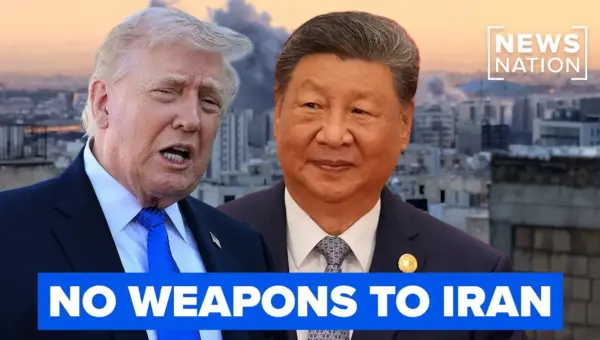
China has agreed not to supply weapons to Iran and is not opposing the U.S. naval blockade in the Strait of Hormuz. This significant development comes as President Trump prepares for a state visit to China and aims to pressure Iran by controlling vital shipping lanes. The move impacts global trade and reshapes regional power dynamics.