Houthi Threats Disrupt Global Shipping Routes
Houthi rebels are threatening to close the vital Bab-el-Mandeb strait, a key global shipping route. This has forced naval rerouting and raised concerns about supply chain security and energy prices. The U.S. Navy has increased its presence in the region.


Houthi Threats Disrupt Global Shipping Routes
Global shipping lanes face growing uncertainty as Houthi rebels in Yemen threaten to disrupt traffic in the vital Bab-el-Mandeb strait. This strategic waterway connects the Red Sea to the Gulf of Aden, acting as a crucial chokepoint for international trade. The rebels’ actions, seemingly in solidarity with Iran, are forcing major naval assets and commercial vessels to alter their routes, raising concerns about the security of global supply chains.
Naval Standoff and Altered Journeys
In response to escalating tensions, the U.S. Navy has deployed a significant presence, with 18 warships in the Middle East. Among these is the USS Tripoli, carrying Marines equipped for maritime interdiction operations. This show of force comes as Iran’s Interior Minister has reportedly ordered governors to neutralize any threat of a naval blockade. However, the situation remains fluid, with merchant vessels attempting to pass through Iranian ports facing direct orders from U.S. forces to turn back.
The effectiveness of these measures is being questioned. While six merchant vessels reportedly turned around, three oil tankers flying flags of Panama, Guyana, and the Cook Islands managed to traverse the strait. One U.S.-sanctioned Chinese tanker also exited the strait unchallenged, though it later made a U-turn. A ship carrying ethanol from the United Arab Emirates, operating outside the immediate blockade, further complicated the optics of enforcement.
Aircraft Carrier Diverted Amidst Red Sea Threats
The implications of these threats are already impacting naval operations. The USS George H.W. Bush aircraft carrier strike group, which would normally take a shorter route, has been forced to reroute around the southern tip of Africa. This deviation adds approximately two weeks to its journey to the Middle East. The reason for this extended voyage is the Houthi threat to strike ships in the Red Sea and close the Bab-el-Mandeb strait. The presence of two guided missile destroyers entering the Strait of Hormuz this past weekend signals U.S. efforts to prepare for potential mine-clearing operations.
Past Operations and Drone Losses
This is not the first time the U.S. military has engaged with the Houthi threat. Between March and May of last year, the Pentagon conducted Operation Rough Rider, a six-week mission aimed at degrading the Houthi’s ability to threaten shipping in the Red Sea. Despite precision strikes on over 1,000 targets in Yemen using guided bombs and cruise missiles, the Houthi forces have persisted. This past operation also resulted in significant U.S. losses, including seven MQ-9 Reaper drones and two F-18 jets, highlighting the resilience and capabilities of the Houthi forces.
The Bab-el-Mandeb Strait: A Critical Trade Artery
The Bab-el-Mandeb strait is one of the world’s most critical shipping lanes. Approximately 3.8 million barrels of oil and refined products pass through it daily. Any disruption here can have immediate and far-reaching consequences for global energy markets and the flow of goods worldwide. The Houthi’s stated intention to close this strait, in support of Iran, underscores the escalating geopolitical risks in the region.
Market Impact and Investor Considerations
The ongoing threats and the potential for disrupted shipping routes create significant uncertainty for global markets. Investors should monitor developments closely, particularly concerning energy prices and the shipping industry. The rerouting of vessels and the increased military presence add to operational costs and transit times, which can eventually translate into higher prices for consumers.
The resilience of the Houthi forces, despite previous U.S. military actions, suggests that this threat may be prolonged. The loss of expensive drones like the MQ-9 Reaper, which are described as one-way attack drones with significant capabilities, also points to the evolving nature of asymmetric warfare. The cost-effectiveness of such drones, compared to the more advanced and expensive MQ-9, is a key consideration for military strategists.
For investors, the increased geopolitical risk in a vital trade region could lead to volatility in oil prices and shipping stocks. Companies reliant on efficient global logistics may face challenges, potentially impacting their earnings. Understanding the strategic importance of chokepoints like the Bab-el-Mandeb strait is crucial for assessing the broader economic implications of regional conflicts.
Source: Houthis threaten to disrupt global shipping in vital Bab-el-Mandeb gateway (YouTube)

Related Articles


Oil Prices Surge to $91 Amid Geopolitical Tensions
Oil prices have surged to $91 a barrel, driven by disruptions in the Strait of Hormuz. This is leading to higher gas prices across the U.S., with California facing particularly steep costs. The situation is fueling debate on energy policy, exports, and the transition to renewable fuels.


China’s Iran Gambit: Deception or a New World Order?
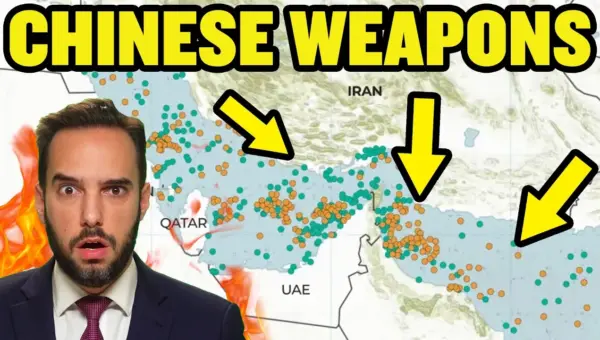
President Trump claims China will stop sending weapons to Iran, but deep skepticism remains due to China's past support and use of spy satellites to aid Iran. This move could be a strategic ploy to weaken the US military.

China Aids Iran Amid US Conflict Escalation
Recent intelligence suggests China is secretly supplying Iran with weapons like MANPADS and sharing critical intelligence, a significant escalation from its previous stance. This move, if confirmed, could deepen regional conflict and lead to severe US economic retaliation, while highlighting long-standing strategic ties between Beijing and Tehran.