Dark Matter: Not a Theory, But a Cosmic Mystery
The concept of dark matter is rooted in a wealth of observational data, not mere theory. Scientists are using new tools to unravel this cosmic mystery, while also clarifying phenomena like the Great Attractor and the extreme climate of Venus.

Dark Matter: Not a Theory, But a Cosmic Mystery
In the vast expanse of the cosmos, some phenomena defy our current understanding, prompting intense scientific inquiry. One such enigma is dark matter. Far from being a mere theoretical construct, the evidence for dark matter stems from a robust collection of independent observations that point to an unseen influence shaping the universe. As highlighted in a recent discussion, the nature of dark matter is often misunderstood, leading to skepticism that misinterprets the scientific process.
The Observational Basis of Dark Matter
The assertion that “dark matter is not a theory” emphasizes a crucial distinction in scientific methodology. It is not a hypothesis waiting to be proven or disproven in the traditional sense. Instead, dark matter represents a placeholder for an observed effect – a significant discrepancy between the predictions of our current theories of gravity and the behavior of celestial objects on large scales. Astronomers observe that galaxies rotate faster than expected based on their visible matter, that stars orbit galactic centers at speeds inconsistent with visible mass, and that large-scale structures in the universe are shaped by gravitational lensing effects that cannot be explained by ordinary matter alone. These observations are not theoretical musings; they are empirical data gathered through meticulous observation and measurement, accessible even with relatively modest equipment and a solid grasp of the underlying science.
Consider the analogy of a car making an unusual sound. The sound itself is an observation. When a friend confirms hearing the same sound, it validates the observation, much like independent astronomical measurements confirming the anomalous behavior of galaxies. The subsequent investigation to determine the cause of the sound – checking the wheels, the transmission, or other components – mirrors the scientific process of proposing and testing hypotheses to explain the observed phenomenon. While the exact nature of the car’s problem might remain unknown initially, the fact that a problem exists is undeniable. Similarly, the existence of an unseen gravitational influence, which we call dark matter, is supported by a convergence of evidence from various astronomical domains, including the cosmic microwave background radiation.
The Search for Dark Matter: A Multifaceted Endeavor
The scientific community is actively engaged in unraveling the mystery of dark matter. This involves exploring a range of potential explanations, from exotic particles to modifications of gravitational laws. Candidates include massive, slow-moving particles (cold dark matter) that interact weakly with ordinary matter, primordial black holes, or even subtle alterations to our understanding of gravity at cosmic scales. The rigorous process of elimination and hypothesis testing is underway, employing sophisticated instruments and experiments.
The landscape of dark matter research is being dramatically reshaped by a new generation of powerful observational tools. Missions like the Dark Energy Spectroscopic Instrument (DESI), the Nancy Grace Roman Space Telescope, the Vera C. Rubin Observatory, and the Euclid mission are poised to provide unprecedented data on the distribution of matter in the universe. The James Webb Space Telescope is also contributing by offering new insights into the early universe and galaxy formation. Complementing these space-based observatories are numerous terrestrial experiments, including those conducted in deep underground mines to shield from cosmic rays, and particle accelerators designed to potentially create or detect dark matter particles. These diverse approaches aim to either directly detect dark matter particles, observe their subtle interactions, or refine our understanding of gravity’s behavior across vast cosmic distances.
Debunking Misconceptions: The Great Attractor
Another area of cosmic intrigue that has recently gained traction in public discourse is the ‘Great Attractor.’ This term refers to a gravitational anomaly located in the direction of the Centaurus and Hydra constellations, pulling galaxies towards it. Misconceptions often arise from outdated information or sensationalized interpretations. Historically, the Great Attractor was a region of gravitational complexity that astronomers were still mapping, obscured by the dense dust and gas at the center of our own Milky Way galaxy.
Thanks to advancements in infrared astronomy, astronomers can now peer through this cosmic veil. The Great Attractor has been largely identified as a massive concentration of galaxies, a supercluster of galaxies on the far side of the Milky Way. This concentration of mass exerts a gravitational pull, influencing the motion of nearby galaxies, including our own. However, this is not a mysterious vacuum cleaner; it is a consequence of gravity acting on a significant collection of matter. While there may still be a few hundred galaxies yet to be precisely mapped within this supercluster, the fundamental nature of the Great Attractor is understood as a result of gravitational dynamics within a dense galactic structure. The universe is also expanding, with galaxies generally moving away from each other, but local gravitational attractions can counteract this expansion on smaller scales.
Venus: A Cautionary Tale of Greenhouse Effects
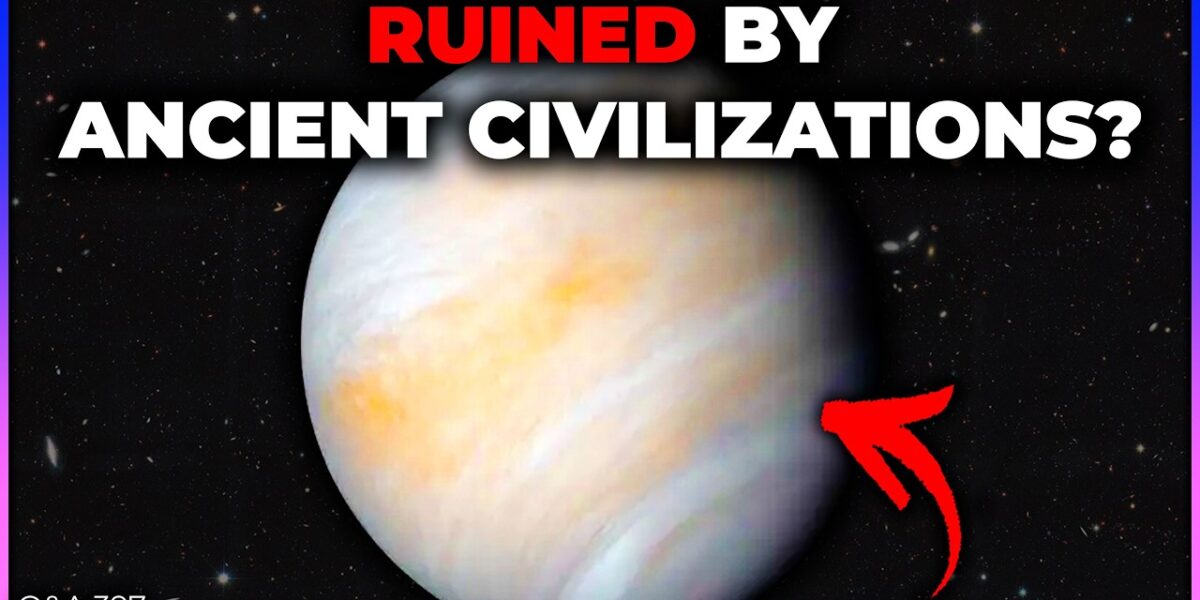
The question of whether Venus was once home to an advanced civilization that destroyed itself through runaway greenhouse gases touches upon our understanding of planetary evolution and atmospheric science. While the idea of an ancient Venusian civilization is speculative, the planet’s current hellish state serves as a stark example of extreme greenhouse effects. The surface of Venus experiences crushing pressures exceeding 90 Earth atmospheres and scorching temperatures. Its atmosphere is overwhelmingly composed of carbon dioxide, a potent greenhouse gas.
Scientists believe that Venus’s extreme climate is primarily a result of its geological history. Unlike Earth, Venus appears to lack active plate tectonics. On Earth, plate tectonics plays a crucial role in regulating the carbon cycle, drawing carbon dioxide from the atmosphere into the planet’s interior. Without this mechanism, any carbon dioxide released on Venus, whether through volcanic activity or other processes, would have accumulated in the atmosphere, leading to a runaway greenhouse effect. The sheer volume of carbon dioxide on Venus far exceeds what could be generated by burning all of Earth’s fossil fuels and forests. This makes Venus a potent, albeit natural, illustration of the devastating potential of unchecked greenhouse gas accumulation, serving as a cautionary tale for Earth’s own climate challenges.
The Future of Cosmic Exploration
The ongoing exploration of dark matter, the mapping of cosmic structures like the Great Attractor, and the study of planetary environments like Venus underscore humanity’s persistent drive to understand the universe. The development of new telescopes and experimental techniques promises to yield further breakthroughs. The scientific community remains committed to rigorous observation, data analysis, and the collaborative pursuit of knowledge, pushing the boundaries of our cosmic comprehension.
Source: Ancient Venus Civilization, Dark Matter, Great Attractor | Q&A 397 (YouTube)

Related Articles

Artemis II Astronauts Set New Human Distance Record
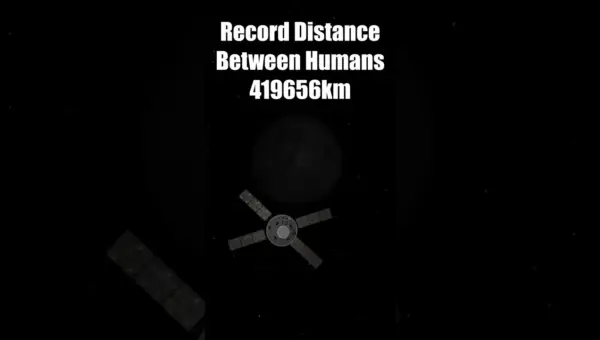
The Artemis II mission set a new human distance record, reaching 413,145 km from Earth. The mission also established a record for the greatest distance between two groups of humans, with astronauts on China's Tiangong space station being 419,656 km away from the Artemis II crew.


Distant Galaxy Appears to Break Light Speed Limit
A distant galaxy, GN-z11, appears to be moving away from Earth faster than the speed of light due to the expansion of space. This phenomenon, while seemingly violating Einstein's laws, is a key indicator of the universe's dynamic growth and offers insights into its early history.


Artemis 2 Crew Captures Stunning Earth Views from Moon Orbit
The Artemis 2 mission has captivated the world with stunning images of Earth from lunar orbit and record-breaking distances. Meanwhile, proposed NASA budget cuts, new insights from the James Webb Telescope, and novel approaches to exploring Mercury highlight the dynamic nature of space exploration.