ISS Crew Returns Early Due to Medical Event
Crew-11 of the International Space Station is returning to Earth earlier than planned due to an unspecified medical situation. NASA emphasizes the crew member is stable and the return is precautionary, not an emergency.

ISS Crew Returns Early Due to Medical Event
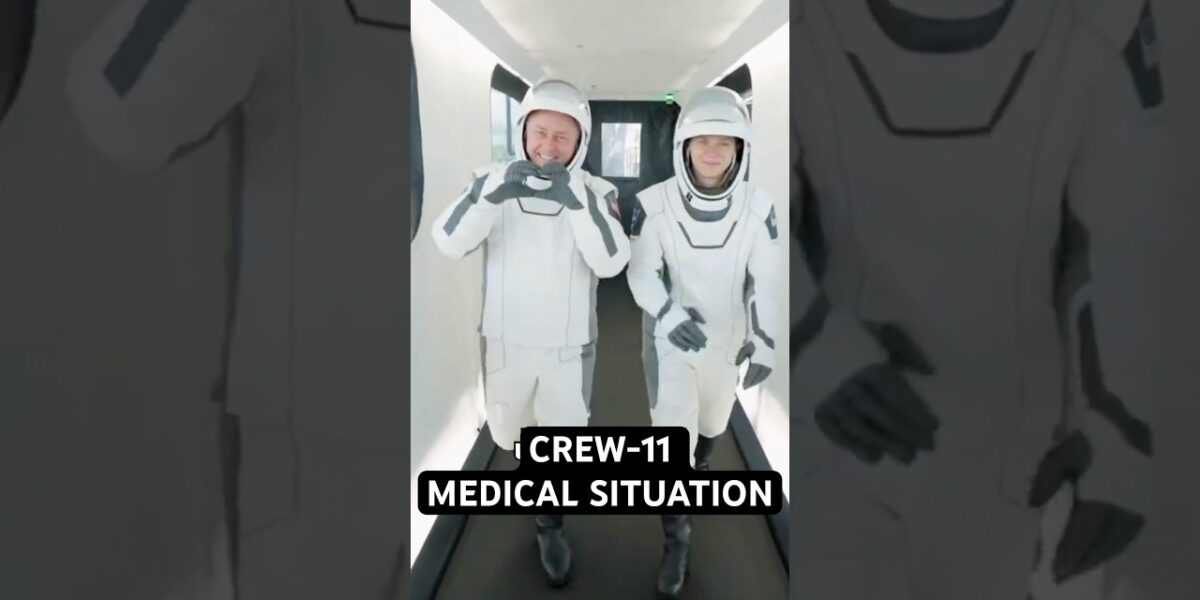
In an unprecedented move within the 25-year history of the International Space Station (ISS), NASA has initiated an early return for the Crew-11 mission due to a medical situation aboard the orbiting laboratory. This decision marks a significant moment in long-duration spaceflight operations, highlighting the agency’s commitment to crew well-being above all else.
Crew-11’s Mission and Early Departure
Crew-11, comprising NASA astronauts Zena Carbon and Mike Finke, JAXA astronaut Kima Yui, and Roscosmos cosmonaut Oleg Platininov, launched to the ISS on August 1st, 2025, aboard SpaceX’s Crew Dragon spacecraft. Their mission was originally scheduled to conclude in mid to late February 2026, shortly after the planned arrival of the next crew, Crew-12. However, circumstances have necessitated a change in their return timeline.
Addressing the Medical Situation
While the specifics of the medical situation remain undisclosed to protect the crew member’s privacy, NASA has confirmed that the affected individual is in a stable condition. Crucially, officials emphasized that this is not an emergency return but rather a precautionary measure, with the standard return procedures simply being accelerated out of an abundance of caution. This distinction is vital, underscoring that the situation, while requiring an early departure, does not pose an immediate threat to the crew or the mission’s integrity.
Preparedness and Contingency Planning
Although this scenario is a first for the ISS program, NASA and its international partners have long acknowledged the inherent risks associated with sending humans into space. The agency invests heavily in comprehensive training and robust contingency planning to address a wide spectrum of potential issues, including medical emergencies. During a press conference discussing the early return, officials noted that based on statistical probabilities of long-duration missions, they had anticipated that an event requiring such a response might occur at some point. This foresight allows for a more measured and less disruptive response when unexpected challenges arise.
The International Space Station: A History of Resilience
The International Space Station, a collaborative project involving NASA, Roscosmos, JAXA, ESA, and CSA, has been continuously inhabited since November 2nd, 2000. It represents a remarkable feat of engineering and international cooperation, serving as a unique microgravity laboratory for scientific research spanning disciplines from biology and human physiology to materials science and astrophysics. Over its quarter-century of operation, the ISS has weathered numerous challenges, including equipment malfunctions, orbital debris threats, and complex resupply missions. Each challenge overcome has contributed to the growing body of knowledge about living and working in space, paving the way for future deep-space exploration.
What Comes Next?
The early return of Crew-11 will necessitate adjustments to the ISS schedule, particularly concerning crew rotations and the integration of the incoming Crew-12. NASA and its partners will work closely to ensure a smooth transition and maintain the station’s operational efficiency. The scientific research conducted by Crew-11 will be carefully documented and analyzed, with findings expected to contribute valuable data to ongoing experiments. The focus now shifts to the safe return of the crew and their reintegration on Earth, followed by a thorough debriefing to capture lessons learned from this unique mission phase.
The Significance for Future Space Exploration
This event, while unexpected, reinforces the critical importance of robust medical protocols and contingency planning for all space missions, especially as humanity sets its sights on longer journeys to the Moon, Mars, and beyond. The ability to adapt and respond effectively to unforeseen medical situations is paramount for ensuring astronaut safety and mission success. The experience gained from Crew-11’s early return will undoubtedly inform future mission architectures, training regimens, and the development of advanced medical capabilities for deep-space exploration. It serves as a testament to the dedication and professionalism of the entire ISS team, who are committed to prioritizing crew health in the demanding environment of space.
Source: NASA’s #CREW11 will return early because of a medical situation (YouTube)

Related Articles


Mars Rover Detects Mysterious Lightning Signals
NASA's Perseverance rover has detected mysterious crackling sounds, providing the first tantalizing evidence of lightning on Mars. This discovery, along with a faint whistler wave detected by the MAVEN spacecraft, suggests that electrical discharges occur in Martian dust storms, impacting atmospheric chemistry and posing new challenges for future human exploration.


Artemis II: Humanity Reaches for the Moon Again
Artemis II marks humanity's return to lunar exploration, sparking public excitement and practical questions. The mission signifies progress and inspires future generations. It's a crucial step toward deeper space exploration.


Artemis II Rocket Sheds Escape System at Liftoff
Curious objects seen speeding away from the Artemis II rocket at liftoff were part of the Emergency Egress System. This high-tech zipline is designed to rapidly remove astronauts from danger in the event of a launchpad emergency before the rocket commits to flight.