Five Fatal Encounters: When Obsession Turns Deadly
Five harrowing true crime stories explore the fatal consequences of obsession, ambition, and miscalculation. From treacherous mountain climbs to deadly encounters with wild animals and tragic accidents in remote locations, these cases highlight the thin line between human endeavor and irreversible tragedy.

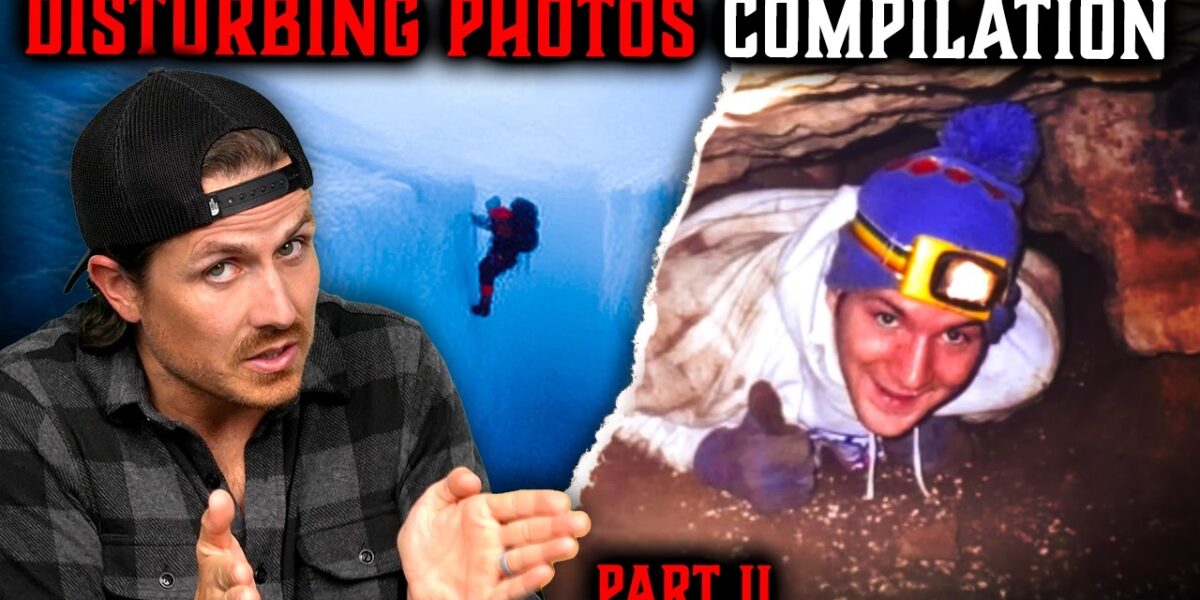
Five Fatal Encounters: When Obsession Turns Deadly
The allure of the unknown, the thrill of a challenge, and the dark fascination with the untamed – these powerful forces can drive individuals to extraordinary lengths. But sometimes, these very obsessions lead to irreversible tragedy, leaving behind a trail of unanswered questions and shattered lives. This article delves into five chilling cases where human ambition, fascination, and miscalculation culminated in fatal outcomes.
The Perilous Ascent: Kurt Demburgger and the Avalanche
On June 27th, 1957, 25-year-old Kurt Demburgger and his partner, 32-year-old Herman Buell, embarked on a daring climb of Cho Oyu, one of the world’s tallest mountains, located in northern Pakistan. Their ambition was not merely to conquer the peak, but to set a new world record by doing so with minimal safety equipment and without the support of guides or Sherpas. This reckless pursuit of glory, they believed, would imbue the climb with true meaning.
As they neared the summit, a dark, ominous cloud appeared, threatening a sudden storm. Despite the clear forecast earlier, the climbers were forced to make a critical decision: abort the mission and risk losing their chance at a record, or push forward and hope to reach the summit before the storm hit. They chose to press on, a decision that would soon prove fatal. As they were just 500 feet from the summit, they found themselves engulfed in the storm’s fury, visibility reduced to zero. Herman urged Kurt to turn back, a realization that had already dawned on Kurt. They began their descent, following their own tracks.
However, their perilous journey was far from over. The ground beneath Kurt began to vibrate, and with a sickening lurch, he realized an avalanche was upon them. In a desperate act of self-preservation, Kurt leaped sideways, narrowly escaping the deadly slide. He landed 30 feet below, miraculously safe. As the avalanche subsided and visibility improved, Kurt frantically searched for Herman. He found their tracks diverging: his own leading to his miraculous escape, and Herman’s disappearing over a cliff edge, swallowed by the snow. Herman’s body was never recovered, a stark reminder of the mountain’s unforgiving nature.
The Tiger’s Gaze: Maksud Khan’s Fatal Fascination
In India, 20-year-old Maksud Khan developed an all-consuming obsession with tigers. This fascination went beyond mere admiration; it was a dark reverence for their untamed ferocity. He often recounted tales of captive tigers that, even in confinement, retained their wild spirit, killing their trainers. This morbid fascination, coupled with a history of joblessness and a carefree attitude, led him down a dangerous path.
On September 23rd, 2014, Maksud, who had been spending his family’s dwindling funds on visits to the zoo, found himself at the white tiger exhibit. Driven by an unknown impulse, he climbed over the protective fence, ignoring warnings from guards and onlookers. He reached the edge of the land overlooking the moat surrounding the tiger enclosure and fell approximately 15 feet into the exhibit. An alarm blared, rousing the tigers. As terrified onlookers screamed and some began throwing rocks at the enclosure in a misguided attempt to help, a tiger descended into the moat. Maksud, huddled in terror, prayed. For ten minutes, the tiger observed him, seemingly unprovoked, until the escalating commotion and projectiles enraged it. The tiger attacked, clamping down on Maksud’s neck and dragging him to a secluded area. By the time zoo staff arrived with a tranquilizer gun, it was too late. Maksud was dead. The zoo staff later faced charges of death by negligence for their delayed response.
The Birth Canal’s Trap: Jon Jones in Nutty Putty Cave
In November 2009, 26-year-old Jon Jones and his family gathered in Utah for Thanksgiving. A shared passion for spelunking led them to Nutty Putty Cave, a popular local spot. Jon, along with his younger brother Josh and nine friends and family, entered the cave. While the main group navigated the ‘Big Slide,’ Jon, feeling adventurous despite not having caved in years, decided to explore the more challenging section known as the ‘Birth Canal’ with his brother. Following a map, Jon, leading the way, encountered a waist-high hole he mistook for the entrance to the Birth Canal. Driven by a child-like mindset and a desire to push his limits, he entered headfirst.
The tunnel proved to be incredibly narrow, constricting Jon’s body. He became wedged, unable to move forward or backward. In his struggle, he pushed past a lip of rock, and as his chest expanded upon inhaling, his rib cage became trapped. Worse still, he realized the tunnel was a dead end. He was completely stuck, upside down. His brother Josh, attempting to reach him, also became trapped, albeit less severely. Josh managed to free himself and went for help, but it would be three and a half hours before the first rescuer, Susie Matah, arrived. Despite reassurances, the grim reality of Jon’s predicament became clear: the tight space and his inverted position made extraction a near-impossible, time-consuming task. Medical professionals estimated Jon had only 8 to 10 hours left to live due to blood pooling in his brain. Rescuers tried various methods, including ropes, pulley systems, drills, and chisels, but made negligible progress. The angle of the cave meant that even if they could free him, his legs wouldn’t fit through the narrow passage without breaking them – a risk they couldn’t take given his deteriorating condition. Twenty-seven hours after becoming trapped, Jon Jones, a medical student and father to a toddler, succumbed to his injuries. Nutty Putty Cave was subsequently sealed with cement, with Jon’s body remaining entombed within.
A Fatal Ride: Samantha Josephson’s Abduction
In 2019, 21-year-old Samantha Josephson, a bright senior at the University of South Carolina with aspirations of becoming an international lawyer, was celebrating the end of her academic year. Having been accepted into Drexel University’s law program, she joined her friends for a night out in downtown Columbia. The group, hopping between bars in the Five Points area, became separated at the crowded Bird Dog bar around 2:00 AM.
Unable to reconnect with her friends via phone, Samantha, feeling tired, decided to head back to her dorm via an Uber. Hours later, her friends, waking up the next morning, realized Samantha had not returned. Their growing concern led them to report her missing to the police by 1:30 PM that Saturday. Simultaneously, 70 miles east of Columbia, two hunters, Anders and Ryan, were searching a forest. Around 4:30 PM, Anders noticed something unusual off to the side of his path – not a turkey, but something out of place. Intrigued, he moved closer, calling Ryan to join him. As Ryan approached, Anders began calling the police. What they discovered was a disturbing scene. Police later found evidence, including Samantha’s phone and personal belongings, in the car of a man who had been operating as an unlicensed Uber driver. This man, Nathaniel Rowland, was arrested and charged with abduction and murder. He had picked up Samantha Josephson, mistaking her for a fare, and subsequently abducted and killed her. The tragedy highlighted the dangers of ride-sharing services and the importance of verifying driver information. Rowland was later sentenced to life in prison without parole.
The Unseen Danger: The Case of the Missing Photographer
In a chilling twist, one of the stories within the collection features a photographer who vanished while documenting a remote and potentially dangerous location. The details surrounding their disappearance remain shrouded in mystery, with their camera found abandoned, containing haunting final images. These photographs, though graphic and disturbing, offer a fragmented glimpse into the events leading up to their vanishing. The investigation into their fate is ongoing, with authorities exploring multiple theories, from accidental death to foul play. The case serves as a grim reminder of the risks involved in pursuing the truth in isolated and hazardous environments.
Source: Top 5 Bingeable SCARY STORIES • DISTURBING PHOTOS Edition Vol. 2 (YouTube)

Related Articles

The Price of Attention: Two Fatal Pursuits of Fame
Two men, Derek Keeper and Francesco Schettino, pursued attention and validation, resulting in tragic outcomes. Keeper died in a car crash due to his anti-seatbelt stance, while Schettino's reckless actions as a cruise ship captain led to a deadly shipwreck. Their stories serve as cautionary tales about the pursuit of recognition and the severe consequences of poor judgment.


Exposed: Duo Behind Pro-Russia Podcast Funded Paramilitaries
An investigation has revealed the identities of the hosts behind the pro-Russia podcast "Russians with Attitude." The hosts, identified as Kiril Kamyki and Eldar Darlov, not only promoted pro-war narratives but also fundraised for Russian paramilitary groups. Some platforms have taken action, while others have not.


TV Stars’ Dark Secrets: Shocking Crimes Revealed!
Beloved TV stars have been involved in shocking real-life crimes, from sexual assault and fraud to murder. This article explores the disturbing cases of figures like Bill Cosby, Danny Masterson, and the Chrisley family. These scandals shattered public illusions and brought severe legal consequences.