China’s Iran War Stance: Strategic Restraint Amid Global Rivalry
China's subdued response to the Iran war, despite significant economic ties, highlights a strategic approach prioritizing self-interest over alliance obligations. This calculated restraint, analysts suggest, is part of Beijing's long-term strategy to gain global influence by allowing geopolitical rivals to expend resources.

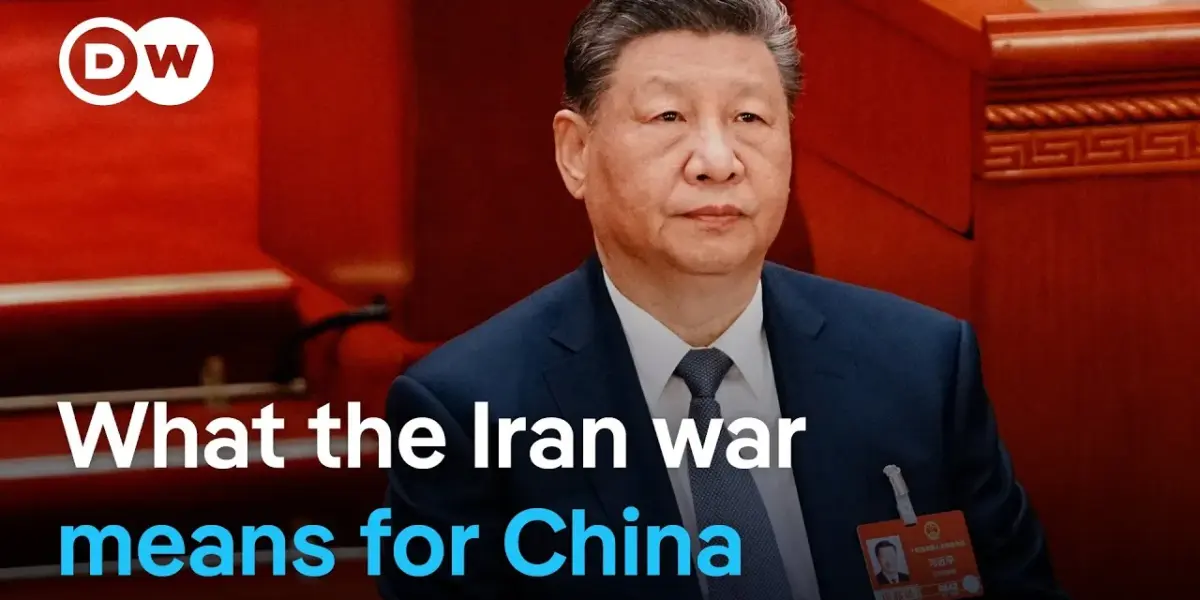
China’s Calculated Silence on Iran Conflict Raises Geopolitical Questions
BEIJING – As Chinese leadership convened for its most significant political gathering of the year, mapping out the nation’s economic trajectory amidst slowing growth and military expansion, a distant conflict in Iran cast a long shadow. The war in Iran, a region where China has long cultivated significant economic and political ties, presents a complex challenge for Beijing, forcing a delicate balancing act between its strategic interests and its carefully crafted global image.
A Longstanding Partnership Tested
China has historically positioned itself as a staunch supporter of the Iranian regime, with President Xi Jinping referring to Iran as a “good friend and partner.” Beijing’s economic engagement is substantial, serving as the largest buyer of Iranian oil and a crucial economic ally. This deep involvement grants China considerable influence in the strategically vital Middle East. However, following the assassination of Iran’s top leadership by geopolitical rival the United States, China’s public response has been notably subdued.
“What we know in public, you know, hasn’t really done much. They’ve issued um you know, stern statements, but they haven’t really um provided much uh support to Iran.
In fact, uh what seems to be leaking out now is uh pressure on Iran to keep the straight of Hormuz open. So, I guess in terms of at least uh short-term issues with inflation, uh Beijing would be concerned about it.”
Strategic Ambiguity: Weakness or Deliberate Strategy?
The question of why Beijing has largely remained on the sidelines is central to understanding its current foreign policy. Analysts debate whether this reticence signals weakness or represents a calculated, deliberate strategy.
China has, in recent years, sought to insulate itself from geopolitical shocks by building substantial strategic oil reserves and diversifying its energy suppliers, making it less vulnerable than many other Asian economies. While stability in the region remains a priority, China’s low-key reaction to the Iranian crisis offers insight into its approach to global partnerships.
A New International Order and Transactional Diplomacy
Under Xi Jinping, China has actively promoted itself as a stable and predictable global power, contrasting its image with that of the United States. This narrative is a key component of Beijing’s broader vision for a new international order, one where China increasingly challenges Western dominance.
In the context of the Iran war, Beijing appears to be projecting this image of measured stability. However, the reality of China’s relationship with Iran, described by Beijing as a “comprehensive strategic partnership,” has always been largely transactional.
Understanding “Comprehensive Strategic Partnership”
While a “comprehensive strategic partnership” ranks highly in China’s diplomatic hierarchy, it differs significantly from a formal military alliance, such as that between Japan and the United States. Such partnerships, according to experts, do not come with specific, binding obligations. This means that while China values cooperation, influence, and economic ties, it is averse to becoming overly dependent on others and is unlikely to engage in military conflict to defend its partners.
“There’s been a lot of u a lot of talk about uh Beijing, you know, not really coming to the assistance of Iran just like they didn’t come to the assistance of uh Venezuela. I suppose Beijing one of the things Beijing will be thinking about is you know whether when they make these sort of um partnerships especially on the security front um how much are they willing to sort of come up with to what degree are they willing to stand by uh their partners and the sort of reputation hit that they might get for not being more forthcoming with your support.”
Questions of Credibility and a ‘Wait and See’ Approach
China’s reluctance to intervene, evident in its responses to crises in both Venezuela and Iran, has inevitably raised questions about its credibility as an ally. However, for the Chinese leadership, this restraint may be a core element of its strategy. The approach appears to be one of allowing the United States to bear the significant risks and potential repercussions of geopolitical interventions.
“The way that China is hoping to achieve global leadership is to stand back while the United States uh is doing all that it can to diminish itself, you know, globally. Uh so it sees inaction as the best course of action when the United States is so um you know keen on diminishing its own global leadership uh and also you know uh de depleted strategic assets you know like these missiles.”
Rivalry Beyond the Middle East: The Taiwan Factor
The dynamic of China-US rivalry extends far beyond the Middle East, significantly influencing other geopolitical hotspots, including Taiwan. China claims the self-ruled democracy as its sovereign territory, a stance vehemently rejected by Taiwan’s government and its people, who are committed to defending their freedom.
Taiwan’s security relies heavily on support and weaponry from the United States. Concerns are mounting that as US attention and resources are diverted to conflicts elsewhere, China might perceive an opportunity to advance its claims over Taiwan.
Some analyses suggest that the current US administration’s perceived disregard for international norms could embolden China to pursue its territorial ambitions. However, President Xi Jinping is widely seen as a leader who prioritizes meticulous planning and long-term strategy, making hasty actions unlikely.
“Essentially, CG [Xi] Jinping, the Chinese leadership does not need in a way the permission or the example of the United States um to act if and when um China will decide to move in the Strait of Taiwan. Uh that will be because Chinese decision makers decided that that’s the right moment.”
Future Outlook: Economic Might and Enduring Rivalry
As China’s leaders focus on strengthening the nation’s economic and military strength, their strategic decision to remain detached from the Iran war underscores a broader foreign policy. The ongoing competition between Beijing and Washington continues to shape global events, with implications reaching far beyond regional conflicts. In the halls of power in Beijing, where China’s future is being forged, this enduring rivalry remains a constant consideration.
Source: What's at stake for China in the Iran war? | DW News (YouTube)

Related Articles

Trump Orders Navy to Shoot Smugglers in Hormuz Strait
President Trump has ordered the U.S. Navy to shoot and kill any small boats laying mines in the Strait of Hormuz. This action escalates tensions with Iran, which has also seized vessels in the region. The move aims to protect vital global oil shipping lanes.


Canada Rejects US Demands, Shifting Trade Ties
Canada is pushing back against U.S. economic pressure, driven by perceived arrogance and destabilizing trade demands. This is hurting American businesses, especially in tourism-reliant states like New Hampshire, and signals a potential shift in North American economic ties. Canada is actively seeking new trade partners, reducing its reliance on the U.S. and challenging Washington's dominant position.

US Blinded by Past Power, Faces Iran’s New Resolve
Lt. Col. Daniel Davis argues the US is clinging to outdated notions of power, failing to grasp Iran's new resolve. This miscalculation risks escalating economic instability and highlights the limits of military intervention.