Iran’s New Leader Wounded Amidst Escalating War and Sleeper Cell Fears
Iran's new Supreme Leader, Mostafa Kamani, has reportedly been critically wounded, sparking fears of internal instability and external intervention. Simultaneously, intelligence suggests Iranian sleeper cells may be activating, while Iran's firing on NATO forces escalates the conflict to a new, dangerous phase.


Iran’s New Leader Wounded Amidst Escalating War and Sleeper Cell Fears
Recent developments from the ongoing conflict involving Iran paint a picture of a rapidly escalating geopolitical situation, marked by the reported critical wounding of Iran’s newly appointed Supreme Leader, Mostafa Kamani, and alarming intelligence suggesting the activation of sleeper cells. These events, occurring against a backdrop of direct military engagement with NATO and ongoing strikes within Iran, signal a dangerous intensification of regional tensions.
New Leadership in Jeopardy
Following the death of his father, Ali Khamenei, in a bombing strike, Mostafa Kamani was sworn in as Iran’s new Supreme Leader. However, his tenure appears to be immediately precarious. Iranian state television has confirmed that Kamani sustained injuries, with reports varying on the severity, ranging from serious to critical condition.
Some unconfirmed accounts even suggest he may have already died, with the regime attempting to conceal the truth. Israeli and other international sources corroborated reports of Kamani being hit in a strike, though initially believed to be alive despite serious injuries. The Iranian government’s admission of Kamani being wounded in a bombing run leaves his survival uncertain in the immediate hours and days ahead.
Adding to the uncertainty, former U.S. President Donald Trump has commented on the situation, suggesting that Kamani ‘is not going to last long.’ While refraining from detailing specific U.S. Plans, this statement implies a strategic intent to neutralize the new leadership, mirroring the fate of his predecessor.
Sleeper Cells and Heightened Alert
Compounding the volatile environment, U.S. intelligence has reportedly intercepted encrypted communications originating from Iran that are believed to be operational triggers for sleeper cells abroad. This intelligence emerged shortly after the death of the previous Supreme Leader.
The fear of Iranian-backed sleeper cells carrying out attacks in the U.S., Europe, and the Middle East has long been a concern. The intercepted communications suggest these dormant networks may now be receiving orders to mobilize.
Authorities are urging the public to maintain a high level of situational awareness. The advice emphasizes trusting one’s instincts, disengaging from potentially dangerous situations, and contacting authorities if something feels amiss.
For those legally permitted and trained, carrying means of self-protection is also noted as a prudent measure in these uncertain times. The interception of these communications places a significant portion of the global population on high alert.
NATO Engaged: Iran Fires on Turkey
The conflict has demonstrably expanded to directly involve NATO. Forces intercepted and neutralized a ballistic missile fired from Iran that entered Turkish airspace. Turkey, a key NATO member, stated that while no casualties or injuries occurred, all necessary measures would be taken against any threat to its territory.
This incident marks a critical escalation, as Iran has now fired upon a NATO target. While it has not yet triggered Article 5 (the collective defense clause), it represents a significant broadening of the war and a direct challenge to the alliance.
Ongoing Strikes and Military Operations
Meanwhile, strikes against Iran continue with significant operational tempo. Footage has emerged showing IRGC command headquarters in Tehran being hit, along with Iranian naval ships being sunk.
The U.S. military is deploying B-52 bombers to the United Kingdom, positioning them for potential strikes within Iran, underscoring a commitment to sustained aerial operations. These bombers are capable of delivering substantial payloads, indicating a strategy of overwhelming force.
Investigations into specific incidents, such as a bombing that killed schoolgirls, suggest the potential use of GPS jamming technology by the U.S. and Israel against Iranian cruise missiles. Analysis of munition wreckage indicates it matches an Iranian Kh-55 land-attack cruise missile. When such a missile’s signal is jammed, it can lead to an uncontrollable dive, potentially explaining the devastating outcome.
Despite these strikes, Iran retains some capacity to retaliate, launching its own ballistic missiles at Israel and other targets. However, its offensive capabilities are reportedly diminishing rapidly.
U.S. Casualties and the Human Cost
The human cost of the conflict is also evident, with the U.S. Department of Defense identifying Sergeant Benjamin Pennington as the seventh American soldier killed in action. He died from injuries sustained during an attack on Prince Sultan Air Base in Saudi Arabia on March 1st. Footage of a ballistic missile attack on a base in Saudi Arabia, where U.S. troops are stationed, has also been released, though its direct connection to Pennington’s death is unconfirmed.
Conclusion: A Critical Juncture
As of March 9th, the situation remains extremely fluid. The reported critical wounding of Iran’s new leader, the intelligence regarding activated sleeper cells, Iran’s direct firing on a NATO member, and ongoing strikes on Iranian targets all point to a significant and dangerous escalation. The rapid pace of developments necessitates constant vigilance and a clear understanding of the escalating risks.
Why This Matters
This situation represents a critical juncture in regional and global security. The potential incapacitation or death of Iran’s Supreme Leader could lead to internal power struggles or further external aggression as factions vie for control. The activation of sleeper cells introduces a direct, asymmetric threat to civilian populations across multiple continents, demanding heightened security measures and international cooperation.
Iran’s direct engagement with NATO forces, particularly firing a ballistic missile at Turkey, pushes the conflict closer to a direct confrontation between major global powers, with the potential to trigger wider alliances and devastating consequences. The ongoing military operations, while perhaps aimed at degrading Iran’s capabilities, also carry the risk of unintended escalation and civilian casualties, as tragically highlighted by the incident involving schoolgirls.
Implications, Trends, and Future Outlook
The implications are far-reaching. We are witnessing a potential shift from a proxy conflict to direct engagement, with increased risks of miscalculation. The trend suggests a broadening of the war, not just geographically but also in the types of actors involved, moving from regional skirmishes to direct NATO involvement.
The future outlook is one of heightened uncertainty and potential instability. Depending on the outcome of Kamani’s condition, Iran could face internal chaos or a more determined, perhaps desperate, external posture.
The success or failure of sleeper cell operations will significantly impact global security perceptions and counter-terrorism strategies. The international community faces the challenge of de-escalation while simultaneously addressing the immediate threats posed by an increasingly aggressive Iran and the potential for wider conflict.
Historical Context and Background
The current crisis is rooted in decades of geopolitical tension between Iran and Western powers, particularly the United States and Israel. The Iranian Revolution of 1979 fundamentally altered the region’s dynamics, leading to a sustained period of animosity. U.S.-Iran relations have been characterized by diplomatic estrangement, sanctions, and covert actions, including support for opposition groups and cyber warfare.
The rise of non-state actors and proxy warfare has been a hallmark of this conflict, with Iran leveraging groups like Hezbollah and Hamas. The recent period has seen a significant increase in direct military actions, moving beyond the shadows of proxy wars. The death of Ali Khamenei and the subsequent injury of his successor represent a dramatic acceleration of events, potentially breaking historical patterns of leadership succession and escalating the conflict to an unprecedented level.
Source: Iran Sleeper Cells ACTIVATING – New Dictator WOUNDED (YouTube)

Related Articles


Ukraine Strikes Cripple Russian Oil; US Goes Global
Ukraine's drone attacks are crippling Russian oil exports and production, forcing significant output reductions. Simultaneously, the U.S. Navy is expanding its reach globally, seizing Iranian oil tankers far from the Persian Gulf. This dual pressure signals a potential breakdown of global trade in energy, agriculture, and manufacturing.


Russia’s Economy Crumbles Under Sanctions, Dissent Grows
New intelligence reports indicate Russia's economy is collapsing under sanctions, with falling oil revenues and rampant inflation. Dissent is growing, with prominent figures and even pro-Kremlin bloggers openly criticizing the government and President Putin.
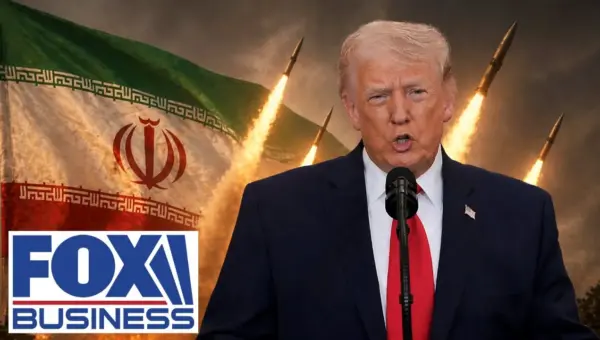
Trump Warns Iran: Bombing Could Start ‘Tomorrow’
President Trump has signaled a tough stance on Iran, warning that he expects to be "bombing tomorrow" if a satisfactory deal isn't reached, with the current cease-fire set to expire. Despite the escalating rhetoric, financial markets have remained measured, seemingly pricing in a future resolution and a potential "peace dividend."