Iran Rejects Trump’s Interference in Leadership Selection
Iran's Foreign Minister Abbas Arachi has firmly rejected any foreign interference in the nation's leadership selection process, asserting that only the Iranian people and their elected representatives have a say. He also emphasized Iran's resolve to resist "unconditional surrender" and defend its dignity amidst ongoing conflict.

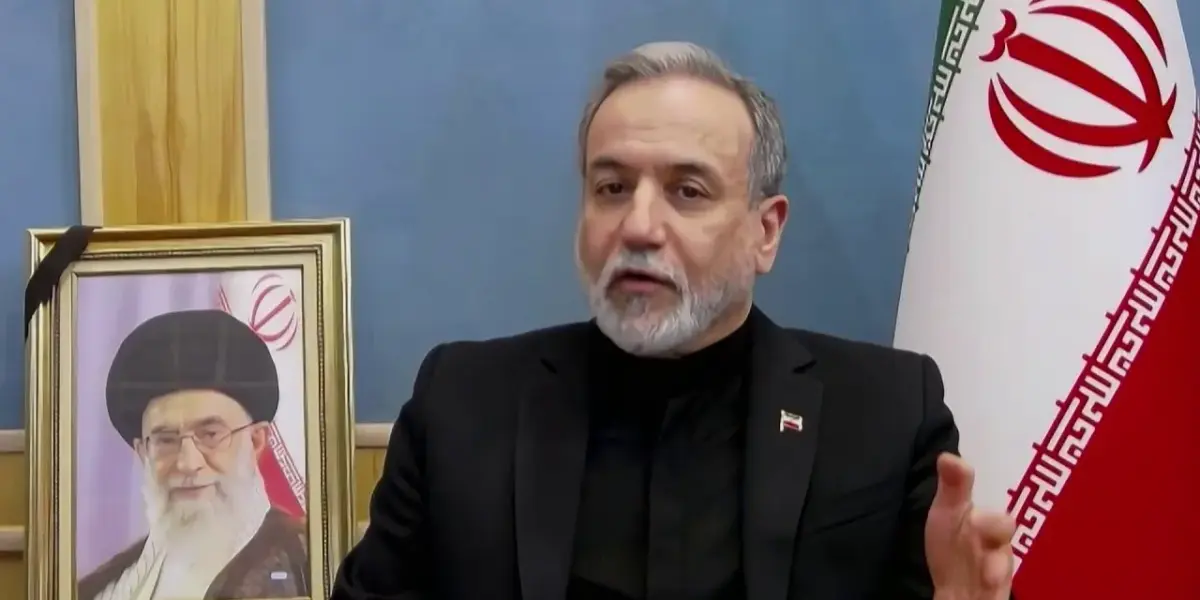
Iran Asserts Sovereignty Amidst Leadership Transition and Conflict
Washington D.C. – In a candid interview on Meet the Press, Iran’s Foreign Minister Abbas Arachi firmly rejected any notion of external interference in the nation’s domestic affairs, particularly concerning the selection of its next Supreme Leader. The remarks come at a critical juncture for Iran, navigating both a leadership transition and an ongoing, complex conflict.
Internal Affairs Remain Solely Iranian Business
Responding to President Trump’s assertion that he would “pick the new leader of Iran,” Minister Arachi stated unequivocally, “We allow nobody to interfere in our domestic affairs. This is up to the Iranian people to elect their new leader.” He elaborated that the Assembly of Experts, whose members are directly elected by the people, is responsible for choosing the new Supreme Leader. “It is the only business of the Iranian people and nobody else’s business,” Arachi emphasized, underscoring Iran’s commitment to its sovereignty.
The interview addressed the current state of Iran’s leadership, with Arachi confirming that an interim leadership council is in place following the absence of the Supreme Leader. The process for electing a new leader is underway, with the Assembly of Experts set to convene and vote. While rumors circulate about potential candidates, including the son of the late Supreme Leader, Arachi maintained that the outcome rests solely with the Assembly’s decision.
Resistance Against “Unconditional Surrender”
When questioned about President Trump’s demand for “unconditional surrender” as a prerequisite for ending the current conflict, Minister Arachi drew parallels to a similar demand made the previous year. “We never give up. We never surrender and we continue to resist as long as it takes,” he declared.
He recounted that after previous Israeli attacks, Iran resisted, leading to a ceasefire request from the Israeli side after 12 days. “We continue to defend ourselves and we are defending our territory, our people and our dignity. And our dignity is not for sale,” Arachi stated forcefully.
Conditions for Peace Remain Elusive
The Foreign Minister clarified Iran’s stance on a ceasefire, explaining that the current situation differs significantly from the past. “Last time we accepted the ceasefire. But you know, this time is quite different,” he explained.
Arachi detailed the “aggression” and “destruction” Iran has faced this year, including attacks on civilians, students, hospitals, and essential infrastructure. He argued that Iran accepted a ceasefire previously out of “good faith” after exercising its right to self-defense, but it did not lead to lasting peace.
“This time is different,” Arachi reiterated. “The reason is obvious.
You know, last time they attacked us, they made aggression against us, they killed our people, they destroyed our places and then asked for a ceasefire.” He posited that Iran is now seeking a “permanent end of the war” and will continue to fight for its people and security until such a resolution is reached. He also stressed that the war was not of Iran’s choosing but was “imposed on us by the United States, by Israelis.” Arachi maintained that Iran’s actions are a “legal act of self-defense” against unprovoked, illegal aggression.
Clarifying Missile Strikes and “Apology”
Addressing reports of Iran launching “hundreds of missiles at 13 other nations,” Arachi clarified that Iran’s targets are “American bases, American installations, American assets” located in the region, not its neighboring countries. “We are not attacking our neighbors. We are attacking Americans who are attacking us.
We are retaliating,” he asserted. He explained that Iran’s missile capabilities are limited to a range of below 2,000 kilometers, a deliberate choice to avoid being perceived as a threat, and that there are no plans to extend this range to reach the United States.
Regarding the Iranian President’s “apology” for strikes on neighboring Gulf states, Arachi described it as a sign of “dignity and strength” within Iranian culture. He explained the apology was directed towards the “peoples of the region for the inconveniences they have faced because of this aggression by the United States and retaliation by us.” He suggested that the President of the United States should be the one apologizing for the “killings and destructions” caused by American actions.
Strategic Partnership with Russia
When asked about receiving assistance from Russia to locate US forces, Minister Arachi confirmed a “strategic partnership” with Russia, noting that military cooperation is not new and is ongoing. While he did not provide specific details on intelligence sharing, he stated, “We have a very good partnership with Russia” and that they are “helping us in many different directions.”
Denial of Responsibility for School Attack
The Foreign Minister vehemently denied responsibility for the strike on an elementary school that reportedly killed over 170 people, including many children. “It is our school. These are our students, our girls and they are attacked by an American fighter jet fighter and they have been killed.
Why Iran is responsible?” he questioned. Arachi asserted that evidence indicates the attack was carried out by an American jet fighter, occurring amidst diplomatic negotiations with the United States.
He questioned the narrative, asking, “If it was not you, if it was not US, then who was that? Maybe Israelis, but it is obvious who else is is attacking us.”
Iran’s Defensive Capabilities and Resolve
Addressing the potential deployment of US ground troops, Arachi stated Iran was “waiting for them,” but cautioned against underestimating their capabilities. He dismissed President Trump’s suggestion that Iran would be “decimated” and unable to fight, asserting, “For the time being, we are capable enough. We have very brave soldiers who are waiting for any enemy who enter into our soil to fight with them and to destroy and to kill them and destroy them.” He highlighted Iran’s long history of defending its land and the bravery of its people and civilization.
Missile Range and Diplomatic Stalemate
On the issue of Iran’s missile program, Arachi reiterated that Iran has intentionally limited its missile range to below 2,000 kilometers. He stated, “We don’t want to be felt as a threat by anybody else in the world.” He firmly denied any plans to increase missile range to reach the United States, calling such claims “misinformation” and stating there is “no evidence, no intelligence, nothing to indicate that Iran is going to long range missiles, let alone those missiles who can reach the United States soul.” The interview concluded with a brief mention of stalled negotiations as a factor leading to the current actions, with both parties expressing the need to monitor developments closely.
Source: Iran foreign minister reacts to Trump saying he'll pick the next leader of Iran: Full interview (YouTube)

Related Articles

Trump Warns Iran: Bombing Could Start ‘Tomorrow’
President Trump has signaled a tough stance on Iran, warning that he expects to be "bombing tomorrow" if a satisfactory deal isn't reached, with the current cease-fire set to expire. Despite the escalating rhetoric, financial markets have remained measured, seemingly pricing in a future resolution and a potential "peace dividend."


Trump’s War Strategy Crumbles Amidst Iranian Stand-Off
President Trump's diplomatic efforts with Iran have collapsed, leading to an emergency White House meeting. Iran claims the U.S. violated a ceasefire, prompting a refusal to negotiate. The situation teeters on the brink of military escalation, with critics raising concerns about corruption and the administration's strategy.

Iran’s ‘New Cards’ Threat Risks Further Global Isolation
Iran's parliament speaker has threatened to reveal 'new cards,' but former Pentagon officials believe this will further isolate the regime. These potential moves, likely involving proxies or sleeper cells, are seen as a familiar but ineffective tactic. Investors are watching for potential escalation and its impact on regional stability and energy markets.