Trump’s Iran Policy Under Fire: Vietor Questions Regime Change Strategy
Tommy Vietor of Crooked Media warns that the Trump administration may be underestimating the challenges of confronting Iran. He questions the feasibility of regime change operations against an "ideologically driven" regime and expresses concern over the lack of a clear strategy for what comes next.

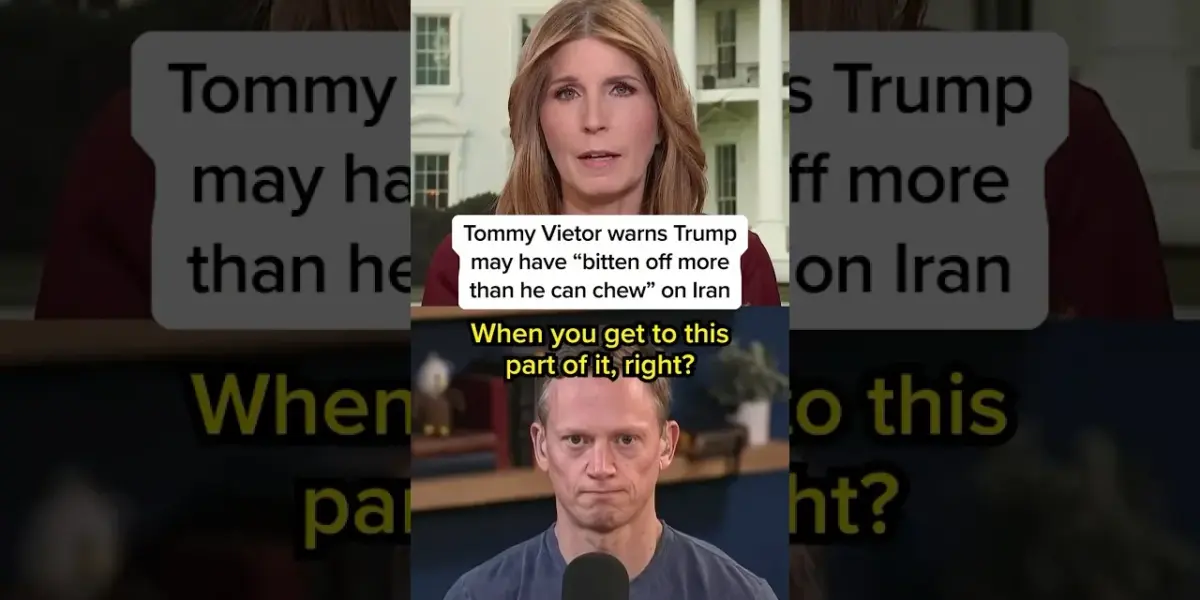
Trump’s Iran Policy Questioned Amid Regime Change Doubts
Tommy Vietor, a prominent voice from Crooked Media, has issued a stark warning regarding the Trump administration’s approach to Iran, suggesting that the President may be “biting off more than he can chew.” Speaking on MS NOW’s new weekly special series, “Crooked on MS NOW,” Vietor expressed significant skepticism about the feasibility and strategic depth of the current U.S. policy towards Tehran, particularly concerning any potential regime change operations.
Challenging Ideological Convictions
Vietor articulated a core challenge to the notion of successfully orchestrating regime change in Iran: “There’s no way to conduct a regime change operation against a regime that is as ideologically driven as the Iranian regime.” This statement underscores a fundamental difference between the Iranian government and regimes that might be more susceptible to external pressure or internal dissent orchestrated from abroad. The deep-seated ideological underpinnings of the Iranian leadership, Vietor implies, make it a uniquely resilient target for external interference aimed at toppling the government.
The implication is that a simplistic or purely transactional approach, often associated with the Trump administration’s foreign policy, may fail to account for the complex motivations and unwavering commitment of the Iranian regime to its revolutionary ideals. This ideological fervor, Vietor suggests, acts as a powerful buffer against the kind of destabilization efforts that have, at times, proven effective elsewhere.
Questions on Strategy and Future Plans
Beyond the inherent difficulty of regime change, Vietor also raised critical questions about the lack of a clear strategy for what would follow such an upheaval. “Questions whether there’s a real strategy for what comes next,” Vietor stated, highlighting a perceived void in the administration’s planning.
This concern points to a broader debate in foreign policy circles about the importance of post-conflict or post-transition planning. Without a well-defined roadmap for a post-regime Iran, any successful destabilization effort could lead to a power vacuum, prolonged instability, or the rise of an even more problematic successor regime.
The administration’s focus, according to Vietor’s assessment, appears to be heavily weighted on exerting maximum pressure through sanctions and diplomatic isolation, but the endgame remains unclear. This critique echoes concerns from various international relations experts who argue that a strategy solely focused on pressure, without a parallel and robust plan for the aftermath, is inherently incomplete and potentially dangerous.
Broader Context: U.S.-Iran Relations
The current tensions between the United States and Iran are a continuation of a complex and often adversarial relationship that has spanned decades. Following the withdrawal of the U.S. From the Joint Comprehensive Plan of Action (JCPOA) in 2018, the Trump administration reimposed stringent sanctions on Iran, aiming to cripple its economy and force concessions on its nuclear program, ballistic missile development, and regional activities. This “maximum pressure” campaign has been met with defiance from Tehran, which has gradually increased its uranium enrichment levels and engaged in retaliatory actions in the Persian Gulf.
Vietor’s commentary fits within this broader context, suggesting that the administration’s assertive posture, while perhaps intended to project strength, might be based on an underestimation of Iran’s resilience and a lack of foresight regarding the potential consequences of its actions. The ideological nature of the Iranian regime, coupled with its significant regional influence and a population that, while often critical of the government, can rally around nationalistic sentiments in the face of external threats, presents a formidable challenge.
The Role of Ideology in Geopolitics
The concept of an “ideologically driven regime” is crucial in understanding Vietor’s critique. Unlike regimes primarily motivated by economic gain or pragmatic geopolitical interests, ideologically committed governments often operate with a long-term vision that transcends immediate economic hardship or diplomatic pressure.
Their actions are guided by principles, historical narratives, and a perceived mission that can make them less predictable and more resistant to standard diplomatic tools. For such regimes, survival and the propagation of their ideology can be paramount, leading them to endure significant external pressure rather than compromise core tenets.
This perspective suggests that the Trump administration’s focus on sanctions and overt pressure might be misaligned with the fundamental drivers of the Iranian regime’s behavior. A successful long-term strategy, in this view, would require a more nuanced understanding of Iran’s ideological framework and a more comprehensive plan for managing the complex aftermath of any significant geopolitical shift.
What’s Next?
As the “Crooked on MS NOW” series continues, audiences will likely be looking for further insights into the specific strategies and potential pitfalls of U.S. policy toward Iran. Vietor’s warnings serve as a critical reminder of the complexities involved in international relations, particularly when dealing with regimes deeply rooted in ideology. The coming weeks and months will reveal whether the current administration’s approach will yield the desired results or if, as Vietor suggests, it has indeed “bitten off more than it can chew” in its confrontation with Tehran.
Source: Tommy Vietor warns Trump may have 'bitten off more than he can chew' on Iran (YouTube)

Related Articles
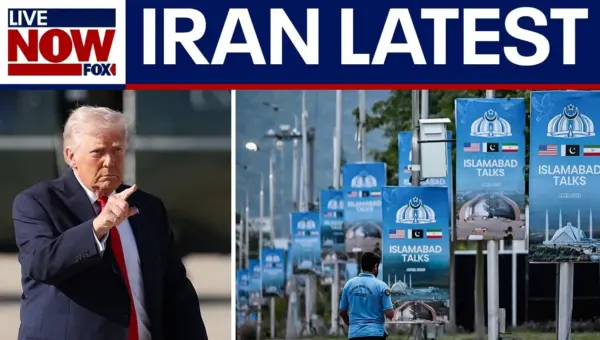
US Talks with Iran Set Amid Tensions, Ceasefire Nears End
US negotiators are heading to Pakistan for talks with Iran as a critical ceasefire nears its April 22nd expiration. Iran has stated it is not ready for direct talks, citing US "maximalist demands." The situation is complicated by conflicting messages, internal Iranian power dynamics, and President Trump's strong rhetoric.
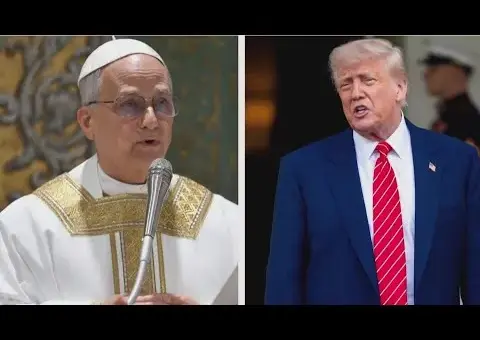
Pope and President Ease Tensions After Public Spat
President Trump and Pope Leo have seemingly stepped back from a public disagreement concerning foreign policy. Following sharp words, both leaders are now signaling a desire to de-escalate tensions. Vice President Vance expressed gratitude for the Pope's efforts to lower the temperature.
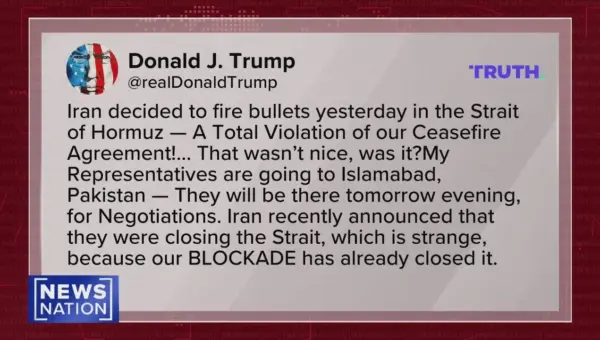
Trump Claims Iran Violated Ceasefire in Hormuz Strait
President Trump accused Iran of violating a ceasefire by firing on ships in the Strait of Hormuz. Conflicting reports and "media warfare" from both sides create confusion. The situation impacts global oil prices and highlights the ongoing diplomatic challenges.