AI’s Job Displacement Threatens Debt-Fueled Economy
The global economy faces a paradox: a debt-fueled growth model clashes with AI's potential to reduce jobs and incomes. Simultaneously, shifting geopolitical alliances and trade dynamics signal the emergence of a new world order, challenging established economic and political structures.


AI Revolution Challenges Debt-Based Economic Growth Model
A fundamental paradox is emerging within the global economy, pitting the long-standing reliance on debt-fueled expansion against the disruptive potential of artificial intelligence (AI). The traditional economic engine has historically depended on increasing employment and rising incomes to service growing debt levels. However, current market valuations appear to be pricing in a future where AI and automation significantly reduce the need for human labor, potentially leading to lower incomes. This creates a fundamental conflict: an expansionary, debt-dependent system cannot coexist with an AI-driven future that anticipates fewer workers and diminished earning potential.
The Debt-Income Conundrum
For decades, economic growth has been intrinsically linked to the accumulation of debt. Businesses borrow to expand, consumers leverage debt for purchases, and governments issue bonds to fund public services and stimulus. This model inherently assumes a growing pool of workers earning sufficient incomes to repay this debt. The current market narrative, however, seems to be betting heavily on AI’s ability to drive productivity and profitability with a significantly smaller human workforce. This raises a critical question: if AI leads to widespread job displacement and suppressed wages, how will the existing debt obligations be met? The market’s optimistic outlook on AI’s economic benefits may be overlooking the systemic implications for debt servicing capacity.
Shifting Global Alliances and Trade Dynamics
Beyond the AI-induced economic tension, geopolitical shifts are also signaling the potential dawn of a new world order. There is a growing sentiment that the global landscape is moving away from traditional power structures, particularly those centered around Europe. This could herald a significant realignment of international alliances and trade relationships. The emphasis is shifting towards reconfiguring global supply chains, with a greater focus on domestic production and strategic partnerships that may bypass established geopolitical norms. This recalibration of trade and investment flows suggests a move towards a more fragmented and potentially less interconnected global economy.
The President’s Role in Reshaping Global Order
The current administration is seen by some as actively pursuing a new world order, particularly in the realms of trade and globalization. This involves a willingness to challenge long-standing alliance structures and to fundamentally rethink economic interdependence. Policies aimed at reshoring manufacturing, diversifying supply chains away from perceived geopolitical risks, and forging new bilateral or multilateral trade agreements are indicative of this strategic pivot. This proactive approach suggests a deliberate effort to reshape the global economic and political architecture, potentially leading to a more protectionist and regionally focused international system.
Market Impact and Investor Considerations
What Investors Should Know:
- AI Disruption: Investors must grapple with the dual narrative of AI’s productivity gains versus its potential to erode consumer demand and debt repayment capacity. Sectors heavily reliant on traditional labor models may face significant headwinds, while AI enablers could see substantial growth, albeit with valuation risks.
- Geopolitical Realignment: The potential shift in global alliances and trade patterns introduces significant uncertainty. Investors need to assess how these changes might impact supply chains, commodity prices, currency valuations, and the profitability of multinational corporations.
- Debt Sustainability: The long-term sustainability of a debt-based economy in an era of potential jobless growth is a major concern. Rising interest rates or economic slowdowns could exacerbate the challenges of servicing the vast amounts of global debt.
- Policy Uncertainty: The active reshaping of trade and foreign policy by major global powers creates an environment of policy uncertainty. This can lead to increased market volatility as businesses and investors adjust to new regulations and geopolitical realities.
The confluence of technological disruption driven by AI and a fundamental reshaping of global geopolitical and economic structures presents a complex and potentially volatile environment for investors. Understanding these interconnected forces is crucial for navigating the evolving financial landscape.
Source: The Next Phase of the New World Order Has Begun (YouTube)

Related Articles


Oil Prices Surge to $91 Amid Geopolitical Tensions
Oil prices have surged to $91 a barrel, driven by disruptions in the Strait of Hormuz. This is leading to higher gas prices across the U.S., with California facing particularly steep costs. The situation is fueling debate on energy policy, exports, and the transition to renewable fuels.

China’s Iran Gambit: Deception or a New World Order?
President Trump claims China will stop sending weapons to Iran, but deep skepticism remains due to China's past support and use of spy satellites to aid Iran. This move could be a strategic ploy to weaken the US military.

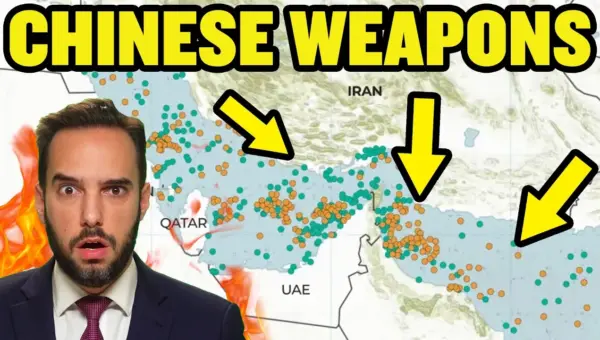
China Aids Iran Amid US Conflict Escalation
Recent intelligence suggests China is secretly supplying Iran with weapons like MANPADS and sharing critical intelligence, a significant escalation from its previous stance. This move, if confirmed, could deepen regional conflict and lead to severe US economic retaliation, while highlighting long-standing strategic ties between Beijing and Tehran.