US Navy’s Ruthless Strike on Iran: A War Escalates?
A US submarine's torpedo strike on an Iranian frigate, killing 87 sailors, signals a dangerous escalation. Analyst Malcolm Nance critiques the flawed strategy behind the conflict, questioning the objectives and the dangerous rhetoric of unconditional surrender. The situation points to a volatile and unpredictable path for the region.

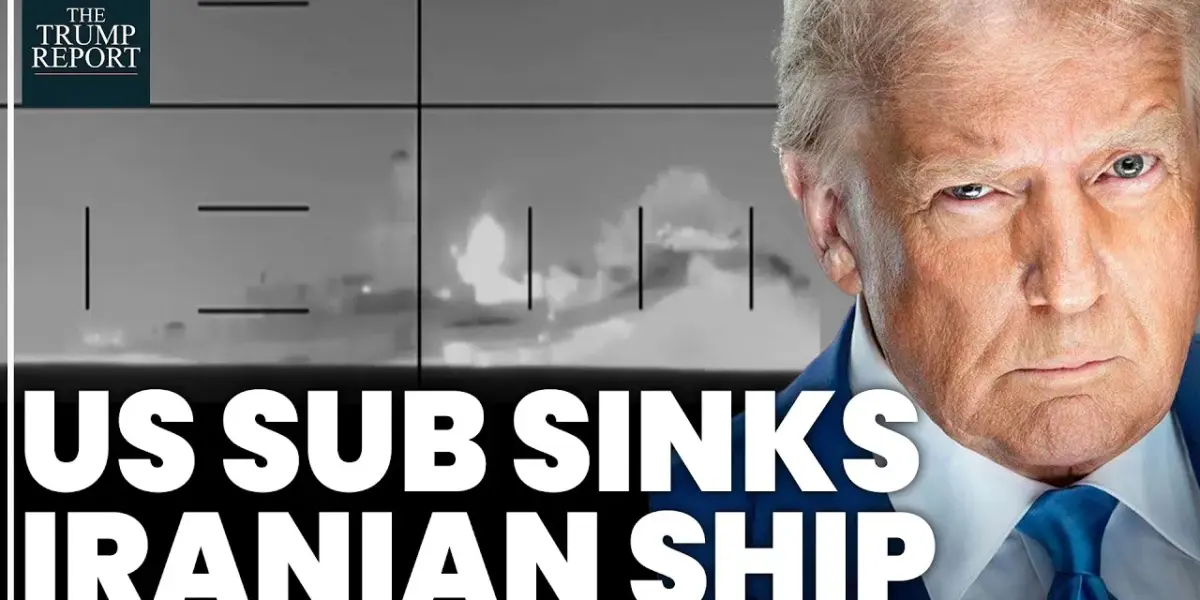
US Navy’s Ruthless Strike on Iran: A War Escalates?
The recent sinking of an Iranian frigate by a US submarine, resulting in the deaths of at least 87 sailors, marks a significant and potentially dangerous escalation in the undeclared conflict between the United States and Iran. This incident, coupled with the broader strategic objectives seemingly pursued by the US and Israel, raises critical questions about the endgame, the rationality of the current approach, and the perilous path the region is now treading.
Decapitation Strikes and Strategic Delusions
The initial strikes, including the assassination of a key Iranian religious leader, were framed as attempts at regime change and disarmament. However, intelligence and foreign policy analyst Malcolm Nance, a US Navy veteran, argues that such tactics are strategically flawed and rooted in a misunderstanding of Iran’s political structure. “Assassinating the leadership through the decapitation strike that the Israelis did not give you regime change.
What that does is that gives you a leadership change,” Nance explains. He likens it to the situation in Venezuela, where the system remains intact despite leadership changes. In Iran, the Supreme Leader holds immense religious and political power, and his assassination merely accelerates a pre-existing succession process.
The idea that targeting a council of elders would lead to regime collapse is, according to Nance, “ludicrous,” as the system is deeply entrenched and has been built over decades. The belief that Iran’s government is a “house of cards” is a miscalculation, ignoring the resilience forged through revolution and sustained for over fifty years.
Unconditional Surrender: A Dangerous Rhetoric
Adding to the confusion and alarm is President Trump’s call for Iran’s “unconditional surrender.” Nance expresses incredulity at this demand, especially given the lack of US boots on the ground and a clear objective for such a surrender. He attributes this rhetoric to a potential disconnect from reality, suggesting it borders on “mental illness masquerading as foreign policy.” The analyst points out the lack of a coherent endgame, whether it be regime collapse, missile disarmament, or the destruction of the Iranian Navy. The focus on sinking a frigate, while a clear military action, does little to address the more significant threat posed by the Iranian Revolutionary Guard Corps’ (IRGC) vast fleet of speedboats capable of disrupting global oil markets.
Nance criticizes the administration’s apparent reliance on flawed intelligence, possibly from the Iranian diaspora disconnected from contemporary Iran, and a failure to consult with experts on the region. He contrasts the current rhetoric with the strategic silence observed before the conflict began, suggesting that the State of the Union address, which omitted any mention of Iran, was an act of “strategic deception” aimed at the American public and the world, rather than Iran.
The Sinking of the Frigate: A Clear Act of War?
The sinking of the Iranian frigate, identified as the Dena, by a US Mark 48 ADCAP torpedo, is a stark illustration of the kinetic actions taking place. Nance, drawing on his own experience in submarines, describes the mission as “relatively straightforward.” The submarine, positioned off the coast of India, tracked the frigate as it transited south.
Despite the frigate posing no significant threat, and having thousands of miles of steaming ahead, orders were given to strike. The torpedo hit the frigate “by the stern, broke it in half and it went under almost immediately.” The tragic loss of life, with 87 sailors confirmed dead and others missing from the 180 on board, highlights the human cost of these operations.
Nance addresses the inevitable questions about the legality and justification of the strike, drawing a parallel to the sinking of the Argentinian cruiser General Belgrano during the Falklands War. He firmly states that in a time of armed conflict, international waters offer no sanctuary.
Citing the Geneva Conventions, he argues that the ongoing military actions, including over 1,300 combat missions and tens of thousands of tons of explosives dropped, constitute a state of war, regardless of formal declarations. The Iranian frigate, by transiting towards the Indian Ocean, was considered “fair game.” He suggests that the Iranian navy, recognizing its inferiority, should have sought refuge in neutral ports or surrendered, rather than proceeding into a conflict zone.
Stoking Kurdish Rebellions: A Risky Gamble
Beyond direct military engagement, the US appears to be exploring asymmetrical tactics, including the potential support of Kurdish groups within Iran. Nance’s analysis points to a scenario where the US and Israel might be attempting to “stoke a rebellion of the Iranian Kurds.” This strategy, reminiscent of past operations, involves leveraging ethnic grievances to create internal pressure on the Iranian regime.
However, this approach carries significant risks, particularly concerning Turkey’s strong opposition to any form of Kurdish autonomy, which could lead to a wider regional conflict involving a NATO member. The reported purchase of Toyota pickup trucks, often associated with insurgent groups, and the deployment of special operations aircraft capable of penetrating hostile airspace, suggest a concerted effort to destabilize Iran from within.
Nance expresses deep concern over this strategy, highlighting President Trump’s past abandonment of Kurdish allies and the potential for a Turkish intervention. He warns that such a move could not only fail to achieve its objectives but also create new, dangerous flashpoints, potentially even leading to tacit coordination between Turkey and the IRGC against a Kurdish uprising.
Why This Matters
The current trajectory of US-Iran relations is exceptionally dangerous. The strategy appears to be a chaotic series of uncoordinated actions and rhetoric, lacking a clear strategic vision or endgame. The assassination of leaders, the sinking of warships, and the potential instigation of internal rebellions are all escalatory steps that could plunge the region into a full-blown war with devastating consequences.
The lack of expert consultation and the reliance on potentially flawed assumptions about Iran’s internal dynamics suggest a dangerous level of hubris and a disregard for the complexities of the region. The human cost, as evidenced by the loss of life on the Iranian frigate, is already significant and threatens to grow exponentially.
Implications, Trends, and Future Outlook
The conflict signals a potential shift towards a more aggressive, less predictable US foreign policy under the current administration. The trend is towards unilateral action, bypassing international norms and alliances, and relying on brute force and destabilization tactics. The future outlook is grim, with a high probability of further escalation.
The potential for miscalculation is immense, and the risk of a wider regional conflict, drawing in other powers, is a distinct possibility. The economic implications, particularly concerning oil and gas supplies, are also severe, as highlighted by warnings from Gulf States about potential collapse.
Historical Context and Background
The current tensions are rooted in decades of animosity, stemming from the 1979 Iranian Revolution, the subsequent hostage crisis, and ongoing disputes over Iran’s nuclear program and regional influence. The US has historically sought to contain Iran, employing sanctions and supporting regional adversaries.
However, the current approach, characterized by direct military strikes and aggressive rhetoric, represents a departure from more measured, albeit still tense, diplomatic and economic pressures of the past. The intelligence community’s historical understanding of Iran, built over decades, appears to be either ignored or misinterpreted in the current decision-making process, leading to a strategic disconnect.
Nance’s analysis suggests that the current “war” is not a well-thought-out campaign but rather a series of impulsive actions, a “pickup ball” game played without a clear strategy or understanding of the rules. This lack of foresight is what makes the situation so precarious, as the potential for unintended consequences and catastrophic escalation looms large.
Source: How the US sank an Iranian frigate with a submarine fired torpedo (YouTube)

Related Articles

Gen Z Poll Reveals Stark Divide on Israel-Palestine Conflict
A new NBC News poll reveals a significant generational split on the Israel-Palestine conflict, with three-quarters of Gen Z sympathizing more with Palestinians. Overall, adults are evenly divided, but partisan and age differences are pronounced. The poll also highlights ongoing public concerns about inflation and the handling of the war in Iran.

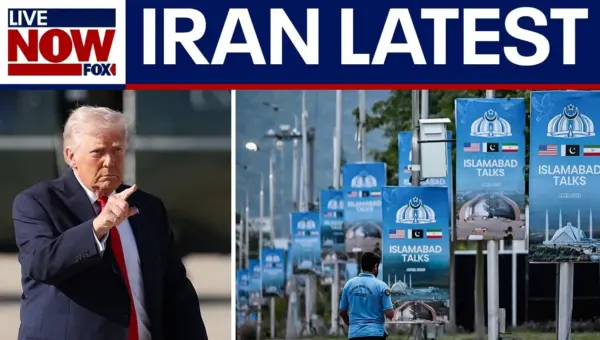
US Talks with Iran Set Amid Tensions, Ceasefire Nears End
US negotiators are heading to Pakistan for talks with Iran as a critical ceasefire nears its April 22nd expiration. Iran has stated it is not ready for direct talks, citing US "maximalist demands." The situation is complicated by conflicting messages, internal Iranian power dynamics, and President Trump's strong rhetoric.
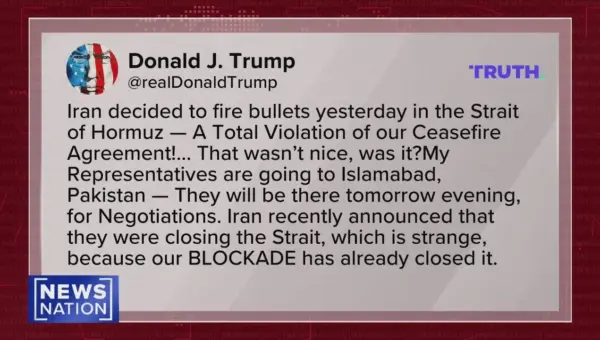
Trump Claims Iran Violated Ceasefire in Hormuz Strait
President Trump accused Iran of violating a ceasefire by firing on ships in the Strait of Hormuz. Conflicting reports and "media warfare" from both sides create confusion. The situation impacts global oil prices and highlights the ongoing diplomatic challenges.