War Costs Explode: Nobel Laureate Questions Value
Nobel laureate Paul Krugman decries the exorbitant costs of modern warfare, particularly in the Middle East, highlighting how billions spent on conflict could instead fund critical social programs like child healthcare and food assistance. He questions the economic justification for wars when domestic needs remain unmet and oil prices surge due to geopolitical instability.


Nobel Economist Paul Krugman Slams War Spending, Highlights Missed Opportunities
In a stark assessment of the economic toll of modern warfare, Nobel Prize-winning economist Paul Krugman has underscored the staggering financial burden of conflicts, particularly in the Middle East, and questioned their ultimate value. Speaking on the escalating costs associated with potential and ongoing military engagements, Krugman highlighted how resources dedicated to war could instead address critical domestic needs, from child healthcare to food security.
The Astronomical Price Tag of Modern Warfare
Krugman began by citing recent estimates of war expenditures, noting that last year’s bombing campaign in Yemen alone cost between three and five billion dollars, according to Harvard’s Kennedy School. More recently, June strikes on Iran’s nuclear facilities were estimated at around two billion dollars. He warned that the current situation in Iran, with no clear exit strategy, could lead to costs that dwarf previous conflicts.
“The costs of this war will likely dwarf anything we’ve seen in a long time,” Krugman stated, emphasizing the need to consider what else could be achieved with such vast sums.
Quantifying the Unseen Costs: Jets vs. Children’s Healthcare
To illustrate the magnitude of these expenses, Krugman offered a compelling analogy involving a minor incident: the downing of three jets in a friendly fire incident over Kuwait. This event alone reportedly cost approximately $300 million.
He then contrasted this figure with domestic social programs. “We have a lot of children in the United States have health coverage provided by the CHIP program, Children’s Health Insurance Program, which costs about $3,000 per child,” Krugman explained. “So just those three jets is the cost of healthcare for 100,000 children over the course of a year.” He further elaborated that the same amount could fund food stamps for about 125,000 people annually.
This comparison underscores his central argument: even seemingly minor military expenditures represent significant resources that could be redirected to strengthen the social safety net, particularly for vulnerable populations like children.
The Federal Budget Paradox: Deficits vs. War Spending
Krugman addressed the common argument that the U.S. Federal budget is too large to accommodate additional spending, particularly when concerns about deficits are high. He pointed out the inherent contradiction when significant funds are allocated to military action while domestic programs face cuts.
“If we were not waging this war in Iran, maybe we cut back on some of the spending at the Pentagon,” he mused. “Could we fund that without also raising…” He noted that even a substantial Middle East war might represent less than 1% of the total federal expenditure, but stressed that this framing overlooks the critical point: choices are being made.
“We are making all kinds of choices because we say the deficit is a problem, spending is too high,” Krugman stated. He referenced “savage cuts to food stamps and to Medicaid” as examples of consequences stemming from a perceived lack of funds, while simultaneously billions are channeled into military operations. He even suggested that extending Obamacare subsidies, a significant domestic policy initiative, might cost less than the projected expenditures for the current conflict, unless the situation escalates dramatically.
Oil Prices and Geopolitical Instability
The discussion then turned to the immediate economic impact on global markets, particularly oil prices. With a significant portion of the world’s oil production and vital shipping lanes, like the Strait of Hormuz, potentially threatened, the consequences for energy costs are substantial.
“The markets have the price of oil… Up about $15 a barrel so far,” Krugman observed, deeming this figure modest given the potential disruption. He warned that prolonged closure of the Strait of Hormuz could easily push oil prices over $100 a barrel.
While acknowledging that the U.S. is less dependent on oil than in previous decades due to improved fuel efficiency and alternative energy sources, he cautioned against complacency. “This is going to be ugly. Prices at the pump are already up significantly,” he noted, citing a $0.75 per gallon increase in wholesale gasoline futures since the start of the year.
Contradictory Energy Policies
Krugman also highlighted a perceived contradiction in current U.S. Energy policy. At a time when initiating a war could drive up oil prices and increase reliance on fossil fuels, the administration has been actively cutting back on alternative energy sources, deregulating, and pulling back investments in green technologies and electric vehicles.
“When you are at the same time making Americans more reliant on it,” he questioned, referring to oil, “it’s kind of contradictory to start a war in the Middle East that blocks up a bunch of oil and sends the price higher.” He criticized the administration’s hostility towards solar and wind power, suggesting that any conflict driving up fossil fuel prices makes the weakening of the renewable energy sector even more ill-timed.
Strategic Reserves and Munitions
The conversation touched upon the nation’s Strategic Petroleum Reserve, reportedly at a 40-year low. While Krugman admitted he hadn’t closely followed its status, he implied that a lack of rebuilding efforts before a potential conflict was shortsighted. However, he expressed greater concern over the potential depletion of precision munitions, which he believes are running out much faster than anticipated.
He further explained that the U.S. cannot unilaterally stabilize global oil prices, even by releasing strategic reserves. “Oil is a global market,” he stated.
“The U.S. Can’t really stabilize the price… Because it’s a global price and if we reduce the pressure on U.S. Imports, then the oil just goes someplace else.”
A Question of Priorities
Concluding his remarks, Krugman reiterated his core message: war is a choice with profound economic and social implications. He circled back to the example of the $300 million cost of three jets, emphasizing that this sum could have provided essential healthcare for 100,000 children or food for 125,000 people for a year. He stressed that this figure is likely a minuscule fraction of the total cost of the ongoing conflict, urging a reevaluation of national priorities.
Looking Ahead
As geopolitical tensions continue to simmer and military actions unfold, the economic ramifications will undoubtedly be a critical focus. The long-term cost of such conflicts, both in terms of direct expenditure and missed opportunities for domestic investment, will continue to be debated. Observers will be watching closely to see how these financial burdens impact global markets, domestic policy, and the broader conversation around the true value and cost of war.
Source: How much does war cost and is it worth it? Nobel Prize winning economist weighs in (YouTube)

Related Articles
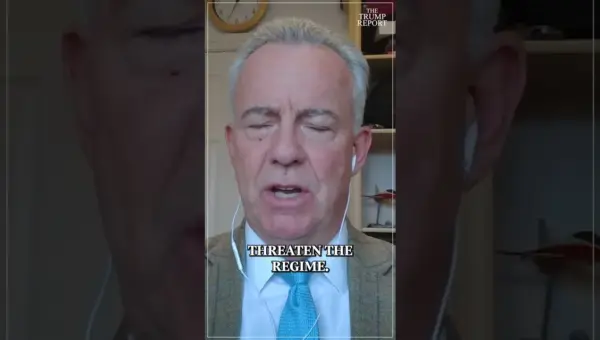
Trump’s Troop Gambit: A Risky Mideast Play?
Reports of thousands of U.S. troops heading to the Middle East clash with President Trump's claims of an impending end to the war. This analysis explores the potential risks and high price of using ground forces as leverage, questioning if the President is prepared for the potential human and political costs.
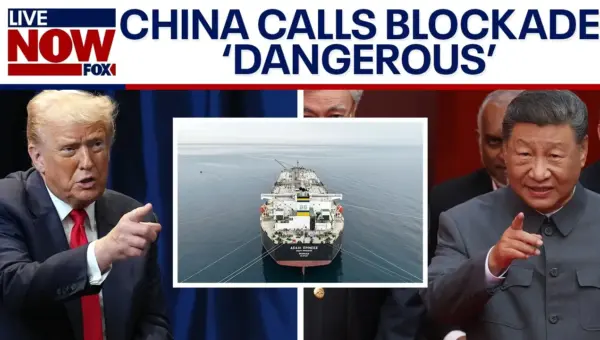
China Agrees Not to Send Weapons to Iran, Trump Claims
President Trump claims China has agreed to stop sending weapons to Iran, a move aimed at increasing pressure on Tehran. The U.S. is also tightening economic sanctions and enforcing a naval blockade on Iranian ports. Diplomatic talks are ongoing as a ceasefire nears its expiration.

Kushner, Witkoff Conflicts Cast Shadow on US-Iran Talks
President Trump's repeated claims that the war with Iran is nearly over are met with skepticism, especially as Iran threatens to block vital shipping lanes. Concerns are mounting over potential conflicts of interest involving key U.S. negotiators like Jared Kushner and Steve Witkoff, whose business dealings have financial ties to nations involved in the talks. The article questions whether past diplomatic opportunities were missed, leaving the fate of U.S. troops in the region uncertain.