Ken Burns Re-examines American Revolution’s Bloody, Complex Truth
Filmmaker Ken Burns' new documentary series on the American Revolution challenges sentimental narratives, revealing a bloody civil war with complex global implications. The series unearths overlooked histories, including the roles of enslaved people, Native Americans, and Loyalists, while confronting the Revolution's inherent contradictions, particularly regarding slavery.

Ken Burns Challenges Nostalgia in New American Revolution Series
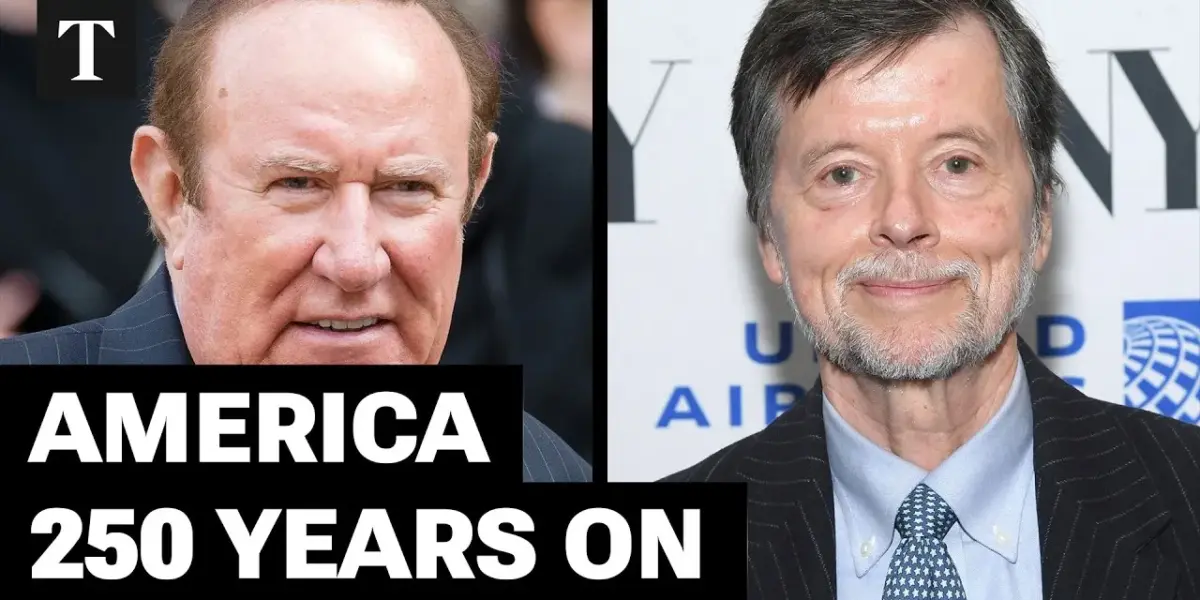
Filmmaker Ken Burns, in a recent interview with Andrew Neil, has underscored the profound complexity and often overlooked violence of the American Revolution, challenging the sentimental and simplified narratives that often dominate public understanding. Burns’ decade-long project, a comprehensive documentary series on the Revolution, aims to peel back layers of nostalgia to reveal a “bloody revolution and a civil war” with far-reaching global implications.
Beyond the Founding Fathers: Unearthing Hidden Histories
“We don’t make films about things we want to tell you what you should study. We are interested in sharing with you the process of our discovery,” Burns explained, highlighting the constant surprises unearthed during the series’ creation. He noted that the Revolution is “drowning in sentimental trial,” obscuring the harsh realities of the conflict.
Contrary to the popular image of “guys thinking great ideas in Philadelphia,” Burns emphasizes that the war was a brutal struggle involving not only the colonists and the British but also a significant portion of the population who remained loyal to the Crown. Native Americans and enslaved and free Black people were deeply involved, often siding with the British.
The series also digs into the global dimensions of the conflict, with France, Spain, and the Dutch playing key roles. This intricate, dynamic tapestry, Burns argues, is often lost in the “barnacles of sentimentality and nostalgia.” He stressed the importance of shedding “tropes” from grammar school education and popular perception to grasp the Revolution’s true nature.
A War of Conquest, Civil War, and World War
Burns elaborated on the complex nature of the Revolution, describing it not just as a war of independence but also as a “war of conquest, a civil war mainly between British loyalists and patriots and a world war too.” He posited that these elements have shaped the United States “just as much as the war of independence.” The core of the conflict, he noted, was an “argument between British citizens” that evolved into an Enlightenment debate about natural rights, famously articulated in the Declaration of Independence with concepts like “life, liberty, and the pursuit of happiness.”
The revolutionary ideas, though imperfectly applied, had a “spasm for more than 200 years” across Europe, the Caribbean, South America, Asia, and Africa. Burns cited Ho Chi Minh’s declaration of Vietnamese independence, quoting Thomas Jefferson, as an example of its enduring global impact.
“It’s not just a struggle between Englishmen over Indian land, taxes, and representation, but a bloody civil war that will engage more than two dozen nations, European as well as Native Americans that somehow still came to be about some of the noblest aspirations of humankind.”
The Unheard Voices: Loyalists, Enslaved People, and Native Nations
A significant focus of Burns’ series is on the often-overlooked perspectives of those who were historically marginalized or considered “losers” in the Revolution. This includes enslaved and free Black people, Native nations, and Loyalists. “In all history, it’s the winners that write the history,” Burns observed, “but you bring some new insights into this wasn’t just a battle of sort of white patriots on one side, white lawyers on the other side.”
He revealed that at least 20% of the population at the time consisted of free and enslaved Black people. An estimated 20,000 fought in the war, with 15,000 siding with the British – a choice often driven by the British Empire’s deep ties to its more profitable Caribbean colonies.
Only 5,000 fought for the Patriots. Native American tribes also faced complex decisions, leading to the destruction of ancient alliances as western tribes largely sided with the British and eastern tribes with the Americans.
Women, who constitute half the population, are also central to the story, though Burns acknowledged that scholarship on their roles has existed for decades, it has yet to “trickle down” into common awareness. The series’ immense popularity, with viewership well over four billion minutes on PBS, indicates a strong public appetite for this deeper understanding.
Slavery: The Unresolved Contradiction
Burns confronted the uncomfortable truth that key Founding Fathers, including George Washington and Thomas Jefferson, were major slave owners. He addressed the question of whether the new nation could have been formed without compromising on the issue of slavery. “I think that one of the great temporizing moments of the revolution is the willingness to kick the can at the time particularly of the constitutional convention and not deal with slavery,” Burns stated.
The Constitution’s “three-fifths compromise,” which counted enslaved people as three-fifths of a person for apportionment and representation, granted the South disproportionate political power until the Civil War. The series notes that prior to the Revolution, few questioned the morality of slavery.
As historian Bernard Balen observes in the film, “Once you’ve said all men are created equal, it’s done. Slavery’s over.” Yet, it took another devastating civil war for slavery to be abolished.
The Revolution’s Enduring Relevance
As the United States approaches the 250th anniversary of its founding, Burns suggests that the nation is at a “critical juncture” facing “existential threats.” He believes that in times of crisis, people naturally look back to their “origin story.” Burns also challenged the common portrayal of King George III as solely an “enemy and the bad guy and an idiot and a madman,” noting his intellectual depth, evidenced by his extensive book collection.
The series, set to premiere in the UK on BBC iPlayer in June, offers a “wonderful” scope, depth, and seriousness of purpose, according to Neil, who lauded Burns as America’s, and perhaps the world’s, premier documentary maker. The interview concluded with Neil’s lighthearted jab, asking Burns if it was time to admit the Revolution was a “big mistake,” to which Burns responded with a knowing, “Yeah, I guess it still hurts, doesn’t it?”
Source: Andrew Neil Asks Ken Burns Whether The American Revolution Was A Mistake 250 Years On (YouTube)

Related Articles

Lamar Odom & Khloé Kardashian’s Raw Truths Shock Director
Filmmaker Jesse Weber was surprised by Lamar Odom and Khloé Kardashian's candid admissions in their documentary. Odom discussed the pain of past actions and missed moments with his children, while Kardashian shared intimate details about addiction. The film aims to foster empathy and understanding for those battling similar struggles.


Trump Reinstalls Columbus Statue Near White House
A 13-foot replica of a Christopher Columbus statue has been reinstalled near the White House, sparking debate about historical interpretation. Supporters see it as a symbol of American history, while critics point to the controversial legacy of Columbus. This symbolic move highlights ongoing national conversations about the past.


Louis Theroux’s Scariest Moments Revealed!
Louis Theroux has faced numerous dangerous situations throughout his documentary career. A new countdown reveals the 32 most terrifying moments, from tense standoffs with violent criminals to unsettling encounters with hate groups and a harrowing interview with Jimmy Savile.