Trump’s Iran Strikes Echo His Own Warnings
New poll data shows significant public disapproval of President Trump's strikes on Iran, with many distrusting his judgment and clear planning. This analysis explores the stark contrast between Trump's past warnings against using war for political gain and his current actions, alongside potential domestic political motivations.

Trump’s Iran Strikes Echo His Own Warnings
A recent CNN poll reveals a stark divergence between President Trump’s actions and public sentiment regarding military strikes in Iran. Nearly six in ten Americans disapprove of the air strikes, with a significant 59% expressing distrust in Trump’s judgment on the use of force. 60% of Americans believe the president lacks a clear plan for managing the escalating situation.
A Pattern of Prediction and Action
For years, Donald Trump positioned himself as a critic of presidents who might resort to military action against Iran for political gain. He frequently warned that a “desperate president” would “bomb Iran to save his own political skin” and that a “weak president” would use the “Iran card” when facing domestic troubles.
The current administration’s actions, however, appear to mirror the very scenario Trump once decried. This shift has led to accusations that the strikes are a distraction from domestic issues, such as the Epstein files, and a tactic to consolidate power ahead of the 2026 midterm elections.
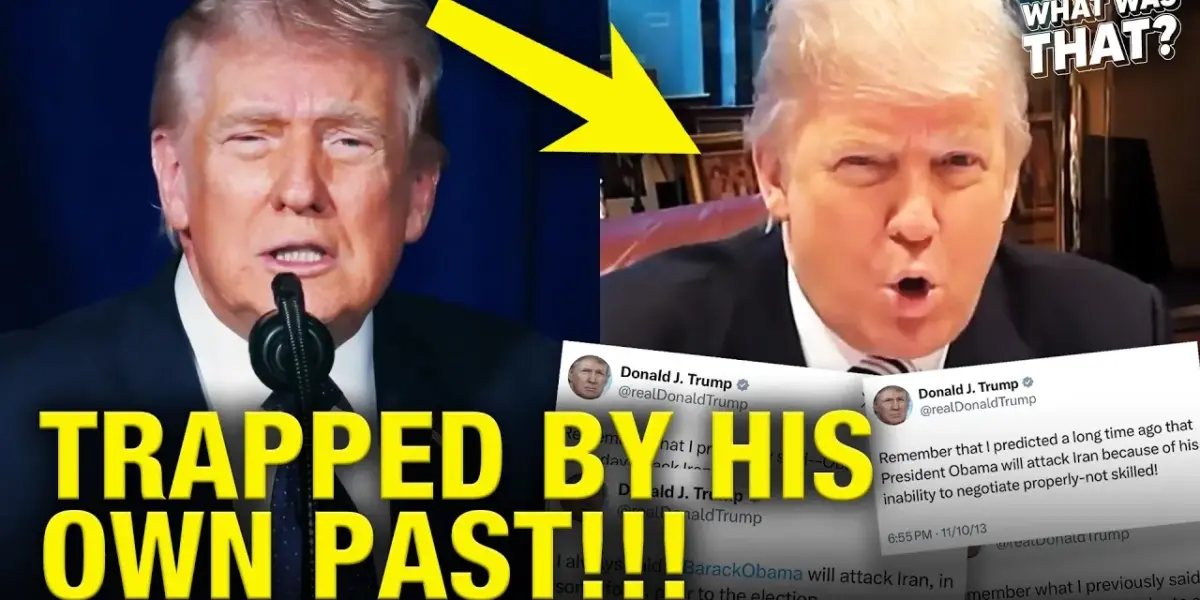
The rhetoric from Trump himself in the past paints a vivid picture. In 2011, he tweeted, “Barack Obama will attack Iran in the not too distant future because it will help him win the election.” He reiterated this prediction multiple times in subsequent years, suggesting Obama would launch strikes to “show how tough he is” or due to an “inability to negotiate properly.” Now, over a decade later, Trump is the one conducting strikes against Iran, leading to the tragic loss of at least six U.S. Soldiers and injuries to eighteen, with the grim acknowledgment that more casualties are likely.
“Our president will start a war with Iran because he has absolutely no ability to negotiate. He’s weak and he’s ineffective. So the only way he figures that he’s going to get reelected and as sure as you’re sitting there is to start a war with Iran, I believe that he will attack Iran sometime prior to the election because he thinks that’s the only way he can get elected.”
The Echo of Obama-Era Rhetoric
The narrative has come full circle, with Trump now embodying the figure he once warned against. The transcript highlights a historical parallel: Trump’s prominent role in pushing the Obama birther conspiracy in 2011, followed by a White House Correspondents’ Dinner roast by President Obama that playfully targeted Trump’s skepticism about Obama’s birth certificate.
This exchange, while seemingly lighthearted, foreshadowed Trump’s later accusations that Obama would initiate a war with Iran for political expediency. The irony is not lost on observers that Obama never launched such a war, while Trump has now initiated military action.
Visualizing Power: The War Room Reimagined
The visual cues of Trump’s engagement with the Iran crisis also draw parallels to past presidential imagery. A photograph from Trump’s Mar-a-Lago golf club, depicting him in a Situation Room-like setting with maps of potential targets, has been noted for its striking resemblance to the iconic war room photo of President Obama during the raid that killed Osama bin Laden.
This deliberate staging, complete with black curtains reminiscent of past events, suggests a desire to emulate a perceived moment of presidential strength and decisiveness. However, the context of a lavish fundraiser held at Mar-a-Lago the same night, with million-dollar-a-plate dinners, has drawn criticism for appearing tone-deaf to the realities of war and its human cost.
Shifting Narratives on Nuclear Threats
The administration’s justification for the strikes has also faced scrutiny. In the past, Trump celebrated a joint U.S.-Israeli strike on Iran’s nuclear facilities, proclaiming that “obliteration is an accurate term” and that Iran’s nuclear program was significantly set back. His defense secretary claimed the bombs “worked perfectly” and that any dissent was an attempt to undermine the president.
Yet, just eight months later, the narrative shifted to one of an “imminent threat” from Iran, citing long-range missiles and potential threats to U.S. troops and the American homeland. Independent experts and legal scholars, however, argue that Iran does not currently possess missiles capable of reaching the U.S. and that no imminent attacks were underway when the strikes occurred. This inconsistency raises questions about the true motivations and justifications for the military action.
“There was no imminent threat to the United States. You know, ironically, Dana, if if the president had chosen to take one of these actions back in early January when the Iranian people were on the streets in in the millions, um, you could make a case because that might have nudged the the regime into a dramatic change.
He couldn’t make that choice because the aircraft carrier that would have assisted that operation was off the coast of Venezuela at that point. And our allies in the region in Europe in particular who would have been helping us u make that choice in January were very focused on the president’s you know crazy folly around Greenland.”
The “Peace President” Paradox
Trump has consistently campaigned on a platform of ending wars and bringing peace, famously stating, “I’m not going to start a war. I’m going to stop wars. No more wars, no more disruptions.
We will have prosperity and we will have peace under Trump.” This message has resonated with a base that desires a departure from prolonged military engagements. However, the recent actions in Iran, coupled with the rhetoric from some within his political circle, including figures like J.D.
Vance and Tulsi Gabbard (who previously campaigned on a “no war with Iran” platform), present a paradox. While Vance has shifted to explaining the merits of the attack, and Gabbard, despite her past stance, has been associated with a president who initiated hostilities, the “peace” narrative appears to be reinterpreted to accommodate military action.
Domestic Implications and Election Concerns
The analysis extends beyond foreign policy, suggesting a potential link between the Iran conflict and domestic political strategies. Concerns are raised about the “SEAB Act” and efforts to restrict access to voter rolls, alongside the exploration of emergency powers related to national security and election integrity. The confluence of a foreign crisis with domestic political maneuvers, such as the proposed use of federal agents during election periods, has led to the argument that the Iran conflict is not isolated from Trump’s “election obsession.” The playbook, as described, involves leveraging perceived foreign threats to gain domestic political advantage, manipulate rules, and consolidate power, echoing past claims of a stolen election that culminated in an attack on American democracy.
Why This Matters
The discrepancy between President Trump’s past warnings and his current actions regarding Iran raises fundamental questions about consistency in foreign policy and the motivations behind military engagement. The public’s distrust, as indicated by the CNN poll, suggests a need for greater transparency and a clearer articulation of strategy. The historical context, where Trump himself predicted such actions for political gain, adds a layer of irony and potentially erodes public confidence in the stated justifications for war.
The alleged connection between foreign policy decisions and domestic political objectives, particularly concerning election security and access, highlights the complex interplay of national security and democratic processes. Understanding these dynamics is crucial for an informed citizenry and for holding leaders accountable for their decisions, especially when they involve the use of force and impact both international stability and the integrity of democratic institutions.
Trends and Future Outlook
The situation points to a broader trend of political rhetoric and action diverging, particularly in times of perceived crisis. The use of military action as a potential political tool, whether for distraction or to galvanize a base, remains a concern in contemporary politics.
The future outlook will likely depend on the ongoing developments in the Middle East, the administration’s ability to articulate a coherent and consistent strategy, and the public’s continued engagement with these issues. The precedent set by these actions could influence future presidential decision-making, potentially normalizing the use of force for reasons that extend beyond immediate self-defense, and further blurring the lines between foreign policy and domestic political maneuvering.
Source: Trump Past Comes Back to HAUNT HIM as WAR RAGES (YouTube)

Related Articles
Pakistan Navigates Tehran’s Tense Diplomacy
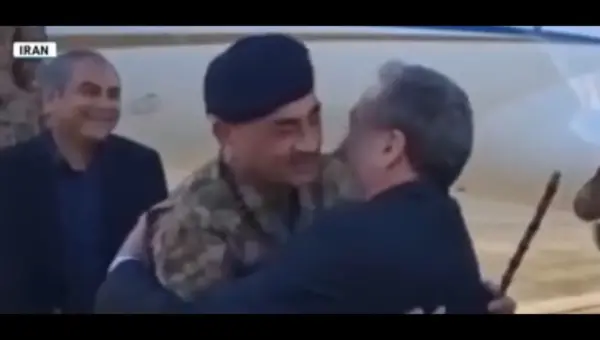
Pakistani officials are mediating talks between Iran and the US amid rising tensions, while the US also works to calm conflict between Israel and Lebanon over Hezbollah. Israel remains militarily prepared and committed to disarming Hezbollah.
China’s Spy Satellite Aided Iran’s Attacks on US Bases
A new report reveals Iran has used a Chinese spy satellite to monitor US military bases in the Middle East, potentially aiding in recent attacks on American warplanes. Leaked documents suggest Iran purchased the satellite, which significantly outperformed its own capabilities, raising concerns about China's role in regional conflicts.
China Agrees Not to Send Weapons to Iran, Trump Claims
President Trump claims China has agreed to stop sending weapons to Iran, a move aimed at increasing pressure on Tehran. The U.S. is also tightening economic sanctions and enforcing a naval blockade on Iranian ports. Diplomatic talks are ongoing as a ceasefire nears its expiration.