GOP Strategist Contradicts Himself on ‘War’ Rhetoric
A Republican strategist's contradictory statements about whether the current situation constitutes 'war' highlight the careful and often shifting use of political language. The exchange reveals the strategic importance of defining conflict without necessarily formal declarations.

GOP Strategist Contradicts Himself on ‘War’ Rhetoric
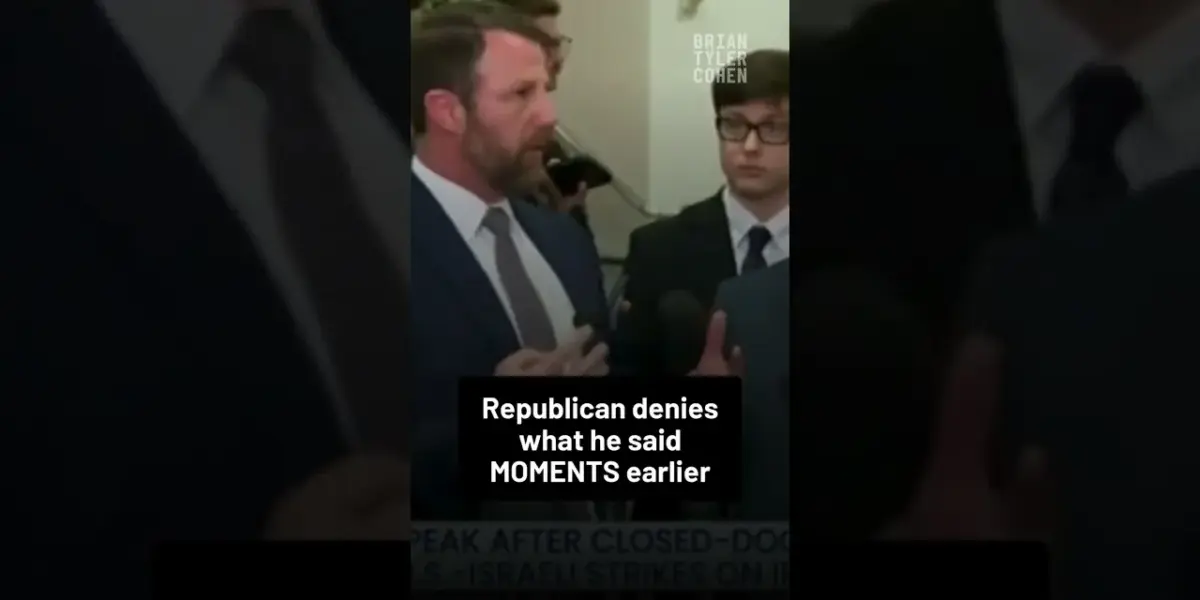
In a revealing exchange, a Republican strategist found himself in a tight spot, seemingly contradicting his own statements regarding the definition of ‘war.’ The situation highlights a recurring theme in political discourse: the careful, and sometimes shifting, use of language to frame complex geopolitical situations. The strategist’s attempt to walk back his earlier assertion that ‘this is war’ highlights the sensitivity surrounding such declarations and the potential implications they carry.
The Evolving Definition of ‘War’
The conversation began with a question about whether alternatives to direct action were being considered. The strategist’s initial response was stark: “This is war and we’re taking out the threat.
Um and if you’re part of the threat, then you have the then you’re a target. You what we’d call call not all the arrows but going after the archers.” This statement unequivocally framed the current situation as a state of war, implying a clear adversary and a justification for aggressive action.
However, when pressed on this very point, the strategist attempted to backtrack. Acknowledging the interviewer’s repeated use of the word ‘war,’ he stated, “We haven’t declared war. They declared war on us but we haven’t war.” This immediately created a dissonance.
The interviewer, confused, reiterated, “Secretary now you said this this is war.” The strategist then offered a clarification that seemed more like a concession: “They called it war. >> They’ve called it war. What I was saying Okay. Okay.
Well, that was a misspoke. What I was saying that they’ve declared war on us, but but war is ugly.
Uh it always has been ugly. Uh but we’re, you know, we’re at a we’re taking out a regime that’s been trying to attack us for quite some time.”
The core of the contradiction lies in the distinction between ‘declaring war’ and ‘being in a state of war.’ The strategist seemed to imply that while the opposing side may have initiated hostilities, the United States has not formally declared war, thus absolving them of the political and legal ramifications associated with such a declaration. Yet, his earlier description of the situation as ‘war’ and the justification for targeting ‘threats’ suggests a de facto state of conflict that mirrors the intensity and seriousness of a declared war.
Navigating Political Language
This linguistic gymnastics is not uncommon in politics. Leaders and strategists often employ rhetoric that evokes strong emotions and clear narratives without necessarily committing to formal declarations or policies. The term ‘war’ carries significant weight.
It implies a mobilization of resources, a justification for potentially extreme measures, and a commitment to a prolonged struggle. By avoiding the formal declaration, a government can maintain flexibility and potentially sidestep certain international obligations or domestic scrutiny.
The strategist’s insistence that “They declared war on us, but we haven’t war” and later, “The president asks us to declare war yet. But we they have declared war on us. We’re just simply fighting the the threat that’s at that’s um that’s been at our door for 47 years,” reveals a strategic attempt to define the conflict on their terms.
It frames the United States as a reactive party, defending itself against an aggressor, rather than an initiator of conflict. This narrative can be crucial for garnering domestic and international support.
Historical Context
The concept of undeclared wars or conflicts that blur the lines of formal declarations is not new. Throughout history, nations have engaged in military actions without the solemnity of a congressional declaration. The Cold War era, for instance, was characterized by numerous proxy wars and interventions where formal declarations were absent, yet the underlying tensions and hostilities were undeniable.
The Korean War and the Vietnam War, while involving significant U.S. military engagement, were not formally declared wars in the traditional sense. This historical precedent provides a backdrop against which current political rhetoric can be understood.
The current situation, as described by the strategist, involves addressing a ‘threat’ that has been ‘at our door for 47 years.’ This long-standing threat provides a historical anchor for the current actions, suggesting a continuous engagement or simmering conflict that has now escalated. The framing suggests a response to a persistent and long-term provocation, further solidifying the narrative of self-defense.
Why This Matters
The careful calibration of language in moments of international tension is critical. The distinction between ‘war’ and ‘conflict,’ ‘threat’ and ‘enemy,’ or ‘declaration’ and ‘action’ can have profound implications.
For the public, it shapes perceptions of the severity of the situation, the justification for governmental actions, and the potential sacrifices required. For international actors, it can influence diplomatic responses, alliances, and the application of international law.
The strategist’s initial strong assertion of ‘war’ suggests a readiness to employ robust measures. His subsequent attempt to qualify this statement by emphasizing the lack of a formal declaration indicates an awareness of the political and diplomatic sensitivities. This tension between the perceived reality of conflict and the formal legal or political definition of war is a complex tightrope that policymakers often walk.
Implications, Trends, and Future Outlook
The trend towards using strong, war-like rhetoric without formal declarations may continue. This approach offers strategic advantages, allowing for decisive action while maintaining political flexibility.
However, it also risks creating ambiguity and potentially eroding public trust if the messaging is perceived as disingenuous or manipulative. The “misspoke” defense, while a common tactic, can only be effective so many times before it loses credibility.
Moving forward, the public and media will likely remain vigilant in scrutinizing such language. The ability to hold political figures accountable for their words, especially when they pertain to matters of conflict and national security, is essential for a healthy democracy. The strategist’s exchange is a reminder that in the arena of public discourse, words have power, and their precise usage, or even their retraction, can reveal much about underlying intentions and strategies.
The core issue remains: when does a ‘threat’ become a ‘war’? And who gets to define it? The answer, as this exchange demonstrates, is often a matter of political strategy as much as it is a reflection of objective reality.
Source: Republican denies what he said MOMENTS earlier (YouTube)

Related Articles
Bulgaria Votes: EU’s Poorest Nation Faces Moscow vs. Brussels Choice
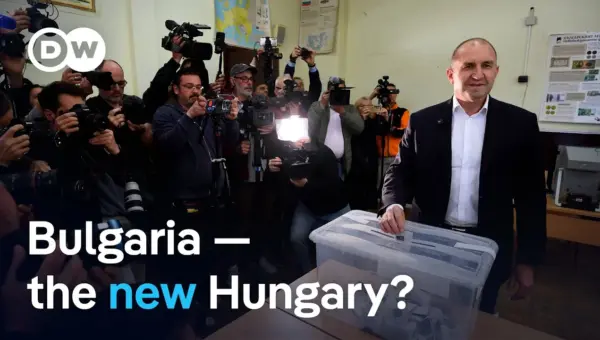
Bulgarians are voting in a critical election that could redefine their country's ties with Russia and the West. With a pro-Russian former president leading the polls, concerns are rising in Brussels and NATO about the nation's geopolitical future and its susceptibility to Russian influence. Domestic issues like corruption and economic hardship also play a significant role in voters' decisions.
Pope and President Ease Tensions After Public Spat
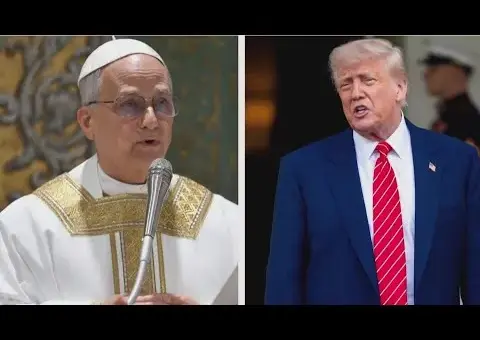
President Trump and Pope Leo have seemingly stepped back from a public disagreement concerning foreign policy. Following sharp words, both leaders are now signaling a desire to de-escalate tensions. Vice President Vance expressed gratitude for the Pope's efforts to lower the temperature.
Global Leaders Shun Trump, Forge New Alliances Abroad
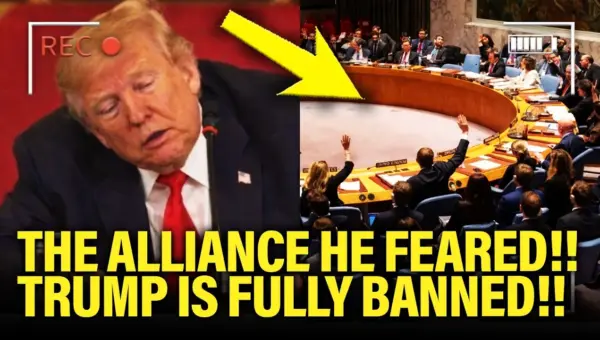
World leaders are increasingly excluding Donald Trump from international conferences, signaling a global pushback against his movement. Nations are exploring new alliances and security frameworks independent of the U.S., driven by concerns over American reliability and the rise of right-wing ideologies.