Cosmic Neighbors: Supernova Safety Zones and Interstellar Hitchhiking?
Explore the cosmic safety zones around supernovae, the elusive nature of dark matter interactions with neutrinos, and the feasibility of using interstellar objects for future space exploration. This article delves into the science behind these fascinating celestial phenomena.

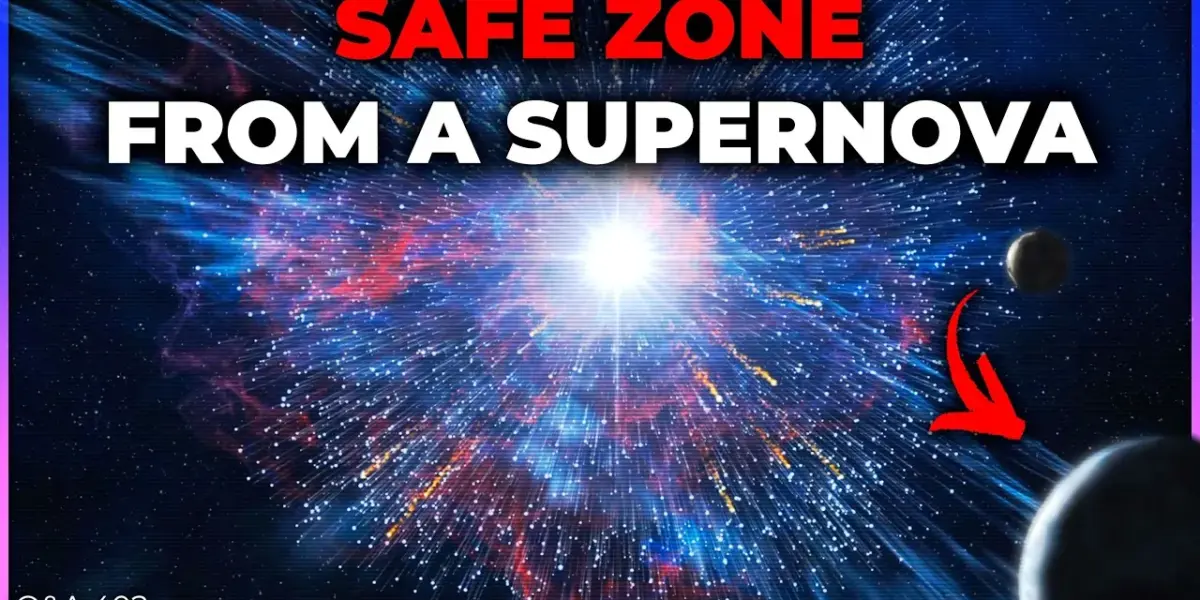
Cosmic Neighborhood Watch: Supernovae and Our Galactic Safety
The explosive deaths of stars, known as supernovae, are among the most powerful events in the universe. While awe-inspiring, they also pose potential threats to life on nearby planets. Scientists have long worked to define a ‘safe zone’ around these stellar cataclysms to understand our cosmic neighborhood’s risks.
Recent discussions suggest that for a Type II supernova, the danger zone extends to about 50 to 100 light-years. However, the precise distance varies, with estimates ranging from 30 to 200 light-years for supernovae in general.
The primary danger isn’t just the initial blast of radiation but also the long-term effects. As a supernova expels vast amounts of energy, it can strip away a planet’s protective ozone layer, leading to increased surface radiation and a higher risk of cancer, potentially contributing to past extinction events.
Type Ia Supernovae: A Different Kind of Stellar Demise
When considering Type Ia supernovae, which involve the detonation of a white dwarf star in a binary system, the dynamics differ. While also powerful, the exact safe distance can be debated.
These events occur when a white dwarf accretes matter from a companion star, eventually reaching a critical mass that triggers a runaway nuclear fusion reaction. The fate of the companion star is a subject of interest; one theory suggests that the violent ejection of the white dwarf could send the companion star on an ‘escape trajectory,’ flinging it out of the galaxy at high speeds, potentially explaining some observed hypervelocity stars.
Gamma-Ray Bursts: The Ultimate Cosmic Threat
The most extreme stellar explosions are gamma-ray bursts (GRBs). These incredibly energetic events can strip away a planet’s ozone layer even from vast distances, potentially across an entire galaxy. Evidence suggests that a GRB originating tens of millions of light-years away once impacted Earth, causing atmospheric disturbances.
Fortunately, current observations indicate no stars in our immediate galactic vicinity are poised to produce a dangerous supernova or GRB directed at us. While a Wolf-Rayet star was once a point of concern due to its orientation, it has since been determined not to pose a threat.
Dark Matter’s Mysterious Influence: Neutrinos and Radiation
The enigmatic nature of dark matter continues to puzzle astronomers. While its gravitational effects are observable—explaining galaxy rotation curves, gravitational lensing, and cosmic microwave background anomalies—its composition remains unknown. Early theories considered neutrinos, which are abundant and weakly interacting, as a potential dark matter candidate.
However, neutrinos travel near the speed of light, whereas dark matter appears to be ‘cold,’ meaning it moves slowly. This discrepancy has largely ruled out standard neutrinos as the sole explanation, leading to hypotheses like ‘sterile neutrinos’ or other exotic particles.
Interactions in the Cosmic Web
Recent research explores potential interactions between neutrinos and dark matter. The idea is that as neutrinos traverse the vast dark matter halos surrounding galaxies, their paths might be subtly altered.
This interaction, if it occurs, could manifest as a detectable change in the pattern of gravitational lensing—the bending of light around massive objects. Upcoming missions like the Euclid space telescope and the Nancy Grace Roman Space Telescope, designed to meticulously map gravitational lensing, may provide the sensitivity needed to detect such subtle effects, offering new clues about the nature of dark matter.
Radiation from Galactic Centers
Regarding radiation in areas suspected of high dark matter concentrations, the evidence is complex. While there’s no general indication of increased radiation from all dark matter-rich regions, the center of our own Milky Way galaxy presents a compelling case. Astronomers have observed an excess of gamma radiation emanating from this region.
One leading explanation is that dark matter particles are accumulating near the supermassive black hole at the galactic center, annihilating each other and producing this gamma-ray signature. However, alternative explanations exist, including radiation from numerous pulsars or interactions with the supermassive black hole itself.
Interstellar Travel: Hitching a Ride on Cosmic Wanderers?
The prospect of ‘hitching a ride’ on an interstellar object, such as a comet or asteroid passing through our solar system, is an intriguing one often posed by the public. However, from a propulsion standpoint, it offers little advantage. To safely land on such an object, a spacecraft must first match its velocity, which is a significant undertaking.
Once the velocity is matched, the spacecraft is essentially traveling at the same speed as the object, rendering the ‘hitchhiking’ aspect moot. The real benefit of intercepting an interstellar object lies not in its speed, but in its composition.
Resources and Shielding in Deep Space
Interstellar objects are essentially time capsules, preserving materials from other star systems. For future long-duration space missions, these objects could serve as invaluable sources of propellant, raw materials for construction, or even as natural shields against cosmic radiation.
By landing on an object and utilizing its resources, or by seeking shelter within its icy depths—perhaps a meter or more below the surface—spacecraft and their occupants could be protected from the damaging effects of cosmic rays. This makes interstellar objects prime targets for scientific study and potential resource utilization, rather than simply as passive transport vessels.
The Nuance of Emerging Technologies
Discussions around rapidly advancing technologies, such as artificial intelligence and private space exploration initiatives, often elicit strong and polarized reactions. This was highlighted by recent commentary on a video discussing AI data centers in space. The reactions ranged from criticism of perceived excessive enthusiasm for AI to strong opposition against any positive outlook on the technology.
Similarly, perspectives on space companies can draw both staunch support and sharp criticism. Navigating these complex topics requires a nuanced approach, acknowledging both the potential benefits and the significant risks involved. Approaching these subjects with caution, careful consideration, and an open mind is crucial as we shape our future with these powerful tools.
Source: Catching Interstellar Objects, Safe Zone from Supernovae, Dark Matter Zones | Q&A 402 (YouTube)

Related Articles


Artemis 2 Carries Astronauts to Lunar Orbit
Artemis 2 has launched four astronauts on a journey around the Moon, marking a significant step in human lunar exploration. Meanwhile, astronomers are studying a comet that reversed its spin and galaxies that seem to lack dark matter. Advances in antimatter transport and satellite refueling also point to future space capabilities.
New Comet Could Dazzle Skies With Naked-Eye Visibility
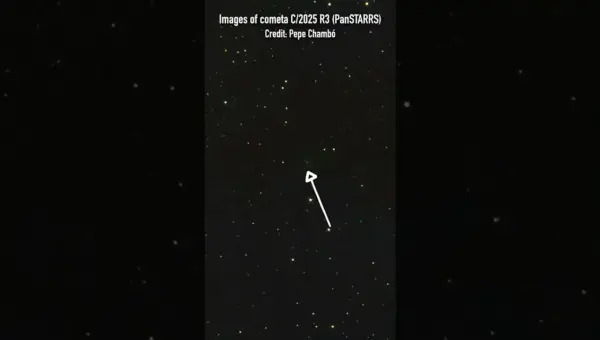
Comet C/2025 R3 (PanSTARRS) is expected to make its closest approach to Earth on April 19th, with predictions suggesting it could become bright enough to be seen with the naked eye. This icy visitor from the outer solar system offers a rare and potentially dazzling celestial display.

Webb Telescope Reveals New Cosmic Secrets
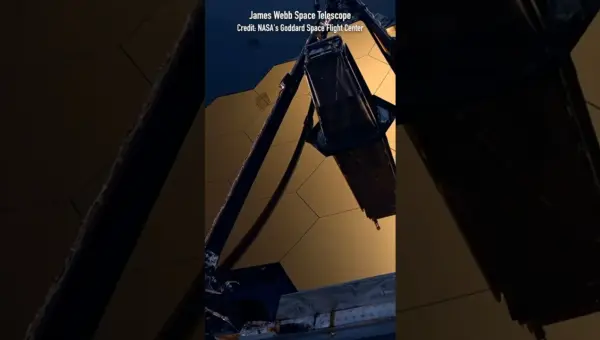
The James Webb Space Telescope has selected its next batch of scientific projects, promising new insights into alien worlds and the early universe. Researchers will use Webb to study exoplanet atmospheres, investigate distant galaxies, and explore objects within our own solar system.