Trump’s Iran Gambit: Legacy of Destruction or Strategic Masterstroke?
The recent US strikes on Iran, justified by an 'imminent threat,' have ignited debate about Donald Trump's legacy. Critics question the legality and shifting justifications, drawing parallels to the Iraq War and warning of potential regional instability. The long-term consequences remain uncertain.

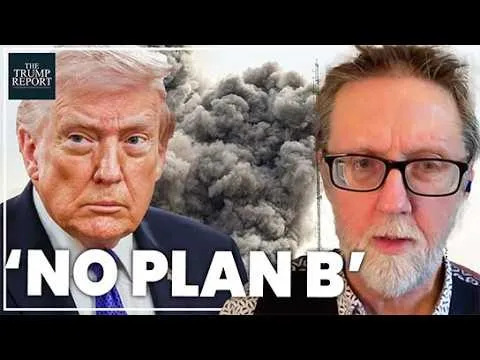
Trump’s Iran Escalation: A Legacy in Flux
The recent escalation involving the United States and Iran, particularly the strikes on Iranian targets, has ignited a firestorm of debate regarding intent, justification, and long-term consequences. As the situation unfolds, a central question emerges: has this action secured Donald Trump’s legacy as a decisive leader, or has it irrevocably damaged it, marking him as one of the most destructive figures in modern presidential history?
The “Imminent Threat” Conundrum and Shifting Justifications
The official narrative surrounding the strikes has been met with significant skepticism. Senator Marco Rubio’s assertion of an “imminent threat” that necessitated a preemptive strike, even if Iran hadn’t attacked first, has been widely scrutinized. The logic presented – that the US had to act because Israel was expected to strike Iran, and Iran would then retaliate against the US – has been described as a “hot mess” and “strange logic.” Critics argue that an “imminent threat” requires more than just the potential for future retaliation; it implies an immediate danger that was not demonstrably present.
The justification appears to shift the onus of initiating conflict onto the US, rather than Iran. As one observer noted, “We had to go to war because Israel was going to attack Iran. So BB as to whether the US goes to war, the US Senate and the American people do not.” This raises profound questions about accountability and the democratic process in matters of war.
International Law and the Preemptive Strike Doctrine
Under international law, preemptive strikes are typically justified only in cases of clear and present danger. The transcript highlights that Iran, while possessing uranium enrichment capabilities, has not reached the threshold for a nuclear weapon and, crucially, has not shown an intention to use one imminently.
The argument that the US attacked Iran preemptively because Israel was poised to do so, and that this preemptive action was necessary to avoid a greater number of casualties, has been met with disbelief. If Israel was the primary actor initiating the potential conflict, questions arise about why the US joined the Israeli offensive before any Iranian retaliation occurred, effectively becoming a party to a conflict it ostensibly sought to avert.
Regime Change: Explicit Goal or Unintended Consequence?
Adding to the confusion is the apparent contradiction in stated objectives. Defense Secretary Pete Hegath’s assertion that the strikes were “not a regime change war” is juxtaposed with comments suggesting the world is “better off” with the potential removal of the current Iranian leadership. This ambiguity is further compounded by a list of evolving rationales: from targeting Iran’s nuclear program and missile capabilities to preventing imminent threats and, implicitly, regime change.
The situation draws parallels to the lead-up to the Iraq War, where justifications shifted and WMDs never materialized, leading to a protracted and destabilizing conflict. The “Trump administration for making George W. Bush administration look competent” sentiment highlights the deep-seated concerns about the coherence and credibility of the US strategy.
The Trump Doctrine: Dominance, Capitulation, and Negotiation
Beneath the layers of shifting justifications, a potential underlying strategy from the Trump camp emerges: the pursuit of American dominance. This approach, while chaotic and uncoordinated, appears to echo the post-unipolar era ambitions of the George W. Bush administration.
The strategy seems to involve applying intense pressure – through military strikes and sanctions – to force Iran into a state of “regime accommodation” or “capitulation.” This would involve Iran fully relinquishing its nuclear program, limiting its ballistic missile capabilities, and potentially allowing for greater internal dissent. The analogy to Venezuela is drawn, where a regime facing pressure ultimately conceded to certain US demands to remain in power. However, this approach appears to be at odds with Israel’s desire for outright regime change, creating a potential point of friction.
The Israeli Factor and Netanyahu’s Calculus
Israel’s objectives, particularly under Prime Minister Netanyahu, appear to be more aligned with a complete dismantling of the Iranian regime. They seek the elimination or overthrow of political and military figures associated with the Islamic Republic.
The US strategy, while involving targeted assassinations, may be content with a capitulation that leaves a weakened but extant regime in place, provided it meets US demands. This divergence could lead to future tensions, as Israel may not be satisfied with a partial victory.
The European Response: Divided and Limited Leverage
European allies have offered varied responses, largely shaped by their own national interests and the broader geopolitical landscape, particularly the war in Ukraine. While many leaders have expressed relief at the death of Supreme Leader Ali Khamenei, their focus has shifted to de-escalation.
The UK’s reluctance to allow the use of Diego Garcia for offensive operations, citing international law, highlights the legal and ethical quandaries. Ultimately, European nations appear to have limited leverage over the US-Israeli approach, especially as long as the US provides support for their actions.
The Iranian Perspective: Celebration and Uncertainty
Despite the international legal concerns and the dangerous geopolitical implications, there is a segment of the Iranian population and diaspora that has welcomed the removal of Ali Khamenei. For those who have suffered under the regime’s repression, his death represents a moment of liberation and celebration. However, this sentiment is tempered by the profound uncertainty about what comes next.
The potential for continued repression, instability, and an unorganized opposition creates a precarious situation. The regime’s ability to frame the conflict as foreign aggression supported by internal dissidents could further consolidate its power.
Why This Matters: Legacy, Stability, and the Future of Conflict
The actions taken in Iran have far-reaching implications. For Donald Trump, this intervention could define his presidency, potentially overshadowing any economic achievements. The significant opposition within the US, even among Republicans, suggests that a prolonged or escalating conflict could prove politically devastating.
Beyond Trump’s legacy, the situation raises critical questions about the future of international law, the efficacy of preemptive military action, and the complex dynamics of regime change. The potential for an “uncontained war” with Iran, involving strikes on Gulf states and a wider regional conflict, poses a grave threat to global stability. The economic ramifications, particularly for oil-dependent nations, could be severe.
Historical Echoes and Future Outlook
The echoes of the Iraq War are undeniable, serving as a cautionary tale about the unintended consequences of military intervention and the difficulty of establishing stable governance in the aftermath of regime collapse. The lack of a clear, organized opposition within Iran further complicates any transition. While the removal of a repressive leader might be welcomed by some, the path forward is fraught with peril.
The current approach risks entrenching a cycle of conflict, with potential for continued strikes and retaliations, leaving the region and the world in a state of heightened tension. The long-term impact on Trump’s legacy will likely depend on whether this gambit leads to lasting regional stability or a descent into further chaos.
Source: Trump just hit ‘self destruct’ on his legacy | Scott Lucas (YouTube)

Related Articles


Global Powers Clash Over ‘Western Civ’ Definition
A debate over what defines "Western civilization" is quietly reshaping international discussions, with differing views from figures like Marco Rubio contrasting with liberal interpretations emphasizing openness and tolerance. This ideological divide influences how nations interact and could lead to a more fragmented or cooperative global order depending on which definition prevails.


Kidnapped Reporter Slams Trump’s Iran Threat as Misguided
Journalist David Rohde, a former Taliban hostage, has criticized Donald Trump's warning to Iran about the Strait of Hormuz. Rohde stated that Trump's aggressive language shows a deep misunderstanding of Islam and the region. His comments highlight the potential pitfalls of confrontational rhetoric in complex international diplomacy.
Trump Eyes Iran Deal by Monday, Hints at Support for Protests
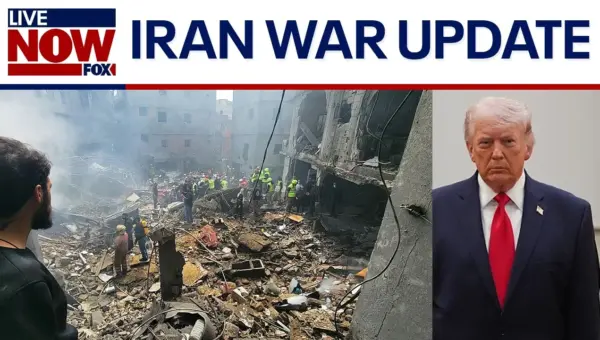
President Donald Trump believes a deal with Iran could be finalized by Monday, telling Fox News he is considering aggressive actions if an agreement isn't reached quickly. Trump also revealed that the US sent guns to Iranian protesters through Kurdish channels. He further stated that Iran's nuclear program is no longer a point of negotiation, with most issues already conceded.