Governor Pritzker Fights Back Against Election Threats
Illinois Governor JB Pritzker details his efforts to safeguard elections against potential interference and outlines a forward-looking agenda for the Democratic Party, emphasizing core values, housing affordability, and the challenges posed by AI.

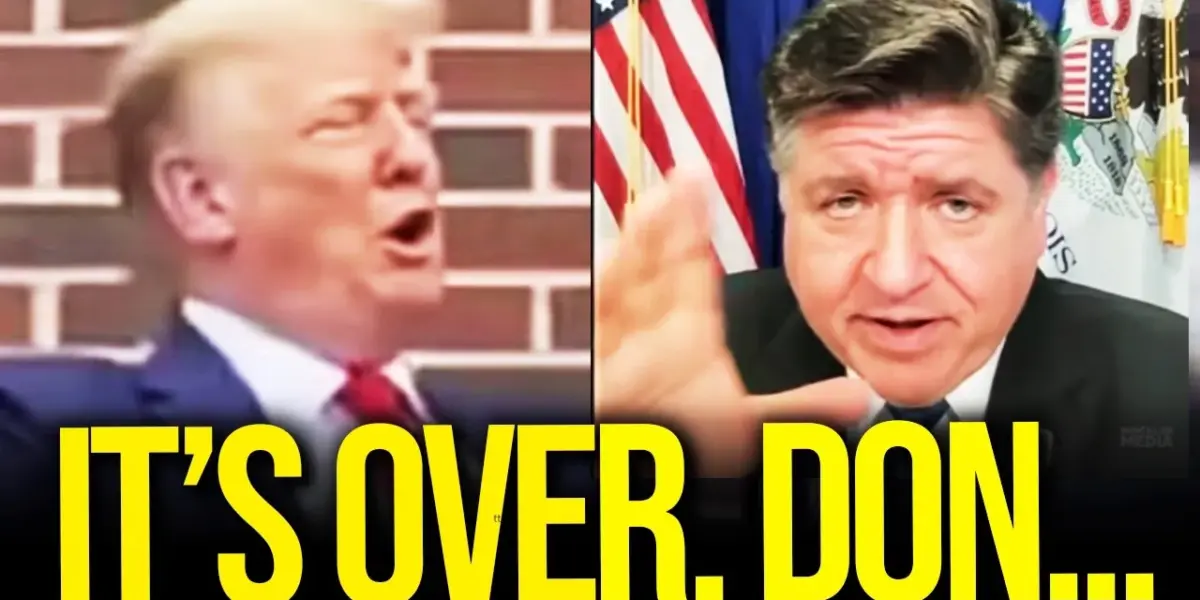
Governor Pritzker Fights Back Against Election Threats
In a recent interview, Illinois Governor JB Pritzker addressed pressing concerns regarding Donald Trump’s alleged efforts to undermine democratic processes, particularly focusing on the sanctity of midterm elections. Pritzker detailed his administration’s proactive measures and outlined a broader vision for the Democratic Party, emphasizing core values and forward-thinking policies.
Safeguarding Midterm Elections
A significant portion of the discussion centered on the perceived threats to the integrity of elections. Governor Pritzker highlighted past instances where Donald Trump’s administration allegedly attempted to interfere with democratic norms. He cited an attempt to federalize the Illinois National Guard and place them on the streets, an action his administration successfully challenged in the Supreme Court.
“We sued, we fought him and we won at the Supreme Court. Shockingly to many people, we won,” Pritzker stated, highlighting the legal battles waged to protect state autonomy.
Beyond the National Guard, Pritzker pointed to the deployment of ICE and CBP agents to cities like Minneapolis, noting their uniform and armament, which he argued mimicked military presence and could be used to intimidate voters. “He wants to put them at the polling places. He does,” Pritzker asserted, framing this as a direct attempt to suppress voter turnout and sow doubt about election results.
He expressed concerns that such tactics could be employed during midterm elections, especially if results do not favor Trump. He also referenced Michael Flynn’s alleged suggestion to seize ballot boxes after the 2020 election as a potential blueprint for future actions.
To counter these threats, Pritzker confirmed he is collaborating with other Democratic governors. “Yes, I am talking to other governors,” he stated.
While specifics were not disclosed to protect operational integrity, the aim is to develop strategies to ensure voter confidence and prevent the seizure of ballot boxes. This includes measures to make voters feel more secure and to actively protect the voting process, reinforcing Illinois’ commitment to accessible voting, including legalized mail-in balloting.
Reinvigorating the Democratic Party’s Message
Beyond election security, Governor Pritzker discussed the need for the Democratic Party to articulate a compelling policy agenda that resonates with the American public. He acknowledged a past tendency for the party to become too technical or “means-tested” in its policy explanations, allowing opponents to offer simpler, more intuitive messages.
Pritzker emphasized a return to foundational Democratic principles: the creation of Medicare, Medicaid, and Social Security, as well as the Civil Rights Act and Voting Rights Act. He argued these achievements are often overlooked and should be central to the party’s platform. He also pointed to the critical issue of the minimum wage, noting that Illinois has raised it to $15, while the national minimum wage remains at a stark $7.25.
“We need to be talking about things like that. How do we raise people’s wages? Let’s start by raising the minimum wage,” he urged, highlighting the broad public support for such a measure, even across the political aisle.
Addressing the Impact of AI and Housing Affordability
Looking toward the future, Pritzker identified the transformative impact of Artificial Intelligence (AI) as a major policy challenge. He acknowledged that AI will inevitably lead to job displacement and stressed the need to adapt the economy and workforce through education and skills training. “The question is how do we transform the economy for people who wouldn’t be able to get a job in an economy where AI is really dominant,” he posited.
On the domestic front, Pritzker championed his administration’s comprehensive housing plan, particularly the “Build Act.” This initiative aims to address the growing crisis of housing affordability, not just for low-income individuals but also for middle-class families earning between $75,000 and $175,000 annually. “People can’t afford even to rent a place to live, let alone to buy a place to live,” he observed.
The core of the Build Act is to increase housing supply by removing barriers for developers and streamlining the permitting process. Pritzker explained this using basic economic principles: “It is about increasing supply to meet the demand so that we can bring prices down.” The plan also seeks to unlock existing housing stock, such as apartments above garages, that are currently unusable due to local regulations.
It includes provisions for down payment assistance and aims to lower utility costs to ensure homeowners can afford to live in their homes after purchasing them. He contrasted the more affordable housing market in Illinois with the prohibitive costs on the coasts, suggesting that similar strategies could be applied nationwide.
Foreign Policy and the Role of Leadership
The conversation also touched upon international affairs, specifically the Iran strikes. Pritzker expressed a need for caution and adherence to the rule of law, emphasizing the lack of congressional authorization for military action. He also drew parallels to Donald Trump’s foreign policy, questioning the logic behind actions such as withdrawing support for Ukraine while potentially engaging in conflicts without clear provocation or goals.
Pritzker criticized what he described as Trump’s “might makes right” approach to foreign policy, which he believes has alienated allies and weakened America’s global standing. He cited anecdotal evidence from US citizens living in Europe who suggested it could take decades, or even never, to regain trust after Trump’s presidency. He also reflected on Trump’s personal attacks against political opponents, including calls for the arrest of governors and mayors, framing these as authoritarian tactics that require a strong, unified response from leaders.
Drawing on his experience working with Holocaust survivors, Pritzker stressed the importance of being an “upstander” rather than a bystander or collaborator. He argued that a failure to push back against authoritarian tendencies allows them to gain power. “Every day that goes by that we’re not pushing back, they are gaining power because these are authoritarians at heart,” he warned, calling for a Democratic Party composed of individuals willing to relentlessly challenge such forces.
Why This Matters
Governor Pritzker’s statements highlight critical contemporary issues: the integrity of democratic elections, the need for a clear and resonant political message, the societal impact of emerging technologies like AI, and the persistent challenge of housing affordability. His proactive stance on election security, coupled with his articulation of core Democratic values and innovative policy solutions like the Build Act, offers a potential roadmap for the party.
The analysis of Trump’s alleged anti-democratic actions and the call for principled leadership highlight the high stakes of the current political climate. Pritzker’s emphasis on being an “upstander” is a powerful reminder of the civic duty to actively defend democratic institutions and values.
Implications and Future Outlook
The discussion points to a growing awareness within the Democratic Party of the need for more effective communication and a stronger policy focus. The emphasis on issues like the minimum wage and housing affordability, combined with a clear explanation of their benefits, could help bridge the gap between policy and public understanding. The acknowledgment of AI’s disruptive potential signals a necessary shift towards future-oriented policy-making, focusing on workforce adaptation and economic transformation.
Pritzker’s robust defense against perceived attempts to undermine elections suggests a more assertive approach from Democratic leadership. The collaboration among governors to protect voting rights indicates a coordinated effort to counter potential threats. The critique of Trump’s foreign policy and its impact on international relations raises questions about the long-term consequences of isolationist or transactional diplomacy.
Historical Context
The concerns raised about election integrity echo historical anxieties surrounding voter suppression and challenges to democratic outcomes. The reference to the Civil Rights Act and Voting Rights Act situates current efforts to protect voting access within a broader struggle for enfranchisement. Pritzker’s analogy to the rise of authoritarianism in the 1930s, drawing on lessons from Holocaust survivors, lends a profound historical weight to the call for active resistance against perceived threats to democracy.
Source: 🚨Pritzker’s Plan to END TRUMP’S TERM (YouTube)

Related Articles
Senator Slams Democrats Over Trump Opposition Tactics
A senator has strongly criticized Democratic senators, accusing them of being overly focused on opposing President Trump. The senator believes this strategy is making Democrats look foolish and weakening their political standing. This political commentary highlights potential voter alienation and its implications for future policy.

Iran Missiles Strike Near Nuclear Site; Gas Prices Stay High
Iran launched missiles near Israel's main nuclear research center, injuring dozens and damaging buildings, marking a dangerous escalation in the four-week conflict. Meanwhile, U.S. gas prices are expected to stay high due to supply chain disruptions. The Senate is also debating the SAVE America Act, which would require proof of citizenship for voter registration.
Joe Scarborough Slams GOP’s SAVE Act as Voting Obstacle
Joe Scarborough has fiercely criticized the Republican-backed SAVE Act, labeling it a manufactured crisis designed to suppress votes. He argues the bill creates unnecessary hurdles for eligible voters rather than addressing real election security concerns. The legislation has ignited a debate over voter ID laws and their potential impact on democratic participation.