US, Israel Strike Iran: Conflicting Goals Emerge in Tehran
The United States and Israel have launched strikes on Iran, but their ultimate objectives appear to be at odds. While the US focuses on missile capabilities, Israel eyes regime change. Analyst Steven Simon questions the viability of these goals and warns of potential Iranian retaliation.

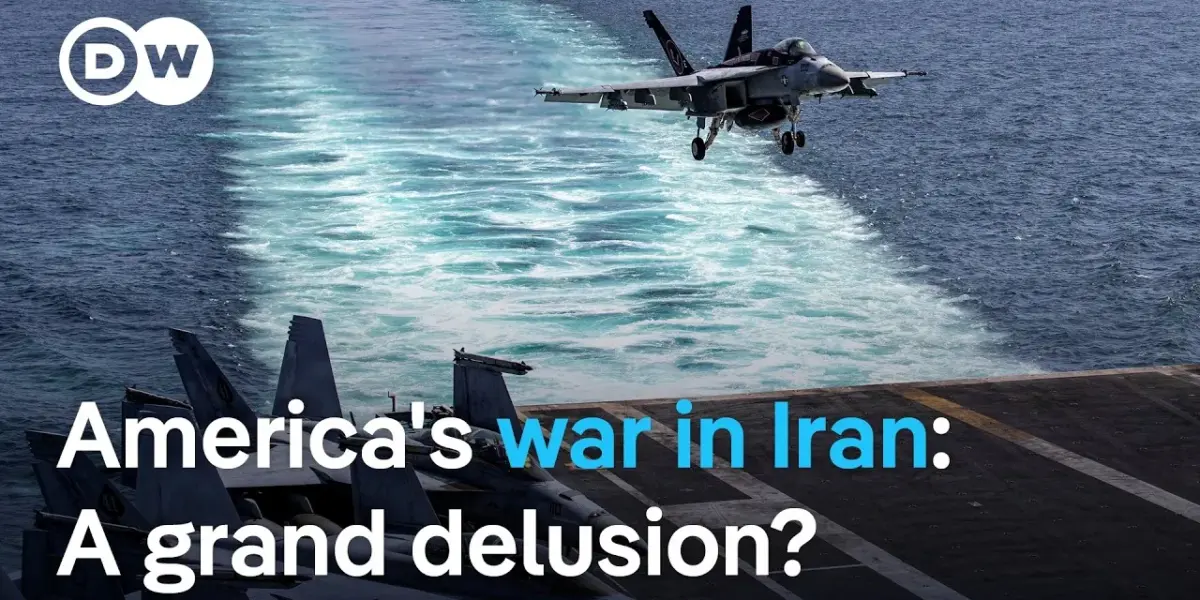
US and Israeli Strikes Target Iran Amid Shifting Objectives
In a rapidly escalating geopolitical climate, the United States and Israel have launched a series of strikes against Iran, a nation reportedly reeling from the loss of its supreme leader. With the vital Strait of Hormuz reportedly closed, the precise objectives of the Trump administration in Iran remain shrouded in uncertainty. As retaliatory strikes ripple across the region, a critical question looms: how far are the U.S. and its allies willing to go, and for how long will these operations continue?
Conflicting Aims: Washington vs. Jerusalem
While the U.S. and Israel appear to be acting in concert on the battlefield, their ultimate strategic goals in Iran seem to be diverging. U.S. Secretary of State Marco Rubio expressed a hope for the Iranian people to overthrow their government and establish a new future.
“We would not be heartbroken and we hope that the Iranian people can overthrow this government and establish a new future for that country,” Rubio stated. However, he clarified the immediate mission’s focus: “the objective of this mission is the destruction of their ballistic missile capabilities and of their naval capabilities.”
Conversely, Israeli Prime Minister Benjamin Netanyahu articulated a broader vision. “We also set out to create the conditions for the brave Iranian people to cast off the yoke of tyranny,” Netanyahu said, emphasizing the approaching day when Iranians could achieve this freedom. He explicitly linked these efforts to his “steadfast ally, the United States and my very steadfast friend, President Trump.”
Expert Analysis: Three War Aims and a Disconnect
Steven Simon, author of “Grand Delusion: The Rise and Fall of American Ambition in the Middle East” and a senior fellow at the Quincy Institute for Responsible Statecraft, provided critical insights into the administration’s stated objectives. According to Simon, the U.S. Administration has articulated three primary war aims:
- Nuclear and Ballistic Missile Threat: Addressing concerns over Iran’s nuclear and missile programs, though Simon notes a lack of consensus within the intelligence community regarding the immediacy of this threat.
- Retribution for Past Actions: Described by the president as “payback” for alleged Iranian actions against Americans since the 1979 revolution.
- Support for Internal Revolution: Intervention aimed at supporting a popular uprising against the current Iranian regime.
Simon expressed skepticism about the feasibility of achieving regime change through air strikes alone, a tactic historically proven difficult. He observed that current U.S. Air attacks appear to target “local repositories of regime control in far-flung areas of the country,” potentially aiming to “prepare the ground for a popular revolt.” However, he questions the U.S.’s “staying power or the patience” to see such a goal through.
Divergent Endgames: Limited Gains vs. Regime Overthrow
The analysis suggests a significant divergence in the desired outcomes between Washington and Jerusalem. Simon believes the U.S., particularly under President Trump, may be satisfied with “limited gains and an interim agreement on the nuclear and ballistic missile issue that meets the president’s needs at least for the near to medium term.” Given Trump’s term limits, his concern for post-presidency consequences is likely minimal.
Netanyahu, on the other hand, appears to be aiming for something far more sweeping: “a decisive change of regime in Iran.” This could involve not just the removal of current leadership but the complete dismantling of the existing power structure, potentially enabling a return of the monarchy or even leading to “chaos, anarchy, or a civil war” in Iran. Simon doubts the U.S. will ultimately pursue such an extensive objective.
The Role of the Revolutionary Guard
Despite the reported elimination of key leadership figures, including the Supreme Leader and many in his inner circle, the Islamic Revolutionary Guard Corps (IRGC) remains a formidable force. Simon estimates their numbers at a minimum of 150,000, describing them as “extremely well-armed” and highly motivated to preserve the regime, as their own survival is intrinsically linked to it.
“In terms of maintaining the internal order in Iran, I think they’re quite formidable,” Simon stated. He expressed “high confidence in the IRGC’s ability to maintain the regime’s control throughout Iran.” The IRGC is identified as a central player moving forward, particularly in the context of any potential negotiations or ceasefire talks with the United States.
Prospects for Negotiation and Popular Uprising
The Iranian regime has reportedly reached out to the U.S. For dialogue, a move President Trump has indicated he is open to. The core issues for discussion are expected to be nuclear enrichment and ballistic missile program controls. Simon anticipates that the Iranian regime might be willing to make significant compromises in these areas to consolidate its power following the recent setbacks.
However, the prospect of a popular uprising, which the U.S. Seems to be hoping for, appears dim. Simon noted the regime’s demonstrated willingness to use force to maintain power, suggesting that the Iranian populace understands the risks involved. “I can’t see them taking the kinds of risks that would be necessary to overthrow this regime,” he commented, emphasizing that such an endeavor would require individuals to be “prepared to risk their lives,” a significant ask.
The Lingering Shadow of Iraq and Future Extremism
The conversation also touched upon the long-term consequences of U.S. Foreign policy in the region, specifically referencing the 2003 invasion of Iraq. Simon argued that the removal of Saddam Hussein’s regime, Iran’s primary strategic adversary, inadvertently handed significant regional influence to Iran, calling it a “massive own goal on the part of the United States.”
Looking ahead, Simon warned of the potential for increased extremism and terrorism if the current conflict does not lead to regime change. He posited that Iran might retaliate by targeting U.S. Embassies, civilians, or military personnel across the globe. “There are many ways that they can kill American civilians in other ways,” he cautioned, highlighting the potential for widespread instability.
Looking Ahead
As the situation in Iran remains volatile, the world watches to see if the U.S. and Israel can reconcile their differing objectives. The resilience of the Iranian regime, particularly the IRGC, will be a critical factor. Future diplomatic overtures, the potential for Iranian retaliation, and the internal dynamics within Iran will be key elements to monitor in the coming weeks and months.
Source: What are US objectives in Iran and how far are they willing to go to achieve them? (YouTube)

Related Articles


Trump’s Iran Deadline: A Risky Game of Threats
President Trump's administration announced a major escalation of strikes against Iran, calling it the largest volume since the operation began. This follows weeks of repeated deadlines and threats against Iran, which Iran has apparently dismissed as bluster.

CIA Boasts Iran Humiliated by Audacious Airman Rescue
The CIA claims it executed a deception campaign that left Iran "embarrassed and humiliated" after successfully rescuing a U.S. airman. The mission involved locating the airman, confirming survival, and safely exfiltrating them under the noses of Iranian forces.

Trump Warns Iran: “Entire Country Can Be Taken Out”
Former President Donald Trump issued a strong warning to Iran, stating the entire country could be taken out in one night. The declaration followed the crash of an American F-15 jet in Iranian territory and the successful rescue of its crew. This geopolitical tension could influence market sentiment and specific industry sectors.