Iran Nuclear Deal Fallout: Peace Negotiator Weighs US Strategy
Veteran peace negotiator Dennis Ross critiques U.S. objectives regarding Iran's nuclear program and regional influence. He discusses historical diplomatic efforts, the nuances of uranium enrichment, and the potential for future negotiations amidst internal Iranian unrest and regional proxy network disruptions.

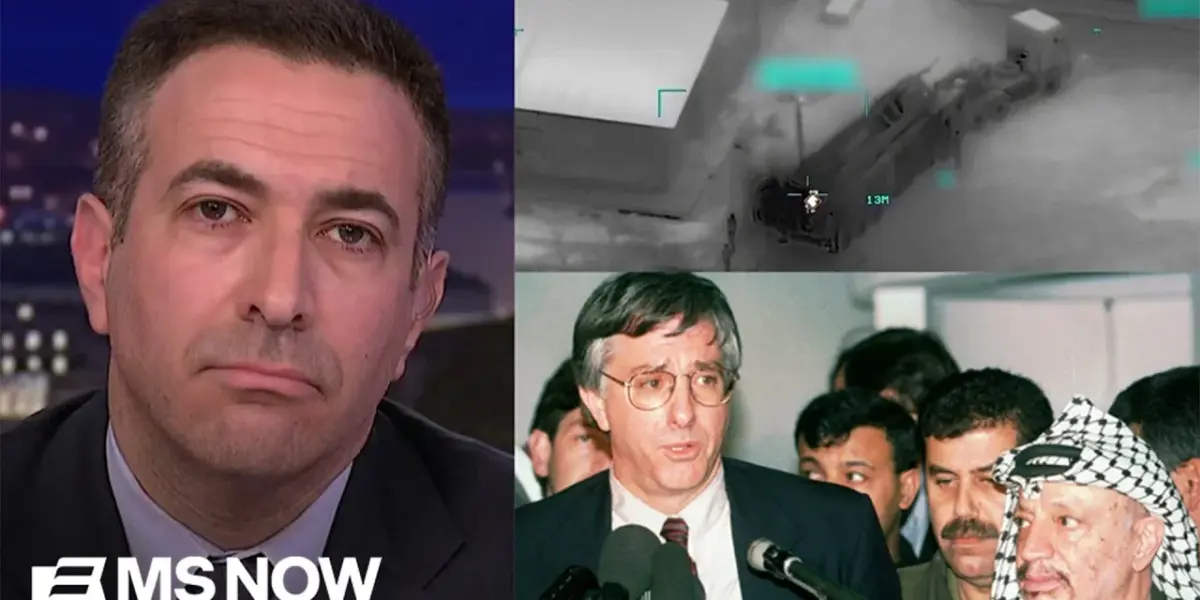
Ross Critiques US Objectives, Discusses Iran’s Nuclear Ambitions and Regional Role
In a candid discussion with Ari Melber, veteran peace negotiator Dennis Ross has offered a critical assessment of current U.S. Objectives concerning Iran, particularly in the context of its nuclear program and regional activities. Ross, a key figure in past U.S. Diplomatic efforts in the Middle East, questioned the narrowly defined goals reportedly set by the Trump administration, suggesting they might be insufficient to achieve broader strategic aims. He elaborated on the complexities of U.S.-Iran relations, contrasting past diplomatic approaches with the current administration’s strategy.
Defining U.S. Objectives in Iran Policy
Ross began by addressing the stated objectives of the U.S. Administration, which he understood to be focused on limiting Iran’s short-range ballistic missiles and potentially its Navy. “Well, excuse me, that’s first I’ve heard that those are our objectives.
Those objectives are quite narrowly stated,” Ross remarked, indicating a potential disconnect between stated goals and broader strategic thinking. He pointed out that short-range ballistic missiles are a direct threat to Gulf partners, while medium-range missiles are a greater concern for Israel, suggesting the administration’s focus might be misaligned with regional realities.
However, Ross offered a broader interpretation of the administration’s underlying aims. “I think the objectives of the administration are not regime change, they’re regime weakening,” he stated.
This weakening, he explained, is twofold: to diminish the regime’s internal power and to curtail Iran’s ability to threaten its neighbors, including Israel. He also touched upon the administration’s stated aim of creating an opportunity for the Iranian public to act, a strategy he viewed with skepticism given the regime’s security apparatus.
“The problem with such an approach is… There’s 150,000 IRGC. There’s 200,000 Revolutionary Guard. Now it is true that we in the Israelis are hitting their headquarters… And we’re disrupting their command control.”
Historical Context: Diplomacy and Deterrence
Melber steered the conversation towards the historical context of U.S. Dealings with Iran, referencing periods of both intense diplomacy and confrontational stances. Ross reflected on the Obama administration’s efforts, which sought to combine diplomacy with robust inspection regimes. He also considered the argument, often favored by hawkish perspectives, that the assertive use of force could create a weakened opponent more amenable to diplomacy.
Ross provided a detailed explanation of the Joint Comprehensive Plan of Action (JCPOA), the nuclear deal negotiated under the Obama administration. He clarified that the JCPOA was not intended as a permanent solution but rather as a 15-year “holding pattern” designed to buy time for more fundamental changes. “The JCPOA were not that it bought your 15 years.
Advantage of those 15 years. The 15 years bought you time to do something much more fundamental,” he explained.
He highlighted that during the JCPOA period, Iran was not relinquishing its right to enrich uranium and was expected to significantly expand its enrichment capabilities after 15 years, with no limits on the scale or size of its program. “So what you really had to do was work at a JCPOA Two to build on that, to really shape differently their approach to the whole question of their nuclear enrichment but also ensuring they couldn’t have nuclear weapons,” Ross emphasized.
The Nuance of Nuclear Enrichment
Ross underscored the critical distinction between enriching uranium for peaceful purposes, such as nuclear reactors, and for weapons development. He noted that enrichment above 20% is considered highly enriched uranium, suitable for weapons.
“The problem with independent enrichment is unless you have controls over this and unless you can ensure it’s never enriched above a low level… Then you run the risk that they can have a covert program, they could do something you wouldn’t be aware of,” he warned.
Challenges to Negotiation and Potential Mediators
Addressing the current state of affairs, Ross expressed uncertainty about the possibility of meaningful negotiations with the Iranian regime. “I don’t know who we would negotiate with right now. I mean, is there someone in this regime who, A, can speak for the regime, which is unclear?” he questioned.
He speculated on potential intermediaries, suggesting Russian President Vladimir Putin could play a role due to his relationship with Iran and his desire to demonstrate relevance to the U.S. “I can see Putin coming in because they have a relationship with him. He would want to show his relevance. And he also wants to show Trump how he can give him a way out,” Ross hypothesized.
For any negotiation to succeed, Ross believes Iran would need to agree to zero enrichment. “My view has been, I can see Putin coming in… He would want to show his relevance.
And he also wants to show Trump how he can give him a way out and then have Trump reward him with his posture on Ukraine. I could see him coming in and saying, look, there’s no way I can go to Trump unless you IF YOU AGREE THAT YOU’LL HAVE ZERO ENRICHMENT, I’M WONDERING TO GO TO HIM BUT YOU GOT TO GIVE ME THAT. YOU GOT TO GIVE ME THAT IN MY POCKET,” he explained.
“Now if that happens, then you have a basis on which to deal with the nuclear program in perpetuity.”
Internal Iranian Dynamics and Regional Impact
Ross highlighted the internal shifts within Iran, particularly the erosion of the regime’s social base due to sustained protests. He cited the “Women, Life, Freedom” movement and the killing of Mahsa Amini as catalysts that have weakened the regime’s traditional support in both rural and urban areas.
He also acknowledged the significant impact of Israel’s actions, particularly post-October 7th, in weakening Iran’s regional proxy network. “The Israelis basically, dramatically weakened that proxy network to the point where have they been when Iran was being attacked? Nowhere,” Ross observed, suggesting a strategic success in disrupting Iran’s regional influence.
Ross countered the long-held fear among some Western analysts that confronting Iran would lead to the unleashing of its proxies. “The old fear, which was sometimes expressed by American doves, was be careful. You rattle Iran and they unleash these other folks…
That proved to be wrong. It proved that, in fact, these were highly defeatable, not particularly effective, in the end lacking any real legitimacy where they were,” he concluded.
The Role of Diplomacy and Leverage
When asked about his own approach, Ross affirmed his belief in diplomacy but stressed that it must be backed by leverage. “Do I believe that you use diplomacy? Yes.
Do I believe you can use diplomacy to achieve objectives? Absolutely.
But I always believe that diplomacy works best when you have real leverage and real leverage sometimes come with course of backing. The idea that you can negotiate without leverage is an illusion,” he stated firmly.
Looking ahead, the effectiveness of the current U.S. Strategy in weakening Iran without provoking a wider conflict, and whether this internal disaffection can be channeled into verifiable concessions on the nuclear front, remain critical questions. The potential for a diplomatic breakthrough, perhaps mediated by a third party, hinges on the regime’s perceived vulnerability and its willingness to engage in meaningful negotiations, a prospect Ross views with cautious skepticism.
Source: Why bomb Iran – and will it work? Ari Melber talks to top peace negotiator Dennis Ross (YouTube)

Related Articles


Trump’s Iran Deadline: A Risky Game of Threats
President Trump's administration announced a major escalation of strikes against Iran, calling it the largest volume since the operation began. This follows weeks of repeated deadlines and threats against Iran, which Iran has apparently dismissed as bluster.

US Courts Belarus, Putin’s Ally, in Risky Strategic Gamble
The United States is making a bold diplomatic move by engaging with Belarus, a key ally of Russia. This strategy aims to leverage potential shifts in regional alliances despite Belarus's role in enabling Russia's invasion of Ukraine. The White House is betting on potential rewards, though significant risks remain.
US, Iran Spar Over Talks Amid Regional Tensions
US officials claim Iran is eager to negotiate a deal, despite internal fears preventing them from openly admitting it. The comments suggest a belief in strong US regional influence and highlight perceived hesitations within the Iranian leadership regarding their own positions.