US Military Flexes Muscle: Iran Faces Escalating Pressure
US forces have demonstrated their ability to enforce blockades in the Gulf of Hormuz, disabling an Iranian ship with precision. If diplomacy fails, the US is considering targeting Iranian infrastructure like power plants and bridges to pressure the regime and potentially foster internal dissent.

US Military Flexes Muscle: Iran Faces Escalating Pressure
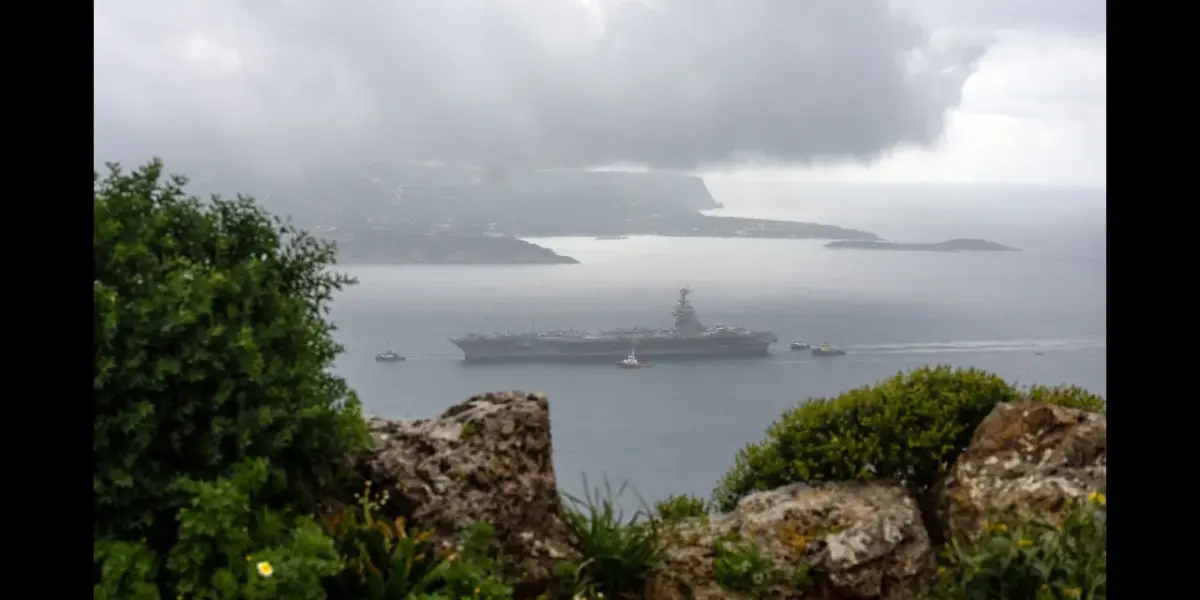
The United States has demonstrated its military power in the Gulf of Hormuz, taking action against an Iranian ship that refused to follow an embargo. This event signals a potential turning point in US-Iran relations, especially if diplomatic efforts fail. The military’s ability to enforce blockades and disable vessels with precision highlights its advanced capabilities.
During a recent encounter, an Iranian ship ignored an embargo for six hours before being disabled by US forces. While the ship was damaged, it did not sink, and no crew members were harmed.
US Marines boarded the vessel, a complex but routine operation for the Navy, Coast Guard, and Marines deployed in the region. This incident proves that the US can effectively enforce its naval embargoes.
Iran’s Potential Countermoves
Despite the US display of force, Iran still possesses ways to retaliate. The country has fast attack craft armed with anti-ship missiles, likely made with Chinese designs and produced in Iran.
Iran also has access to naval mines that could be deployed to disrupt shipping. These assets pose a threat to naval operations in the Strait of Hormuz.
However, US forces in the Gulf of Hormuz are well-equipped to counter these threats. Advanced radar systems on ships, surveillance aircraft, and satellite intelligence make it difficult for Iran to hide its mobile platforms. The presence of AH-64 attack helicopters and US Air Force aircraft like the A-10 Warthog and F-15E Eagle means any Iranian vessel that approaches US forces could be quickly attacked.
Precision Strikes and Restraint
The operation to disable the Iranian ship involved remarkable precision, targeting the engine room without causing casualties or sinking the vessel. This level of accuracy is often achieved with precision-guided shells, though details on their availability for naval artillery are not widely public. Even without an explosion, penetrating the engine room can disable a ship and send a strong political message.
The boarding of ships is a skill honed by the Navy and Marines over centuries, dating back to figures like John Paul Jones. This expertise allows them to conduct such operations effectively.
The military’s ability to use force with such restraint, avoiding unnecessary destruction, is a key aspect of its strategy. This suggests a deliberate approach to avoid harming civilians or destroying infrastructure vital to the population.
Diplomatic Stalemate and Escalation Options
The US president has indicated that if Iran does not return to negotiations, there are options to escalate pressure. One significant option is targeting Iranian infrastructure, such as power plants and bridges. Taking out key bridges could isolate important centers of power within Iran, like the Islamic Revolutionary Guard Corps (IRGC).
By weakening the IRGC’s ability to move forces and support each other, the US could create opportunities for local rebellions. If a city can overthrow the IRGC and prevent outside intervention, it could become a base for opposition. This could lead to the development of an organized opposition power center.
The Path to Regime Change?
From these opposition centers, the US could employ political warfare strategies to spread rebellion. Establishing air strips would allow for the delivery of supplies, weapons, and helicopters to aid other cities in rebelling. This would build momentum against the current regime.
The ultimate goal of such a strategy would be to encourage the Iranian population to rise up and overthrow the leadership in Tehran. Successfully doing so would usher in a new era for the people of Iran and have significant implications for the Middle East and the world. This approach aims to pressure the regime by empowering internal dissent and weakening its control.
Why This Matters
The events in the Gulf of Hormuz and the potential for further military action highlight the high stakes in US-Iran relations. The US strategy appears to balance the need to pressure the Iranian government with a desire to avoid widespread civilian harm. However, the possibility of targeting critical infrastructure raises concerns about unintended consequences and regional stability.
The discussion of supporting internal rebellions and fostering regime change is a significant escalation of US policy. It moves beyond economic sanctions to actively encouraging internal conflict. This approach carries risks, including the potential for prolonged instability and unforeseen outcomes in a volatile region.
Implications and Future Outlook
If Iran continues to resist diplomatic pressure, the US may pursue a strategy of targeted infrastructure damage and support for internal opposition. This could lead to a protracted period of low-level conflict and political maneuvering. The success of such a strategy would depend heavily on the Iranian people’s willingness and ability to challenge the current regime.
The future outlook remains uncertain. The effectiveness of US military actions and the potential for internal change in Iran are difficult to predict.
However, the current trajectory suggests a continued path of escalating pressure if no diplomatic breakthrough occurs. The coming weeks will be crucial in determining whether tensions ease or further escalate.
Historical Context
US-Iran relations have been strained for decades, marked by events like the 1979 Islamic Revolution and the subsequent hostage crisis. Periods of tension have often involved naval standoffs and sanctions. This current situation echoes past confrontations, but the specific strategies discussed, like targeting bridges to foster internal rebellion, represent a potentially new phase.
The use of military power to influence political outcomes in other nations is a long-standing feature of international relations. However, the detailed discussion of disabling specific infrastructure to create internal divisions suggests a refined, albeit risky, approach to regime change. The historical pattern shows that such interventions often have complex and long-lasting effects.
The next critical date mentioned is Wednesday, when the US president has stated options for attacking Iranian infrastructure are on the table. This upcoming deadline adds urgency to the ongoing diplomatic and military standoff.
Source: Destroying Iranian Bridges, Power Plants A Step Closer to Regime Change If No Deal Reached (YouTube)

Related Articles


US-Iran Truce Nears End Amid Seizure of Ship
The U.S.-Iran ceasefire is nearing its end amid a naval confrontation where U.S. Marines seized an Iranian-flagged ship. Meanwhile, FBI Director Kash Patel is suing The Atlantic for $250 million over a report accusing him of excessive drinking. In other news, Apple CEO Tim Cook is stepping down after 13 years.

Iran Talks: Why Bolton Thinks Iran Won’t Keep Promises
John Bolton believes Iran has little incentive to honor any deal reached in upcoming peace talks. He argues Iran senses U.S. "panic" and sees President Trump seeking a way out for domestic political reasons, giving Iran significant leverage. Bolton is skeptical of Iran's commitment, citing their history of broken promises.


Germany, Brazil Seek New Alliances Amidst Trump Tensions
Germany and Brazil are forging independent paths amidst U.S. policy shifts, emphasizing diplomacy and enhanced international cooperation. Both nations are strengthening economic and defense ties to navigate global instability and reduce reliance on a single superpower.