Military Certainty Needed for Gas Prices to Fall
Experts state that military certainty in key regions is essential for gas prices to fall consistently. Recent price swings highlight market volatility, driven by concerns over the Strait of Hormuz. High diesel and fertilizer costs also pose a risk of future food price inflation.

Military Certainty Needed for Gas Prices to Fall
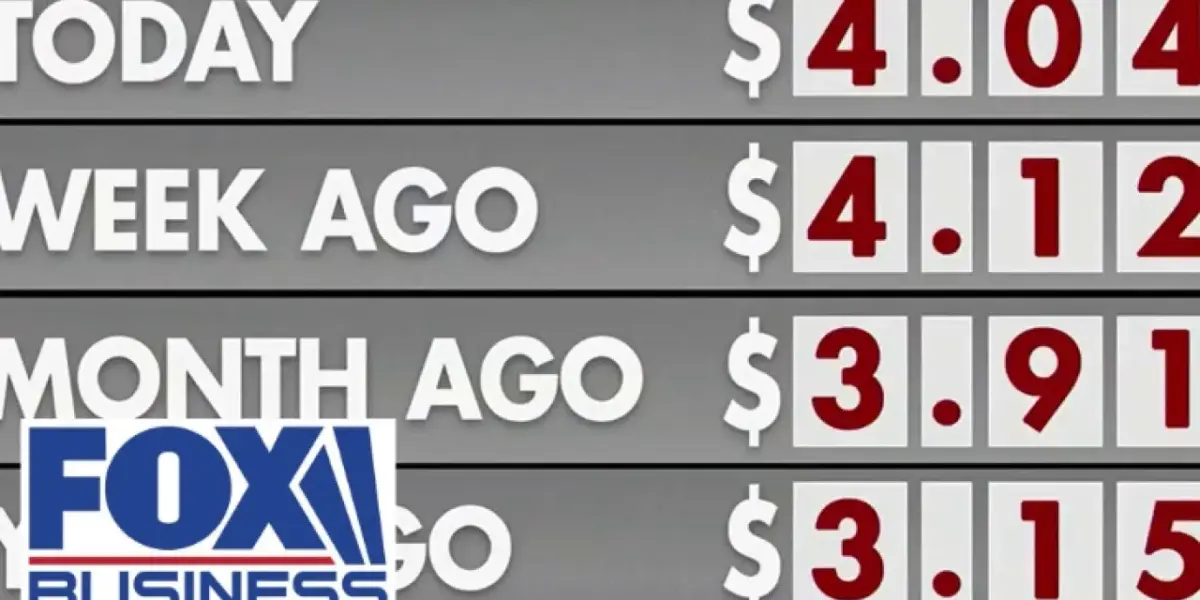
Gas prices have seen significant swings recently, with market fluctuations reaching $25 to $30 in a single week. While prices have been trending downward over the past week, experts suggest that true stability, and therefore lower prices, depends on achieving a high level of certainty, specifically military certainty, in key global regions.
This military certainty is crucial for ensuring the smooth flow of oil and gas. The Strait of Hormuz, a vital waterway for global energy transport, remains a focal point.
Any disruptions or aggressive actions in this region can cause prices to spike immediately. For prices to consistently decrease, there needs to be a clear and stable environment where the risks associated with transporting oil are significantly reduced.
What Stability Looks Like
Stability in this context means a situation where shipping traffic can flow without fear of disruption. When the Strait of Hormuz is open and traffic is moving freely, it signals a lower risk for oil tankers. A boat captain, responsible for a highly explosive payload and the lives of their crew, will not take chances if there is any doubt about safety.
Until shipping companies and individuals can confidently navigate these routes without the threat of sudden conflict or shutdown, oil prices will likely remain volatile. The current situation is not yet at that point of reliable stability, which is a concerning factor for market watchers. This lack of certainty is what allows for the large price swings seen in the oil markets.
Broader Economic Impacts
The concern over energy prices extends beyond just gasoline. Diesel and fertilizer prices are also significant economic indicators.
High diesel prices directly impact the cost of farming, including the fuel needed for irrigation and transportation. Similarly, high fertilizer costs, driven partly by energy prices, increase the expense of crop production.
These increased costs in agriculture are likely to be passed on to consumers in the form of higher food prices later in the year, particularly during the fall harvest season. While the economy might absorb a few months of elevated prices, prolonged periods of high energy and agricultural input costs can have lasting inflationary effects. Undoing the impact of several years of unfavorable economic conditions takes time.
Policy and Energy Production
Recent actions, such as authorizing the use of the Defense Production Act to support cold fire plants and refineries, aim to address potential domestic energy supply issues. These measures are intended to strengthen production and potentially ease price pressures. Increased domestic energy production and the expansion of nuclear power are seen as positive steps towards greater energy independence and price stability.
Any policy that helps reduce the burden of high energy prices is generally welcomed. Addressing energy costs is a significant challenge for any administration.
The courage to tackle these complex energy issues, even when politically difficult, deserves recognition. Focusing on increasing hydrocarbon and fossil fuel production, alongside other energy sources, is viewed as a necessary approach to managing market dynamics.
Market Impact
The immediate future of gas prices hinges on geopolitical stability, particularly concerning the Strait of Hormuz. Without clear signs of sustained peace and open transit, prices are likely to remain sensitive to news and events in the region. This volatility makes it difficult for consumers and businesses to plan financially.
In the longer term, sustained high energy costs, including diesel and fertilizer, could contribute to broader inflation across various sectors, especially food. Investments in domestic energy production and infrastructure are key to mitigating these risks and achieving more predictable energy prices.
Upcoming discussions and developments regarding the Strait of Hormuz and international energy policies will be critical to watch. The market will be looking for concrete signs of de-escalation and stable supply chains to signal a sustained drop in energy prices.
Source: You need military certainty for these gas prices to come down, expert says (YouTube)

Related Articles


Trump Faces Iran Crisis: Trapped with No Easy Answers
Former President Trump faces a complex crisis with Iran, appearing trapped with limited options. Public opinion and Iran's strategic maneuvering suggest a need for a deal, but leverage is scarce. The situation echoes historical tensions and raises questions about future diplomatic outcomes.


Pakistan Steps Up as Global Peacemaker Amidst Rising Domestic Anger
Pakistan is balancing its role as a key mediator in the U.S.-Iran conflict with rising domestic anger over American actions against Iran. While hosting crucial peace talks in Islamabad, the nation faces internal pressure and concerns about sectarian violence. This dual role highlights Pakistan's strategic importance and its complex relationship with regional and global powers.


Oil Crisis Deepens Amid Shifting Iran Deal Talks
The global oil market is grappling with its largest supply shortfall in 50 years, centered around the volatile situation at the Strait of Hormuz. Amidst shifting Iran deal talks and economic resilience, investors are watching closely for signs of stability. Technology and communication services sectors are currently driving the stock market's rise, even as recession risks linger.