Trump’s Military Purge: Are Generals Being Replaced by Loyalists?
Top military leaders are being removed at an alarming rate, raising concerns about loyalty replacing experience. This analysis explores the pattern of dismissals, historical parallels, and the potential impact on national security.

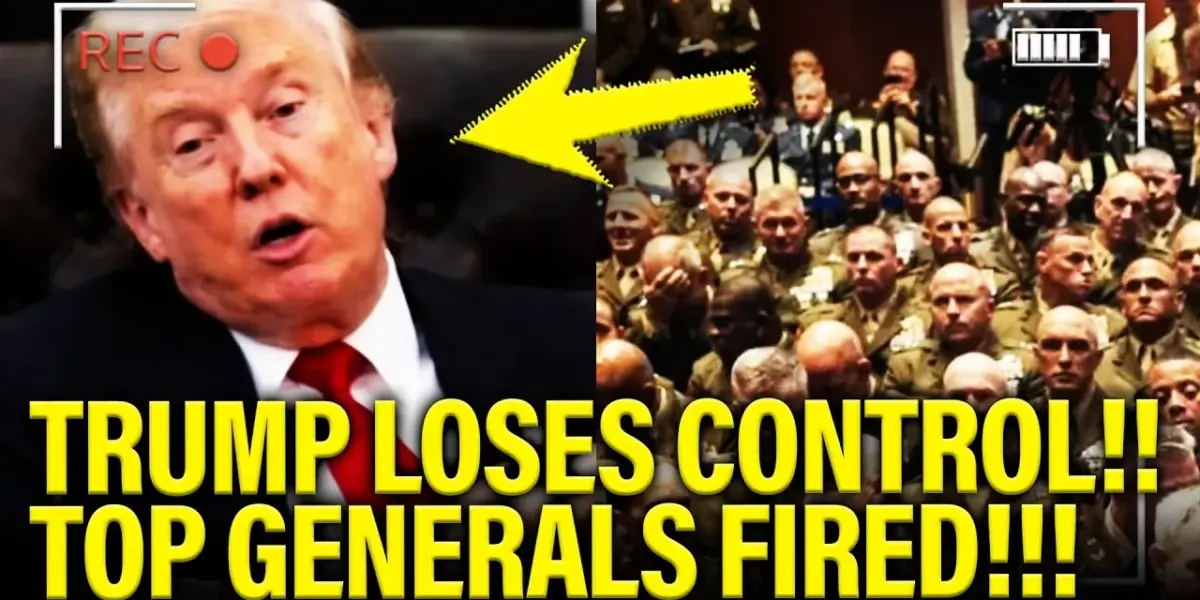
Trump’s Military Purge: Are Generals Being Replaced by Loyalists?
In recent times, a significant number of top military leaders in the United States have been removed from their positions. This includes the top officer of the Army, the leader of the Navy, and the former chairman of the Joint Chiefs of Staff.
The commander of Southcom in the Caribbean was also forced out. Over the past 14 months, Donald Trump and Defense Secretary Pete Hegesith have overseen what some are calling a large-scale removal of military officials, including generals, admirals, and other high-ranking officers.
This wave of dismissals and resignations has led to the departure of some of the nation’s most experienced military talent. This is happening at a time when their expertise is arguably needed the most. One former Army commander in Europe, Ben Hodges, recalled that his breaking point with Trump came when he heard the former president refer to generals and admirals as “my generals” and “my admirals.” Hodges compared this language to that used by historical dictators like Adolf Hitler and Benito Mussolini, suggesting the current purges echo those seen in authoritarian regimes.
The Navy Secretary Controversy
A recent example of this upheaval involved the firing of Navy Secretary John Felan. The firing was announced by Hegesith, though as a presidentially appointed and Senate-confirmed position, Trump himself would have to be the one to officially dismiss Felan. Reports indicate that Felan initially believed he had not been fired and went to the White House to confront Trump.
According to reports, Trump’s reason for firing Felan was dissatisfaction with the pace of shipbuilding. Trump reportedly wanted ships built faster and expressed a desire for “Trump battleships,” reminiscent of those used in World War I, rather than modern aircraft carriers or stealth ships.
He apparently found older battleships more aesthetically pleasing. Felan was dismissed because he wasn’t building these specific battleships quickly enough.
This dismissal occurred while the U.S. faced a naval blockade in the Persian Gulf, a critical issue in negotiations with Iran. John Felan himself had no prior military experience, coming from a private equity background and being a Republican donor. His appointment to lead the Navy was unusual from the start.
A Pattern of Dismissals
This is not an isolated incident. About two weeks prior, Sean Parnell, the Pentagon spokesperson, announced the termination of General Randy George, the Army Chief of Staff.
George held the top position in the U.S. Army. This move surprised many senior Army officials and marked a near-complete overhaul of the Joint Chiefs of Staff since Hegesith took office.
Beyond George and Felan, Defense Secretary Hegesith has also dismissed other key figures. These include Major General David Hodney, a former Army Ranger who led Army transformation and training, and Major General William Green Jr., the chief of the Army’s chaplain corps. Hegesith has also reportedly sought to remove Secretary of the Army Dan Driscoll, showing a clear desire to consolidate power and remove individuals he perceives as rivals or not aligned with his vision.
Concerns Echo Historical Parallels
The actions by Hegesith and Trump draw comparisons to historical patterns of authoritarian leaders consolidating military power. Adolf Hitler, between 1938 and 1941, systematically weakened Germany’s military command structure.
He sidelined independent generals, abolished the war ministry, and concentrated all control under his direct command, ultimately making himself the supreme commander. This deliberate centralization of power is seen by critics as a concerning parallel to the current situation.
Admiral Alvin Holsey, who led Southcom, also stepped down after being asked to leave by Hegesith. Reports suggest Holsey objected to alleged war crimes, specifically the U.S. military blowing up fishing boats off the coast of Venezuela. Tensions had been growing between Holsey and Hegesith for weeks, with Hegesith reportedly believing Holsey was not aggressive enough in his operations and desiring more casualties.
Worries About Trump’s Intentions
Some analyses suggest that Trump’s actions, including building a ballroom and bunker, indicate he is not planning to leave power after his term ends. There is a concern that he might try to use the military to remain in power, especially given his low approval ratings. This is happening while the military is reportedly trying to keep Trump out of the Situation Room due to his erratic behavior.
Even some generals who remain in their positions have voiced concerns. General Dan McCaine, the current Chairman of the Joint Chiefs, reportedly warned Trump against an attack on Iran, predicting it would be problematic. He cited potential Iranian responses, the Strait of Hormuz closure, and a lack of critical munitions and allied support, all of which proved accurate.
A Pattern of Unexplained Removals
According to reports, 26 generals and admirals have been removed within 14 months, with no misconduct cited for any of them. Pete Hegesith, a former Fox News host without senior military command experience, has overseen the removal of the Joint Chiefs chairman, the Army Chief of Staff, and heads of major commands, along with at least 22 other senior officers. He also blocked the promotion of four Army officers, including two Black men and two women, reportedly because he did not want to promote them, overriding the Army Secretary’s refusal.
Retired Lieutenant General Ben Hodges expressed his deep concern about Trump’s language, stating that hearing him talk about “my generals” felt like something from a third-world country, where officials owe their loyalty to a dictator. Hodges believes the founding fathers never intended for the president to have such personal control over generals, finding Trump’s approach reprehensible.
Strategic Concerns and Military Preparedness
There are also concerns about the military’s strategic direction under this new leadership. The discussion highlights the cost-effectiveness of modern warfare, contrasting expensive U.S. missile defense systems with cheaper Iranian drones. The argument is that the U.S. could deplete its missile stockpiles trying to counter low-cost drone attacks, questioning the efficiency of current defense strategies.
This situation has led to a broader discussion about the President’s fitness for office. A confrontation between Congresswoman Malin Dean and Speaker Mike Johnson in October 2025 brought up concerns about the President being “unhinged” and “unwell.” Dean specifically referred to the President’s behavior when speaking in front of generals, calling it dangerous and a cause for concern among allies and enemies alike.
Historical Context and Future Outlook
The transcript references a 2025 event where Hegesith reportedly ordered all generals and admirals to gather at Quantico. There, he allegedly berated them, emphasizing that anyone not fully compliant should leave.
This event, along with Trump’s own statements about firing generals on the spot if he dislikes them, reinforces the narrative of a leader seeking absolute loyalty over military expertise. The actions are seen by critics as having crippled the military.
Donald Trump himself has spoken about the military and its leadership in the past, suggesting generals do a bad job and should be fired. He ran on a platform that criticized the military and its leadership, despite claiming to have rebuilt it. This rhetoric, combined with the current firings, suggests a pattern of dissatisfaction with established military leadership and a preference for unquestioning obedience.
Why This Matters
The systematic removal of experienced military leaders, the appointment of individuals with little to no military background to top positions, and the comparison to historical authoritarian tactics raise serious questions about the future of U.S. military command and control. The potential for political loyalty to supersede professional judgment is a dangerous precedent.
This trend could undermine military readiness, strategic decision-making, and the non-partisan nature of the armed forces. The focus on personal aesthetics for naval vessels and the desire for “Trump battleships” highlights a potential disconnect between presidential preferences and national security needs.
Implications and Future Outlook
The ongoing changes in military leadership could have profound implications for U.S. foreign policy and defense strategies. If key positions are filled with individuals based on loyalty rather than experience, it could lead to flawed decision-making in critical situations.
The concerns raised about the military’s preparedness for modern threats, like drone warfare, suggest that strategic thinking might be compromised. The upcoming election will be a crucial period to observe how these trends continue or potentially reverse.
Historical Background
The United States military has a long history of civilian oversight, with the President as Commander-in-Chief. However, this oversight has traditionally been balanced by the professional advice and experience of military leaders.
The current situation, as described, appears to be a departure from this norm, with accusations of a deliberate effort to centralize power and replace experienced commanders with those who are perceived as more loyal to the current administration. The historical examples cited, such as Hitler’s consolidation of power, serve as stark warnings about the potential consequences of such actions.
Looking Ahead
The coming months will be critical in determining the long-term impact of these leadership changes. The military’s ability to adapt to new threats and maintain its global standing may depend on the decisions made regarding its leadership structure and the principles guiding appointments and dismissals. The focus remains on whether experienced leadership will be restored or if the trend of loyalty-based appointments will continue.
Source: Trump LOSES IT and FIRES TOP GENERALS at WORST TIME!!! (YouTube)

Related Articles

Dem Lawmaker Slams Trump’s Iran Policy, Navy Secretary Firing
Democratic Congressman Gregory Meeks sharply criticized President Trump's Iran policy, calling for diplomacy over military action. He also expressed deep concern over the recent firing of Navy Secretary John Phelan amidst ongoing operations. Meeks argued that the administration lacks a clear strategy and sufficient congressional oversight.

Pentagon Becomes ‘King Donald’s Court’ Amid Military Firings
The U.S. Pentagon is reportedly transforming into a 'loyalist organization' under President Trump, marked by the dismissal of numerous senior military officials, including the Navy Secretary. Meanwhile, the conflict with Iran shows no signs of resolution, with analysts suggesting time favors Tehran due to differing 'pain thresholds' between the two nations.

Iran Standoff: Trump’s War Strategy Under Fire
Iran fired on ships and seized two in the vital Strait of Hormuz, escalating tensions despite a fragile cease-fire. Critics argue President Trump's advisors, not historical strategy, led to the current dangerous standoff. The effectiveness of the U.S. naval blockade is now being questioned as global economic impacts loom.